4 months ago
Special Rejection Means International Insulation for Kosovo

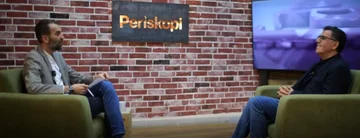
Periskopi(8 years ago)
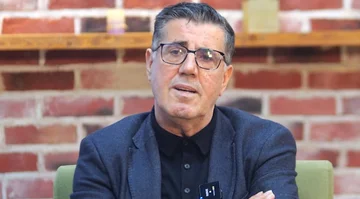
(8 years ago)The “Nism of the MP group is their legal right. However, how would Kosovo benefit from such an initiative? I only see harmful effects for the country. In this respect, Kosovo has judicial, constitutional and international obligations”, says, besides, the president of the Council for General Governance, with headquarters in New York, Alex [...]
Radio Free Europe: Following failed efforts at the Kosovo Assembly to withdraw legislation for the Special Court, many experts and analysts say this was not in Kosovo's best interest. Also, there has been strong rejection of this movement by representatives of Western countries in Kosovo, including the United States. How do you see this effort as a person who has been involved in the Kosovo issue for a long time?
Alex Roynishville Grigorev: I was surprised, like many others, when all of this began to happen very suddenly Friday before the long weekend of Christmas, when many of the international officials in Pristina, Brussels and Washington are not there and their attention is more focused on joining their families for holidays than on the Kosovo Assembly.
I perfectly understand the negative feeling for this Special Court, especially among former KLA members. You know, also, like many others in Kosovo, that those who committed terrible war crimes in Krusha the Great, Rahovec, Meje or Vushtrri in 1999 have largely remained unpunished.
Despite this, the crimes the Special Court handles have occurred. The charges filed in the report prepared by Swiss Senator Dick Marty are extremely terrible to remain unattended. The story of Kosovo's state formation is hardly complete without clear answers to these questions. These charges should be considered in order for each to move and close this serious chapter in Kosovo's history.
No doubt, the MP group's initiative is their legal right. However, how would Kosovo benefit from such an initiative? I only see harmful effects for the country. In this respect, Kosovo has judicial, constitutional and international obligations. States that want to be regarded as reliable international players should take their contractual obligations seriously. Any success of this initiative will not only damage Kosovo's reputation and reports with its closest friends and allies, but also cause irreparable damage to the European Union integration process. I am not surprised by serious statements from ambassadors of the United States and Britain, as well as EU representative, over the past weekend. They said the initiative will isolate Kosovo globally, at a time when international support is still vital for the country. The parliamentary success of this museum will almost completely destroy those built in the last 18 years. Someone should always remember that history is never written by chance, but by choice.
However, the initiative will never be fully successful as it should not be forgotten what the United States has said during the initial debate on the Special Court in 2015. If Kosovo had not created the tribunal, Americans were willing to do so through the UN Security Council, which is a far different conclusion for Kosovo.
Radio Free Europe: As I said, you and the Council for General Governance (CIG) have been involved in the negotiations between Kosovo and Serbia in the facilitated dialogue by the European Union. Of course, there are many charges between the parties about failing to establish any agreements. What is your view of this dialogue and do you think it has tangible results?
Alex Roynishville Grigorev: Without a doubt, dialogue was a positive process for both countries and for the region. It has enabled the resolution of few issues that were left unresolved since 1999, and talks between Belgrade and Pristina have moved them to a distinct qualitative level. The efforts of Kosovo and Serbian negotiators, as well, of EU facilitators, must be positively assessed.
There is clear progress on the ground. Take, for example, just a few issues we take these days to ensure: management of crossings between Serbia and Kosovo, the customs regime, holding Kosovo's summer elections, police integration, destruction of civil defence units, and others.
Because of this process, Serbia has been allowed to open accession negotiations with the EU, and its further progress is largely conditioned by the success of normalising reports with Kosovo. Kosovo has signed the Stabilisation and Association Agreement with the EU and is ready to run for EU membership.
Most important for all time, Pristina and Belgrade are conducting direct negotiations on their future reports. The year 2017 seems to have seen no dramatic tensions either in Kosovo or between Kosovo and Serbia.
Even so, in 2017, dialogue has stalled. New agreements have not been reached, and many of those for whom compliance was reached have not been implemented - some at all.
It seems that the time of constructive durability, which was very useful in the initial phase of dialogue, is over. This consonant has exhausted its capacity for change and soft relief from the EU, it is no longer working. There is a need for strong mediation of the comprehensive process with clear intentions, precise and strict deadlines respected by all sides. Likely, it is time to think about appointing a special EU envoy, who 100% of his or her time would spend on the matter. He or she should have the full support of the EU's most powerful players, just as the impact of the current Brussels process on points published in Berlin shortly.
The nature of the process is another major issue. The process should be precise. He must have a clear purpose. It is clear that the new phase should be for comprehensive normalisation, which would include the creation of full bilateral reports, Kosovo membership in all international organisations and mutual recognition of the legal and jurisdictional system. Other important issues, as well, should not be forgotten, including that of missing persons and mutual co-operation in this respect, then the issue of Kosovo's pension fund, security co-operation and agreement on reviewing property differences, etc. Many stress that the outcome of the status issue is becoming increasingly difficult.
Radio Free Europe: One of the major differences between Kosovo and Serbia is, as well, the creation of the Communist Association with the majority Serb population in Kosovo. How about this association?
Alex Roynishville Grigorev: Establishment of association is an international obligation of Kosovo, as is the full normalisation of reports with Kosovo an international obligation for Serbia. Serbs in Kosovo, on the other hand, need strong legal guarantees for observance and legalisation under Kosovo's legislation for the current system of Serbian education and health, as well as social welfare payments from Belgrade. That is, too, in Kosovo's interest.
I don't understand why the proposal for this association has yet to be produced. This would be the best place to start and help move the debate on association from the political issue to more technical.
Radio Free Europe: For dialogue, we have some calls from top Kosovo officials for direct involvement in these negotiations. But, on the other hand, we have some statements from Serbian officials that, in that case, they will seek Russian evolution. How do you see this situation?
Alex Roynishville Grigorev: Kosovo and Serbia want to become EU members and must learn how to operate within the EU framework. In this context, the current EU leadership for this process is efficient perfectly, especially if it improves in the way I described earlier. The United States fully supports the EU-led process. I believe that Russia's expression of support for the EU-led process can only be welcome.
Radio Free Europe: Kosovo is the only country in the Balkans without visa liberalisation with the European Union. One of the main conditions is the ratification of demarcation with Montenegro. But, on this issue, political parties in Kosovo are deeply divided... You have visited Kosovo and do you see any solution to this disagreement?
Alex Roynishville Grigorev: This is a very important issue for Kosovo. Kosovo remains the only country in Europe without free visa access for its citizens, who are Albanians, Serbs or others. Once, Kosovo's population may be one of the most linked to Western Europe. Likely, every citizen of Kosovo is linked through multiple family ties with relatives in the Schengen space. The solution to the matter is urgent and must be found.
During my stay in Pristina, earlier this month, I have heard little idea of how to resolve this issue. As in dialogue with Serbia, it also requires agreement with the opposition. It is becoming increasingly clear that the current atmosphere of political hostilities in Pristina is exciting and prevents a successful solution to more important national problems. Political maturity has shown itself in Kosovo in many cases. It's time for this to be shown again. The way to get out of this path without political leadership must be found as soon as possible in order for the country to move forward.
The EU on the other hand should have a more serious new look on the issue as well. It is in the interests of the EU, so that Kosovo does not lag behind. Leaving Kosovo isolated, it is dangerous at many levels. Leadership is art for someone else to do what you want to be done.
Let's hope that the year 2018 will bring about solutions to the problems we talked about. Kosovo needs to release its entire capacity to deal with much more difficult and existential issues, the socioeconomic situation, development, unemployment and rapprochement with Europe. The great leaders bring their people from where they are, where they have not been!