32 minutes ago
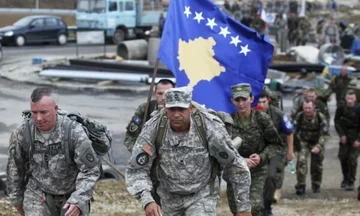
For Serbia it's easier if you recognise Kosovo

Periskopi(9 years ago)
(9 years ago)Accepting the fact that Serbia has lost Kosovo would be the easiest solution for Belgrade on the road to the latter towards membership in the European Union. So expressed in a conversation with the Balkan service of Free Radio Europe, Toby Vogel, expert of developments in the Balkans and analyst at the Centre [...]
Accepting the fact that Serbia has lost Kosovo would be the easiest solution for Belgrade on the road to the latter towards membership in the European Union.
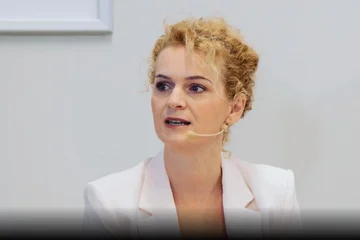
So expressed in a conversation with the Balkan service of Free Radio Europe, Toby Vogel, expert on developments in the Balkans and analyst at the Centre for European Political Studies in Brussels.
The easier it would be for Belgrade, at last, to accept the fact that it has lost Kosovo and lost it, not because of NATO bombings, but because of its actions over more decades in Kosovo. If he would accept that, then the logical conclusion would be to accept Kosovo's right to self-rule, which would imply full independence and sovereignty, not only de facto but also legal independence. In other words, it would be easier for Belgrade to accept Kosovo”, Vogel has said.
Although the new phase of dialogue between Kosovo and Serbia is under way, it has not yet been disclosed what it will include. The European Union's top representative, Federica Moghrini, has said the dialogue will mark a “qualitative jump” by the end of 2018, when even Mrs. Moghrin will complete his term.
But Vogel stressed that there is a need to be careful about the tendency to accelerate things just because there are artificial deadlines.
If the two countries -- Kosovo and Serbia -- are not willing to conclude a key agreement that the two countries would respect, then I don't think it's useful to reach such an agreement, because it will only be a piece of paper that will be neglected later. We've had such cases in the past”, he stressed Vogel.
He has added that it is a fact that the European Union has no other strategy for the Western Balkans except enlargement. According to him, parallel processes exist, which support the European Union, such as the Berlin process or talks between Pristina and Belgrade, although such processes, in one measure, are independent of one another.
Vogel has expressed the opinion that the European Union should consider the possibilities for how it can help Western Balkan countries reform their local, justice, economic and social systems so that they can become better places. Such a thing, he says, would lead nearly automatically towards turning them into far more reliable candidates for EU membership.
As already said, Serbia, but Montenegro, will be the future members of the European Union. But Serbia will become a member without Kosovo, which it calls part of. In this case, Vogel considers that there is no danger that European Union countries that do not recognise the state of Kosovo, the country adds another country, in this case Serbia, which would make Kosovo's path to the European Union difficult.
“No, because there will have to be extreme clarity about this issue: that Serbia will not be able to block Kosovo on the path to membership because of the status issue or because Serbia considers it to be the status issue. They need to turn on absolute clarity that this won't happen. Of course Serbia will not stumble in blocking Kosovo on other issues. There will always be other issues, which will be used as instruments for blocking. Ironically, Kosovo has the same problem with Cyprus, as with Serbia. Cyprus's opposition to accepting Kosovo's independence is actually linked to the situation in Cyprus and not to its friendship with Belgrade”, Vogel has said.
According to him, even if Belgrade knew that tomorrow Kosovo, it is difficult to believe Cyprus would do the same.