4 months ago
Russia is increasingly interfering in Balkans

Periskopi(9 years ago)
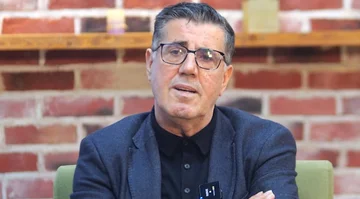
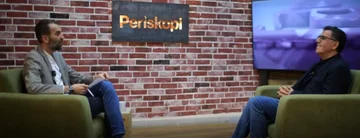
(9 years ago)In his interview with the French warehouse “Internationalique”, President Thaci has also talked about the five EU nations that do not recognise the state of Kosovo, about the EU mediation in Kosovo's dialogue with Serbia, about the impact France may have and the impact that Turkey now has in the Western Balkans, etc. In this [...]
In his interview with the French warehouse “Internationalique”, President Thaci has also talked about the five EU nations that do not recognise the state of Kosovo, about the EU mediation in Kosovo's dialogue with Serbia, about the impact France may have and the impact that Turkey now has in the Western Balkans, etc.
In this part, President Thaci also speaks of cooperation with Great Britain and the United States of America but also of Eastern and Gulf countries. It also speaks of the united fight against terrorism.
Political International: Do you know why five European countries -- Spain, Romania, Slovakia, Greece and Cyprus -- refuse to recognise Kosovo's independence?
Hashim Thaci: Each of these countries has their reasons. They are not directly related to our situation, but they are sovereign decisions over which we have no influence. We can only remind these different governments that we have made great progress. However, I noticed that everyone accepts our passport and other official documents. Spain does not recognise Kosovo because of Catalonia, but, as I had the chance to tell Spanish politicians, Kosovo is not Catalonia and Spain is not Serbia and Milosevic. Cyprus also has an internal problem that does not relate to Kosovo, and I believe that Greece, although very friendly with us, does not accept the island's participation. As for Romania and Slovakia, they were on a different scale on the eve of Kosovo's recognition, but their political situation has become more complex and the moment passed. Experts say the two countries are afraid of a form of secession of their Hungarian minority. For my part, I can repeat, once again, that Kosovo is recognised as a sovereign republic based on the plan proposed by a special UN envoy and accepted by major Western democracies. Our route is Sui generis and has nothing to do with Catalonia, Cyprus or any other country.
Political International: Do you hope to convince them to change their position?
Hashim Thaci: I think the European Union should adopt a unified political approach for Kosovo. How can Europe hope to speak with a voice on more important issues like Russia or Syria if they cannot agree on Kosovo's small.
Political International: What role can the European Union play to improve your relations with Serbia? Ashton was very involved in this process. Mrs. Moghrin, who has succeeded, has the same will?
Hashim Thaci: The European Union and the United States play a crucial role in facilitating dialogue between Kosovo and Serbia. Ashton was personally involved. This helped us reach Brussels' historic agreement on April 19, 2013. Now we must move forward to adopt the final package for reconciliation and normalisation agreements. I hope that Brussels diplomacy will continue this way. Kosovo and Serbia want to become members of the European Union, which means the Union has the means to exert pressure on us if it wants to.
Political International: What do you expect from the Serbian side to permanently normalise bilateral relations? What new advances are possible?
Hashim Thaci: Our two delegations and the EU also know exactly what they're talking about. The first agreement reached in Brussels concerned the Serb withdrawal of the parallel institutions established in Kosovo and Belgrade's commitment not to interfere in my country's constitutional order. The second agreement should be about recognising the full reality of Kosovo's independence and starting the reconciliation process between our two peoples. We owe our children and will personally never stop seeking a final peace agreement.
Political International: Let's talk a little bit about the European Union. What inspires you Brex? What can be the consequence for Kosovo?
Hashim Thaci: The UK has been a very strong partner for Kosovo. It strongly supported our freedom and independence and argued strongly for European Union enlargement. We can only regret the decision of the British people, but we respect it. What is certain is that London will maintain its commitment to the region and is expected to hold, in the summer of 2018, the upcoming Western Balkans summit as part of the Berlin process. This is an important sign of the continuation of its commitment, but we are aware that Brex will reduce the difference for negotiations in Brussels with the Western Balkans and slow the European Union's enlargement process. So I don't see any Balkan country that will join the EU before Brex, which means it still takes a few years.
Political International: Many believe that choice in France and Emmaunel Macron is a reinforcement for European integrations. Can this choice give a new impetus?
Hashim Thaci: I commend President Macro for this great victory. It has shown that at this time of widespread hatred in several European political circles, it is possible to gain power without drowning in nationalism and xenophobia. We hope to have an active dialogue with Paris. To further strengthen bilateral cooperation, economic ties, and investments, so to co-operate in the multilateral diplomatic field, since France is a powerful actor of the European Union and the United Nations. We are also glad to have been welcomed to the International Francophony Organisation. At the beginning of the summer, Kosovo has won two gold medals under the Francophony Games. So we actively support close co-operation with Paris, describing politics, economy and culture.
Political International: The current behaviour of the Turkish president, who seems to remove Turkey definitely from the European Union, poses an obstacle to your accession prospects in view of Turkey's historic, economic and religious influence in your country?
Hashim Thaci: Relations between Turkey and the EU are relations between them and it is not up to me to comment on this current situation. I can only say that Turkey has expressed its decades-old wishes to integrate into the EU, and we hope that Turkey and the EU will find the political opportunity to develop their relations and co-operation for a better future. When we say of Ankara's influence in the Western Balkans, it is a natural link based on the historical circumstances that a part of the Balkan citizens, but also of Kosovo, are related to Turkey. The Western Balkan countries have been part of Ottoman Turkey for five centuries, while today Turkey is an important investor in the region. For what reason should we hold the arm of one or the other? I refuse if Kosovo is obliged to make such a choice.
Political International: Can you tell us more about your ties with Turkey? And what do you have to do with Eastern and Gulf countries?
Hashim Thaci: Turkey is a strategic partner of Kosovo for economic, political and diplomatic ties. Turkey has supported our candidacy in all international bodies and has helped recognise Kosovo's independence from several countries. Besides Washington, Berlin, Paris, London and Rome, Ankara has been one of the leaders of our independence. Meanwhile, Turkish companies receive a large part of the foreign direct investments that have been realised to us. Last year we have condemned the military plan against President Erdogan and the death of civilians provoked by this stick. Today, we are extremely aware that in the national interests of Kosovo we look to partners from Washington to Brussels, from Paris to Ottawa, from Ankara to Oslo, who speak in a voice from the Atlantic Alliance, adapting to a unified position against the dangers to the Euro-Atlantic family. And with countries in the near East, we are in constant contact with all Gulf Co-operation Council governments. We also know that we live in a multilateral world and are always motivated to develop contacts with potential investors in this region. Kosovo is a small republic, but we are witnesses directly to a current global policy story when members of the Atlantic Alliance are unified and when their shares are supported by countries from Japan to Gulf states, their intervention is likely to be successful. And I would add that life is possible to be saved, as has happened to us in 1999. Unfortunately, the first unity among several key members of the Alliance as it was created after the fall of the Berlin Wall has recently begun to be damaged by radicalism and nationalism...
Political International: Your country has always shown a strong bond with the United States because of their commitment to the realization of your independence. Are you concerned when President Trump takes a distance in relation to Europe?
Hashim Thaci: The American government is very active in favour of the Western Balkans. You have been able to see in recent months how Macedonia and Albania have helped solve their problems and accelerate reform steps. Shortly, I have met Vice President Pence, convincing him that only Washington's commitment can guarantee the progress, stability and integration of the Balkans. Seeing that members of the European Union themselves do not always speak out in Kosovo's case, the American commitment to Kosovars has a vital, irreplaceable importance, even though Brussels is a key helper. However, our contacts and exchanges with the Senate, the House of Representatives, the State Department and the White House make me optimistic about a continued American engagement in the Western Balkans. It has only been weeks since Kosovo has accepted a donation of $50m through the Millennium Challenge Corporation development programme to invest in Renewable Energy. This is proof that reports that the United States will leave the region are unwise.
Political International: Montenegro has already joined NATO, do you have a motive to hope for your membership?
Hashim Thaci: It is true that Montenegro's NATO membership is one of the best news for us this year. Kosovo shares two borders with two already NATO members who are Albania and Montenegro. We're also very interested in joining. NATO. We have several stages left to membership, beginning with the transformation of our humble security force into a multiethnic military force. We should also work with our partners to enter the Partnership for Peace programme and prepare Kosovo to become a member of the Atlantic Alliance. It is also the obligation of the Atlantic family to help in our future, since with this family we share the same ideals and will bring security to our children. We must not allow history to repeat itself in this part of the world. The outcome of NATO's expansion in the Western Balkans is the best security against returning old wishes.
Political International: What is the state of your relations with Russia? Is it interfering in the Balkans? If so, how?
Hashim Thaci: Russia is increasingly interfering with the entire area. Religious extremism has become the biggest regional threat for four or five years, but it is clear that today the Russian government is trying to destabilise the Balkans. Russian propaganda weapons like Russia Today and Sputnik broadcast continuous news against NATO and against the European Union. On the other hand, some nongovernmental organisations play a very negative role in Serbia, but also in the Serb population in Bosnia and Montenegro and also in several municipalities in Kosovo. The attempted assassination against Montenegro's prime minister by persons suspected as members of the Russian secret service also show that we must face a destabilising agenda. I regret that we have not yet been able to develop an adequate method or means to resist this type of asymmetrical war, propaganda, false news and funding of extremist groups that have indeed developed into an ideological war weapon.
Political International: During the war, The NLA did everything to prevent fundamentalists from entering its ranks. Today with the fall of the Islamic State “”, do you fear the return of jihadists to your territory? There are three hundred Kosovo fighters in the “Islamic State”, or six hundred individuals originally from Kosovo and Bosnia, according to Kingque London.
Hashim Thaci: The number of Kosovo volunteers who have gone to join the wars in Syria and Iraq has been largely reduced in the past two years. Our security institutions stress that there are only a few dozen extremists remaining in the ranks of “Islamic State”. I want to be very clear in that Kosovo is a member of the coalition against “the Islamic State”. In relation to its Muslim population, Kosovo has fewer extremists than France, Belgium, Great Britain and most European Union countries. Interpol's data shows that our settlements or municipalities are safer than some European cities. Unfortunately, this information about Kosovo is little or no known, and most journalists prefer to believe or claim that very soon there will be a danger in the Balkans. It is true that we have seen increasing forms of extremism in our society, but we have done what needs to be done by using law, adopting measures and investing in tolerance and interreligious dialogue. We have also detained dozens of people investigated for relations with “the Islamic State”, including several imams who spread their propaganda through social networks and YouTube. American and European governments have welcomed my country for this success in this area and also our secret service for co-operation with their Western colleagues. Of course, we need to stay alert and work even more especially with young people and professionals so that eventually the position of radical Islam will not harm our secular Republic.
Political International: Will you soon have an army and not the current security force of 4,000, as you say?
Hashim Thaci: We've mentioned: Kosovo will have a small military defence force. Three main reasons lead us to this: first, a large part of the country's population believes Kosovo should take something on its defence and freedom. Second, as I told you earlier, we hope to join the North Atlantic Alliance, having a modest but quality and functional army, which is also a prerequisite for membership. Third, Kosovo has experienced genocide in less than 20 years ago and we will never allow anyone to threaten our children again. The Balkans are calm for now. All Balkan states have a democracy and an orientation by the European Union, but that times can change and we must prepare to face any possible danger in the future. Some options are available to us and we will work with all levels of our society, as well as with our Alliance partners to ensure that our national security plan will lead to the creation of a defence force.
Political International: Finally, does the situation in the Balkans sound like <x0nus”?
Hashim Thaci: No, on the contrary, our country, in this respect, aims to do everything to realise security in the Balkans. Kosovo and Kosovars have never fought outside their borders. We fought a defensive war in 1998 and 1999, and I strongly oppose any ideas under which the men and women of our Security Force, of the country's different ethnicities, who will hold the uniform, will be trained by NATO and controlled by the democraticly elected institutions, be a threat to anyone.