6 minutes ago
Hajdari talks in Belgrade about missing persons in Kosovo

Periskopi(9 years ago)
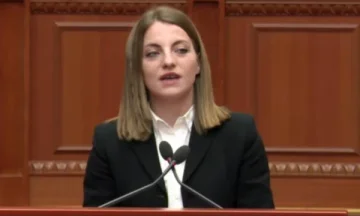
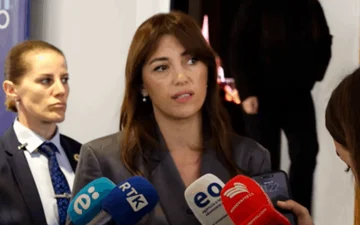
(9 years ago)Kosovo prosecutor Drita Hajdari in Belgrade at a conference for the missing held one in she delivered a speech commemorating that 1560 people were missing in Kosovo. She said efforts are continuing in Kosovo to find the missing indiscriminately the religion of the nation. Hajdari cited obstacles that Kosovo has [...]
She said efforts are continuing in Kosovo to find the missing indiscriminately the religion of the nation. Hajdari cited the obstacles that Kosovo has so far had in this area, while also citing co-operation with family members of the dead.
This is prosecutor Hajdari's full speech in Belgrade
We are gathered at this Conference to try to resolve a very sensitive issue like the issue of missing persons holding thousands of families, whose members are on this list that included over 1560 people of all nationalities, genders and ages, to whom we have legal and moral obligations.
It is man's legal and basic duty to inform family members of the fate of missing family members. After signing the war outcome agreement, the warring parties have had to show where missing persons are, but that they have not done so because the political will has been lacking, and that the internationals have not put sufficient pressure on the parties involved in the war.
The Kosovo Republic's Special Prosecutorial Prosecutors have recently been locked up in this process for the fact that the issue of missing persons has been the exclusive competence of UNMIK, where they have then moved to EULEX's competence in 2008. From the beginning of the process of transferring cases from EULEX's mission to the local prosecution, Kosovo's Special Prosecutorship, respectively, from 2015 to now, local prosecutors have issued a total of 56 orders for exhumation. With information on the possible existence of mortore remains, local prosecutors do not wait a day -- they immediately issue orders for exhumation and examination of mortar waste. Many times prosecutors participate in exhumations. After completing the exhumation, mortore remains are sent to the Institute for Legal Medicine, where their identification and examination are conducted.
As sources of information in the investigation of missing persons, we have very good co-operation with reliable organisations that have worked long in this area as they are: The Government Commission for the Unemployed, the Council for Protection of Human Rights and Freedoms, the Fund for Humanitarian Law. Extensive contributions in this regard have been given and are providing the Associations of Familys of Missing Persons and the Institute for Legal Medicine, which is directed by the valuable expert Prof. Dr. Education Gerjaliu.
The most encouraging fact is the co-operation of the Family Associations of Missing Persons, Kosovo and Serbia, who have long broken all possible prejudices, make efforts, as the most affected category, to make concrete contributions to whiteening the fate of missing persons.
A human and institutional infrastructure has been created to deal with this issue, and there are positive movements and concrete results, but the number of missing people in Kosovo is still huge and poses constant concern for family members who rightly seek to be informed of the fate of their loved ones.
As a state prosecutor with the Special Prosecutor of the Republic of Kosovo who handles war crimes cases, I commit myself to clarifying the case of persons considered missing despite their ethnic, religious affiliation, non-principle, gender, social status, political beliefs, etc. as if I make the maximum effort for those responsible for planning, implementing or preventing war crimes to be brought before justice bodies, also without making distinctions on ethnic, religious, non-competitive, gender, social status, political beliefs, etc. As a prosecutor, I seek first justice and satisphation for the victims of war, contributing to the record of guilt for those who committed these terrible crimes. The principle of justice in a legal state is to divide justice on the basis of evidence and not on the basis of ethnic affiliation.
There is also a challenge before us that we will always face if we want to ensure justice for the victims and responsibility for criminals and that challenge is the confrontation with the past. Without clarifying the past, we will have an unstable present and we will find it impossible to build a accepted future, where there will be no winners or losers. This is a necessity and obligation to families of missing persons. This obligation is based on some principles of righteousness:
The right to know, or the right to be informed specifically requires that information be provided about missing persons.
The right to justice requires concrete responsibility for those who are found guilty of violating the Humanity Law and here in an experimental way include missing persons.
The right to reparations implies symbolic reparations for victims and their families as a result of violations of the laws of war.
As a prosecutor with the Special Prosecutor of the Republic of Kosovo, I am committed to clarifying all the cases, but it is very difficult to achieve expected results without any mutual and sincere co-operation with all prosecutors and institutions dealing with this issue of the countries of the region that have been involved in the wars after which, the issue of the missing has remained as the most untreated issue and that the whole burden of lighting up the fate of missing persons has fallen on their families, the associations of missing family members and specialised organisations dealing with the human rights issue, which is not enough to ensure the victims of justice and war.
Only fair law enforcement provides justice for victims and responsibility for criminals.
The Republic of Serbia has been able to establish a war crimes court, while we in Kosovo have been denied that right. After the end of the Kosovo war, we have been told that for war crimes cases in Kosovo are UNMIK and EULEX courts, while for the most serious ones, the International Tribunal for the former Yugoslavia for War Crimes in The Hague. We all know the results. Over 1560 people are still identified as missing.
Accepting responsibilities for war crimes cases, we local prosecutors require first of all a human responsibility, and we have legal obligation to follow these cases until they are fully white.
Conscious results in whitening the fate of the missing can only be achieved with the cooperation of the warring parties, while failure to cooperate will only continue the anxiety of family members who have no quiet minutes until the fate of their loved ones dawns.
Despite the desire and professional commitment to bring to justice the responsibilities of war crimes, among which there is the disappearance of persons on a long list of missing persons, it is difficult to resolve all these cases, as long as the passing of time can diminish the willingness and will to resolve these cases. However, we all know that war crimes are not advanced and that there will never be amnesty for those who committed these crimes. International statistics tell us that, beginning with Balkan wars, the first and second world war, the wars in South America, Africa and Asia, at least 25 to 30% of missing persons' cases have remained unfulfilled.
We have to commit to us in the region this percentage is as small as possible. With our commitment and concrete co-operation, in the name of law enforcement, we will ensure justice and satisifation for victims, responsibility for war criminals, rest and tranquillity for family members, as well as an untapped environment with ethnic hatred.
Only those who are devoted and courageous in law enforcement can build a bridge between a past with much pain and suffering towards a future accepted by all. Why don't we start building this bridge and, I think, I don't have to explain that, before we're prosecutors, investigators and judges, we're people, most of us are parents, have children, as well as family members who are suffering so long without information about their missing boyfriends. It is inhuman, immoral, and illegal for victims to be divided on the basis of ethnic affiliation as being illegal, as is immoral, for war criminals, on the basis of ethnic affiliation to be cloned as heroes.
We prosecutors are not required of us anything that does not belong to us, just what we have vowed - fair and uncompetitive law enforcement. To accomplish this task, we need the support of the whole society, especially those who can contribute seriously to whitewashing the fate of the missing and punishing the guilty. Only with literal cooperation can we do what we must do!