4 months ago
EU needs special charge for Kosovo

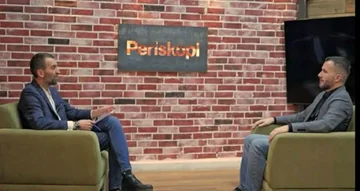
Periskopi(9 years ago)
(9 years ago)DW: Mr. Petritsch, you say, there is now a historic chance of resolving the Kosovo issue. Because? Wolfgang Petritsch: I believe that Serbian President Vuciq is now really ready to deal with and solve the issue. It's actually a kind of historic chance to solve the conflict. [...]
Wolfgang Petritsch: I believe that Serbian President Vuciq is now really ready to deal with and solve the issue. It's actually a kind of historic chance to solve the recent conflict is now valued by the EU as the very big chance.
What exactly do you expect from Brussels?
Must start with a new political process and be seized routine, which has been in demand of dialogue between Belgrade and Pristina. For the next two years, the focus must be focused on solving this problem. Maybe a political mandate with a personality should be appointed here, which you know very well in the region. And that should also be linked to a clear objective, to make it possible to solve this problem. It should also be thought of what is going on between Serbia, with what Serbia can be motivated to implement this historic step.
You say Brussels should be put on a move, but in your opinion what is actually being exercised by the Serbian government, regarding a statement by Vucinqi?
These are processes, which he has already suggested: from one end to another, and possibly quickly shut down dialogue between Belgrade and Pristina. The fundamental word for the institutional rights of Serbs in Kosovo. The second major step is dialogue within Serbs. I believe, that this is a condition of commitment to the true stability that could bring about the region. It would also be, in Serbia, not feeling compelled from abroad, for recognition, but for an internal dialogue to be developed in order to achieve a choice accepted by both sides. The biggest problem, of course, has to do with that, that Serbian politics can most certainly overcome it, that it says, that Kosovo is lost, something which de facto has changed.
But of course it should be for the Serbs to be offered something. This should include a good security of the ethnic Serb minority until eventually even a bilateral solution, including both Belgrade and Pristina, can agree if a word is answered for example in some correction of borders. Serbia has also progressed relatively well with membership talks with the EU. People in Serbia should be told much and clearly that they need, that the seizure of these obstacles will say, even that in a few years, membership can be achieved. This should move parallel to internal dialogue on the Kosovo issue. Until 2019, when Brussels is under way by the new administration, open issues need to be dealt with in part. Kosovo is either resolved or at least the solution to be positive. The aim would be, in 2019, the new EU administration to have a plan to prepare for the Balkans. The EU, that plan could be implemented within a relatively short time.
You think in a package...
That's what needs to be seen. The weak link in the Western Balkan chain is Bosnia. And that's where it's going. But even for this case I am of the opinion, which should be launched relatively quickly, with which talks start to take priority over those specific Bosniak problems that are not solved. This should enable a member. There must be a kind of race within the region to see who will arrive first in line. It's clear to all about what the word is about: in Serbia's case, to solve Kosovo's problem, on the matter of Bosnia and Herzegovina is a matter of avoiding the two state functions, based on the Dayton Agreement. The challenges are clear and the process needs to be determined.
What do you advise Serbian political people to do with their credibility and seriousness towards other partners in the talks?
There is a great distrust of Belgrade leadership in particular over media freedom, legal state and so on...
Serbia certainly still has many major problems, but I believe, this should be seen in the context of the much larger unresolved problem for Kosovo. On the other hand, Vuíq, both in Berlin, and in other European capitals, has created a great faith, especially in terms of the refugee problem at 2015/2016. So he's positioned as someone, with whom you can really deal with a difficult issue. I believe, that Serbian government should be given a prior bonus of trust, but without any mention of the problem. I am quite optimistic, though, that all this issue can be resolved, as soon as Brussels from one of these countries submits a clear time plan regarding membership The EU and, in turn, problems with Pristina are solved.
What do you recommend to Kosovo political?
Kosovo is politically a very corrupt country. It's a weak state on the verge of collapse you can literally say compared to Serbia, which is generally developed very much economically. But even from Pristina, it has to be done to make a living. The task consists of that, which is quickly possible to make Kosovo the Serb community. A few years ago they signed, to create an association for the Serb minority. This should finally be implemented. I believe that now Pristina has decided to act.
How do you see the time frame?
I believe, since the new EU administration began working, so in 2019, the membership of the Western Balkan states -- some or all -- should be seen.
What role does Tirana play, in your opinion?
Albania's prime minister is apparently interested in reaching a solution. He's got a very good relationship with the Wuggin that I consider very, very important, that's the new dikes. Albania must now not engage itself in the same order for Kosovo. I believe it would be a great advantage, if Belgrade and Tirana could agree, not by bypassing others, but by acting as a motivating force. Albania in this direction can play a role in the future.
The Austrian diplomat, Social Democrat Wolfgang Petritsch, has been from 1999 to 2002, for Bosnia-Hercegova. In that post, he has headed the implementation of the Dayton Peace Agreement signed on 14 December 1995. Before that, he was Austrian ambassador to Belgrade (1997 to 1999) and the EU's sole in charge of Kosovo. In that post he was in 1999, and the EU's chief negotiator in the Ramboullett and Paris peace talks.