4 months ago
Special Court is discrimination for Kosovo

Periskopi(9 years ago)
(9 years ago)DA: Mr. Schomburg, what goals did the international community have in May 1993 when the UN Security Council decided to establish the International War Crimes Tribunal for the former Yugoslavia (ICTY)? Wolfgang Schomburg: At the time, some scholars had collected many desperate material for terrible crimes in the former Yugoslavia, as long as the Security Council could not do [...]
DA: Mr. Schomburg, what goals did the international community have in May 1993 when the UN Security Council decided to establish the International War Crimes Tribunal for the former Yugoslavia (ICTY)?
Wolfgang Schomburg: At the time, some scholars had gathered many desperate material for terrible crimes in the former Yugoslavia, so that the Security Council could do nothing but establish a so-called ad-hoc criminal court. This was the attempt, in line with the UN Charter, to establish peace and that not through military intervention, but with the means of justice. The Security Council on the basis of the UN Charter has different possibilities to counter those who threaten peace. This was the first time, for such a purpose, a a ad-hoc court was created, namely, specifically for this case.
So The Hague Tribunal, as this judge was called, wasn't an earlier model?
No, that was a innovation. For all those long before with such thematic theme, this came as a surprise - a dream that suddenly came true. The court had to show that no one stands above the law and everyone must respond to justice, no matter what role he plays in politics, in the military, or anywhere in his country. This was a major achievement on the road to more justice.
What were The Hague's greatest successes?
The Tribunal showed that even the big ones can fight against it and that it's not worth the “to hang the baby and set the big one free”. We first had more processes against so-called “younger”, against some guards in prison camps. And we could judge them. Then, step by step, we were able to work on the basis of the evidence that had been collected in other processes and thus managed to complete the mosaic. This enabled both Mladic and Karadzic to be tried. This is a remarkable success of the Tribunal. I am convinced that later we will be surprised how a court founded on nothing could achieve such efficiency.
What would you consider the biggest mistake or failure of the Tribunal? )
Of course, there are always things that could have been better done, but this was the first time and no one has been really well prepared at first. Prosecutors and judges from around the world arrived, with different legal and professional backgrounds, and not all were well qualified for the job. The question also arises, if it was right, to apply Anglo-American law. This once created difficulty with understanding in some processes. But these are relatively small if we consider the overall outcome. Here, for the first time, war crimes could be fought with the means of existing law. That was a great achievement.
Especially in Croatia and Serbia, the Tribunal's judgments are seen as harmful to their nation.
This is on the one hand in human nature: you will not admit, that in your country, serious crimes have been committed in particular. It is thought directly in a collective way. If judgment has been compatible with self - interest, then it is considered righteous; otherwise, it is considered an unfair decision. But we've always had to do with the individual guilt of individuals. I also know him by the criminal code in general: the missing one is totally unhappy with the court. But what's most important is, the victims have been heard. It's just by many victims' associations I've heard them say that. That's more important. Victims for the first time had the opportunity to sign up with the handles in the boiler room. Sometimes it was hard to see how the victims tried to see the accused in front of the accused, and he avoided seeing because he could not handle that contact in the police room. None of the accused had thought, that by his works one day he would stand before a fair court to render an account.
With decisions in the appeals process in the case of six Bosnian Croats actually the Tribunal wraps up his work after almost 25 years. But has this Tribunal done the job completely?
In my opinion, yes. Of the 161 accused have carried out 151 processes, in other cases we are dealing with people who have died, or the cases have been handed over to local courts. So all the cases have been compiled. At the same time, a remarkable qualifications in the field of righteousness has been achieved. What is most important to the former Yugoslavia could be found many facts that today no one can reasonably deny.
Meanwhile, a Special Court for Kosovo has also been established, how did you see that?
But it is true that a Special Court for Kosovo has also been established. Please don't ask me what such a court means. But let's go back to the previous question, if the ICTY closed faster than necessary: If in the international community the thought, which should be considered elsewhere, then it would have been better to have been mandated I TY this. But I ask the question, that while the ICTY has also had some processes regarding Kosovo, why should this chapter of Kosovo be addressed once again? I consider this in some way as Kosovo's discrimination. It is self-evident, that specific regions may even issue claims on specific cases seeking to whiteen them at the local level, as they cannot be closed to an international court. But in the case of Kosovo, I don't understand the reasons, and that seems to me to be discriminating. / FE
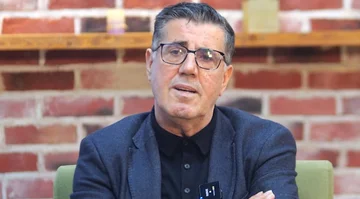
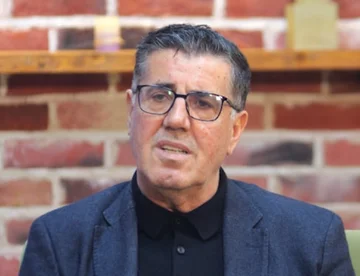
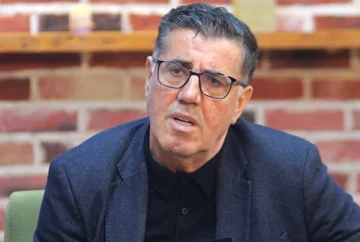
Wolfgang Schomburg (69) has been a judge at Germany's Constitutional Court in Karlsruhe and in 2001 - 2008 the first German judge at The Hague Tribunal. He has also been a judge until 2008 at the International Criminal Tribunal for Rwanda in Arusha.