4 months ago
Serbia not stab Kosovo behind its back

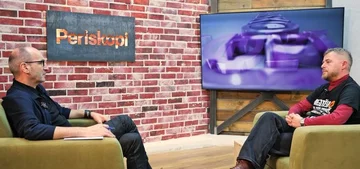
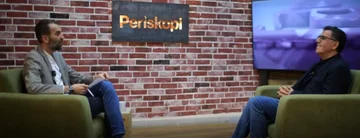
Periskopi(9 years ago)
(9 years ago)American congressionalwoman Eliot Engel, in an interview for Radio Free Europe, says Serbia's approach to Kosovo has been destructive. Speaking of dialogue between Kosovo and Serbia, Congresswoman Engel says that “is good to make dialogue with one country, but when that country goes behind your back and stabs you”. Engel [...]
Engel also speaks of the border demarcation agreement with Montenegro and the possibility of the US being included in the Brussels dialogue.
Radio Free Europe: Mr. Engel, ratification of the demarcation with Montenegro keeps Kosovo citizens isolated. Citizens cannot travel when they want to. It seems that Kosovo has been unable to resolve this issue for years. How do you see the solution, considering that there is a strong opposition in the country against this agreement?
Eliot Engel: I really believe that visa liberalisation has had to happen much earlier. With or without demarcation, Kosovars must have the same rights as people in other countries. I hope the Government will resolve the issue of demarcation, so that visa liberalisation can happen as soon as possible. It's very frustrating when it comes to certain issues, but it has to be taken care of.
Radio Free Europe: The next question concerns the involvement of the United States in Brussels' dialogue on normalising relations between Kosovo and Serbia. Kosovo leaders, the prime minister and president are recently insisting that the United States should be more strongly involved in the final phase of dialogue for normalisation of relations. Should the United States be involved in the final phase of the dialogue?
Eliot EngelYeah, you definitely should, but will you, I don't know. But I think that people here have confidence in the United States and know that if the United States is involved, the interests of Kosovo will be protected.
What we unfortunately have is the fact that we have Serbia, which does not help, in my opinion.
Both Serbia and Kosovo have access to the European Union, while the two countries must make dialogue and have specific goals. It's good to make a dialogue with one place, but when that place goes behind your back and gives you the knife, that's not something to expect. As far as I'm concerned, this is what the Government of Serbia has done in the last few years. They have effectively kept Kosovo outside the United Nations. Of course, together with Russia they've been exiled to U NESTO when we thought that Kosovo would membership, but has lost for 3 votes. A few weeks ago, we had the INTERPOL case, and Serbs still haven't played a good role in this. There have been other incidents when they tried to block Kosovo.
I think that's not okay. If two countries have dialogue, then it shouldn't have to be done behind the back. That's what they've done, in many ways. Honestly, it's time for you to stop with this and that's what I'm talking about. I think Serbia should join the European Union, as well as Kosovo.
I don't think they need membership if they block Kosovo. If they become members before Kosovo, as planned at the moment, how can we be sure that as a member of the European Union, it will not block Kosovo?
According to me, it is not very comfortable that they have certain ties with Russia, which is not a friend of the European Union. Russia is involved in the election process for the president of the United States, as well as in several European democratic states. If Serbia plays those games with Russia, it did not move me to help access the European Union or whatever else. I think they should interrupt this sense and both countries should be accepted simultaneously in the European Union and one state should not block the other country.
Radio Free Europe: Do you think the United States and European allies have a right to say that the formation of the Kosovo Army should happen only with constitutional changes? Should this issue be addressed as soon as possible, especially in the context of Russian involvement in the region?
Eliot Engel: Yes. I don't agree with what they said and did in the United States. Kosovo should have its own army, each independent and free nation, as this is, has the right to have the army. I don't like all these additional obstacles, which go to Kosovo. So this is also an issue we need to work on.
Radio Free Europe: One more thing that Kosovo, but the Western Balkans region is facing, is violent extremism. What is this serious problem even further for the region?
Eliot Engel: We are very concerned about people who have abandoned different countries to fight on the Islamic State side. Now, since the Islamic State has been defeated, a lot of people are returning. Unfortunately, a number of young people from Kosovo have gone there. I think this was wrong, and I hope these returning people learned from their mistakes. But this is no longer a problem, because the Islamic State has been defeated for many practical reasons.
It is very important that young people here sense progress in Kosovo. Young people are fighting for a job because unemployment is too big. We don't want to have what we call “brain drain”, whether the best and wisest go to Germany or the United States, because they can't find work here. There are many things that need to be done here. I'm convinced that this is possible and that this will happen. We will help as we can, because the goal is to keep young people who are wise and who have the potential to help build this country. We don't want them to go because they think that the possibilities are better elsewhere or worse, to go because they think it's the insurgents to join the Islamic State, when we know it's nothing but a terrorist group that wants to kill people. So, I don't think that's good for anybody.
Radio Free Europe: Kosovo is expected to face the biggest challenge, the Special Court for War Crimes. How do you see this Court? Is that an obligation? Is this a one-ethnic institution, as individuals are calling it?
Eliot Engel: It's not perfect, but I think it's necessary. When this issue has come to the fore, I don't think it would be good for Kosovo not to agree with it or to look like it's hiding something. I always engage in truth. If bad things have happened, then we must know them so that they do not repeat themselves in the future.
What we have to do in this region is leave the past behind and head towards the future. That's why I love this place, because that's exactly what people want here. They want multiethnic states and cease the war, which has lasted for centuries in the Balkans. This is destructive for all of us. So, the Government's action on court creation has been a fair act and I think there has been no other choice. Let's do this and move forward to the future.