2 days ago
Russian scientists have developed a water toxin - finding vehicle

Periskopi(9 years ago)
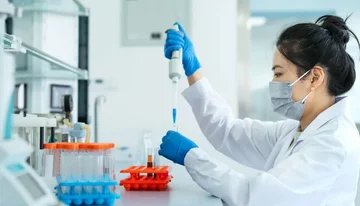
(9 years ago)Scientists from the Federal University of the Far East and the branch of the Russian Academy of Sciences have developed a sensor prototype system that can record even the smallest concentration of hydrogen toxic sulfide in water. According to the university, the system can be very useful for environmental monitoring and medical research. [...]
The new device, which uses biosensors, takes the concentrations of hydrogen sulphide up to 100 microliters (1,000,000 microliters) is equivalent to 1 litre).
The prototype tool uses a biopolymer device equipped with ultrasensive receptors. If it starts to shine, it signals the presence of the hydrogen sulfide, a university press release, reports “Sputnik International” Transmission Periscope.
“In the course of experiments, we created a river sensor system based on protein complexes formed from the introduction of the chemically connected fluorescent CY3 ink and mioglobin proteins in a biopolalmer”, explained Alexander Sergeev, a researcher at the University of Nature Sciences.
The ability to find small concentrations of hydrogen sulfide in water is of outstanding practical importance, since this gas is a by - product of the metabolism of living organisms and decomposing organic matter”, the scientist added.
Sergeev also stressed the practical importance of the new equipment. With the help of this new technology, it is possible to perform ecological monitoring of marine environments and develop a wide range of biomedical research”.
The hydrogen sculpture is a gas present in the water, giving a distinctive aroma that resembles a rotten <x0vesis”.
It is often found in clean water in rural environments, its presence has been known to cause disease, and in extreme cases, even death. Exploration in developed areas is often caused by near production, sewage treatment plants, and such things as oil and gas development. It also occurs naturally in several underground waters.
Research through new technology has become possible thanks to grants from the Russian Science Foundation and the Russian President's Fund for Young Scientists.
In recent years researchers from the Federal University of the Far East and the Far East branch of the Russian Academy of Sciences have created some pioneer technologies that allow for the discovery of dangerous chemicals.
Among their creations is an optical sensor that enables very precise measurements of relative humidity, plovers that receive ammonia, and new tools for the discovery of metal ions in fluids. /Periscopi/