2 minutes ago
Russia or the West This Is Serbia's Answer

Periskopi(9 years ago)
(9 years ago)Serbia says it will continue its policy of walking between Russia and the West, putting its interests first. Serbian Foreign Minister Ivica Dacic, in an interview with Reuters news agency, refocused this stance by referring to statements by US diplomat Hoyt Brian Yee, who warned Belgrade [...]
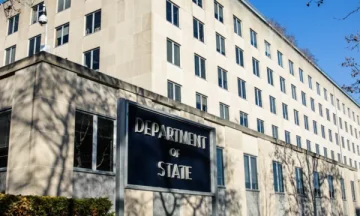
Serbian Foreign Minister Ivica Dacic, in an interview with the Reuters news agency, refocused this position by referring to statements by US diplomat Hoyt Brian Yee, who warned Belgrade “that he cannot sit on two chairs”.
When someone asks us not to sit in two chairs, then he's trying to pull the chair... so we can fall. That's why I don't think we should pay attention to this criticism. It's only likely that we stick to our national interest”, he said.
Many Serbs see themselves as the victim of NATO bombings in 1999 that led to Kosovo's liberation, while Belgrade continues to maintain emotional and cultural ties with Moscow, especially because of its stance against Kosovo's independence, which was declared in February 2008, with the support of the United States and the main countries of the European Union.
Days earlier, Serbia's president, Aleksandar Vucic, said that with US diplomat Hoyt Brian Yee, he had held a fun “ ” meeting, where the main topics were Kosovo and Russia.
He (Hot Brian Yee) told me that you cannot touch Kosovo's entire land, while I told him, you could have touched Serbia's entirety nine years ago. Then there were other rules. That's what I said in his face. He let me know, he said I delivered the message of America. You have to respect it, if you don't... the consequences are known...”, the Serbian president said.
While the Serbian foreign minister compared the Kosovo and Catalonia issue in Spain, said that “if Spain can fight for its concept, then Serbs can fight for their country”.
While targeting integration into the European Union, Serbia has refused to join Euro-American sanctions against Moscow due to its actions in Ukraine.
Serbia's Foreign Ministry officials even warned measures against Ukrainian Ambassador to Belgrade Oleksandr Alexandrovych, who in an interview with the Balkan Network for Investigative Journalism, said that “Russia is exploiting Serbia to destabilise the Balkans and destroy Europe”.
Serbian Foreign Minister Ivica Tonchev's state secretary charged him with “not diplomatic behaviour” and efforts to undermine Serbia's relations with Russia. He said that if such actions continue, Serbia would be obliged to “take steps”.
Political developments in Southeast Europe over the past year sparked growing concerns about the region's instability and Russia's intervention, which no longer sees the Euro-Atlantic integration of the Balkan countries.
The United States has also expressed concern about a centre of emergencies Russia manages in the town of Nis in southern Serbia. Several Western groups and military analysts see it as a camouflaged military base that the Kremlin has set up to oversee American interests in the Balkans.
The Russian centre, originally opened in 2012, is located relatively close to the 40,000-strong peacekeeping force in Kosovo. Part of the international forces in Kosovo are 600 American soldiers.
Moscow requires that its personnel be granted diplomatic immunity, while denying any of its activities except emergency treatment. It delivered six military aircraft MiG-29 to Serbia days ago, while expected to send 30 T-72 tanks and 30 armoured vehicles to Belgrade.
Belgrade, however, is involved in a process of talks on normalising relations with Kosovo in exchange for drawing closer to European structures.
At the beginning of this week, Serbia officially also opened domestic dialogue on the Kosovo issue in search of, as said, “a historic agreement with Albanians”.
The opening of this dialogue, launched by Serbian President Aleksandar Vucic, prompted many reactions in Serbia, where ideas about partitioning Kosovo -- ideas that have been rejected by Pristina.