4 months ago
Renegotiation Renegotiated With Montenegro

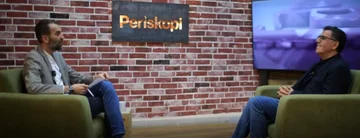
Periskopi(9 years ago)
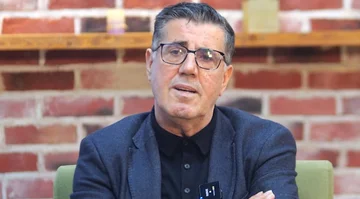
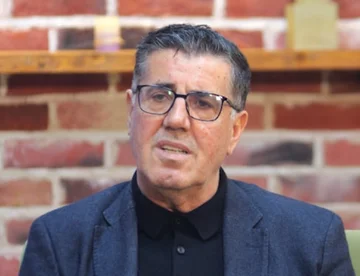
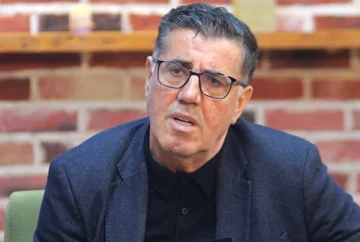
(9 years ago)“Montenegro cannot unilaterally implement the Agreement for Demarcation of Border”, says Vetevendosje Chairman Visar Ymer. In an interview for Radio Free Europe, Ymer points out that Demarketing is an extremely important process in which there must be great caution so that the border line can be determined, not [...]
“Montenegro cannot unilaterally implement the Agreement for Demarcation of Border”, says Vetevendosje Chairman Visar Ymer. In an interview for Radio Free Europe, Ymer points out that Demarketing is an extremely important process in which there must be great caution so that the border line is assigned, not damaging either side. And for Kosovo-Serbia dialogue, Ymer says this dialogue has produced extremely bad and risks for the Republic of Kosovo.
Radio Free Europe: Mr. Ymer, how did you see the closure of the border demarcation process with Montenegro, given the work of the new state commission, which is trying to bring new facts about the 2015 agreement?
Visar Ymer: It is clear that this border demarcation agreement, which was signed in 2015, has been harmful to the Republic of Kosovo on one side, is overcoming the mandate that the world was founded by the Government, which has had a mandate for border demarcation and maintenance. While in the agreement, they have made an appointment of a new border, to arrogance, to postpone this agreement by the past government, and especially from that world, the foreign minister, and now Kosovo President Hashim Thaci, thus violating the territorial integrity of the Republic of Kosovo, but also seriously damaging the welfare of citizens and the country's economy through this agreement.
Of course, this agreement must be, not only from the Republic of Kosovo but also experts from the Republic of Albania to renegotiate with Montenegro in light of the facts that have so far been presented by experts from the Republic of Kosovo, so that the border can be located where it should be, and that neither the territorial integrity of the Republic of Kosovo nor Montenegro is violated.
Radio Free Europe: Montenegro has said this issue is closed since it has ratified this agreement in the Assembly. How can it be renegotiated?
Visar Ymer: Montenegro cannot implement the unilateral agreement. This is also an issue that in the relationship between the two states, the principle of good neighbourlyity must also have reciprocity, understanding, and respect for the territorial integrity of each country. In this direction, I consider the agreement to be uncompliable if the two sides disagree. The Republic of Kosovo, the institutions of the Republic of Kosovo, in light of the new facts to be presented even by the late-founded Commission, would have to keep this agreement from delaying and dismissing it. I think that establishing or re-founding a commission, with the same task, but with a different composition and established by another government, should automatically imply rejecting the agreement because it makes no sense for the previous Commission to be dismissed while the outcome of their work is accepted.
In this direction, I consider that although Montenegro considers this issue closed, the issue is not closed if Kosovo has not closed because, in the end, it is an agreement between the two states and the two states must agree to it.
Radio Free Europe: From the international factor, but also from official Tirana, clear messages have been given for ratification of the current demarcation agreement so that Kosovo can benefit in the visa liberalisation process. How do you get out of the current situation, in terms of a deadlock?
Visar Ymer: First of all, I'm going to say that the process of targeting the border line, of setting an international border line, in this case between Kosovo and Montenegro, should not be an issue exchanged with any other process, nor is there any connection to any other process. This is an extremely important process in which we have to be very careful so that this border line is set, not damaging either side. In this direction, I consider that this interconnection of this agreement -- that is, ratification of this with the visa liberalisation process -- has been unfair and it is an injustice in which we have to work to avoid. Therefore, it must be insisted on European Union institutions, but also on member states, in order to explain that on one side the border demarcation process with Montenegro will be done peacefully. So we have neither the interest nor the intention to damage relations with Montenegro.
Relations with Montenegro, such as the Republic of Kosovo, are very good for us and will continue with the same. But we have a part of the border that we currently disagree about and we will resolve peacefully. Meanwhile, on the other hand, our relations with European Union institutions and the right to freely move for citizens of the Republic of Kosovo should be given on the basis of the criteria used in other countries as well.
So this double standard that is used in this case against Kosovo is both unfair and unacceptable, and on the other hand I am putting Kosovo in an extremely difficult situation.
JOY PARLAMENTAR ABOUT DYALOGUT With SERBIN
Radio Free Europe: Meanwhile, Mr. Ymer, there are many warnings that even the format of talks between Kosovo and Serbia under way in Brussels could undergo changes. Do Vetevendosje see any possibilities or forms involved in this process, taking into account the Kosovo president's public call for a comprehensive team?
Visar Ymer: First of all, we've never done something that's very important for the Republic of Kosovo, and that's to have an institutional, social discussion, in the Assembly, with civil society, with country experts, with the Academy of Sciences and Arts, with the country's intellectuals, in order to evaluate the overall dialogue. So how did it develop? What has brought us, and where is Kosovo behind this dialogue as an independent and sovereign state? We from the Vetevendosje Movement think this dialogue has produced extremely bad and risks for the Republic of Kosovo, which eventually culminated in the agreement to establish the Serb majority community of municipalities, which was practically a Republika Srpska within the Republic of Kosovo.
Second, a parliamentary investigation should be made on how this dialogue has been conducted in Brussels over these years. You know that the dialogue started in 2011 and continued intensively until 2013 and then with a slightly lower intensity until 2015 and the institutions of the Republic of Kosovo, the deputies of the Republic, and the less citizens of the Republic, are not even aware of how this dialogue has developed, which have been the positions of the Republic of Kosovo in comparison with this dialogue, and how these agreements have come to those agreements, which are clearly harmful, and I repeat again with the recent agreement for the majority Serb community, which practically threatened to overturn the constitutional order of the Republic. And in this direction, I consider that without these two things being done, we cannot even talk about what dialogue and when it should develop with Serbia.
On the other hand, the Republic of Kosovo needs a huge need for a dynamic and democratic dialogue for internal development, and in this direction I consider it necessary for central institutions to develop dialogue with the citizens of the country, and here especially with the national minorities living in Kosovo, and maybe especially with the Serb minority living in Kosovo, so that we can talk about the necessity of economic development and the creation of mechanisms for prosperity, economic, social and social equality, even before the law on citizens of the Republic. We think this would be everyone's integration path into Kosovo society, in order to have a society that is dynamic, on the other hand is a sustainable foundation for sustainable development and increased prosperity for citizens.
Any dialogue with Serbia has so far proved that it affects the Republic of Kosovo more and undermines its functionality, rather than creating any environment for integration and common life. While the Republic of Kosovo needs its citizens to live together, for its citizens to be equal, and for its citizens to have jobs, so that through these jobs there will be a well-being and an overall asset that is equally divided. We are absolutely opposed to this way of dialogue with Serbia, and especially because of the lack of principle in it, even because of the topics which are discussed which are asymmetric.
Radio Free Europe: When talking about Kosovo reports, Serbia, currently in Belgrade, the government there has initiated an internal dialogue about Kosovo. What do you see possible for Belgrade to change its position towards the state of Kosovo?
Visar Ymer: But we should see that, of course, this dialogue has already started in Serbia, and in this direction we still have it unclear where this dialogue will go and what the interests or interests of the parties there are developing. I consider that the recognition of the Republic of Kosovo by the recognition of the Republic of Serbia is both the necessary minimum, but also the issue that should not be delayed, because only thus is good conditions created between the two countries. So the principle of good neighbourlyity, which would have to be the principle of the relationship between states in the region where we are, in the Balkans, is possible only after mutual recognition. Without mutual recognition, there is no neighbourhood; hence, there is no good neighborhood.
Radio Free Europe: If we can get back to the Parliament work. Do you expect that during this mandate, the Assembly will be able to overcome a continuing blockade of decision-making when issues that require a majority of two-thirds of the vote come in?
Visar Ymer: I think it depends on what issues we're talking about. We had a situation where 2/3 of the votes were reached when we voted for agreements for IPA funds that Kosovo receives from the European Union. So it's not that the Assembly has been constantly blocked on each subject. The Assembly was blocked when we were staged in protest to defend the Republic, which was then testified to by the Constitutional Court's act of judgment, which is being testified for days of new fate against the Agreement on Demarging the border line with Montenegro. So in this regard, I consider that depending on what issues we will discuss and the Assembly will be functional.
We are extremely interested that in the Republic of Kosovo, in both institutional and social discussion, we focus on two issues that are also priority and very urgent for the Republic of Kosovo, and it is the first to discuss that developed economy that creates jobs for the citizens of the country, and on the other side, to discuss that independent and autonomous judiciary which creates equal justice for the citizens of the country. So these two are missing and without these two, as the main pillars of the state we cannot build state. In the meantime, that other issues that are constantly coming up as our priority are not our priorities, are other priorities of whom, these topics from which citizens of the Republic of Kosovo have seen no benefit.
ME LDK UNKOKED FOR SOME CHOSE
Radio Free Europe: How can you, like Vetevendosje, co-operate with the other opposition party, LDK?
Visar Ymer: Even at this point, I think that the answer is similar depends on what and what co-operation. Of course, we have consistently expressed an interest in co-operation when we agree with different political subjects.
You know, in 2014 we had a joint agreement on creating a government based on the guiding principles of a new government that would bring about change with the AAK and Initiative.
A world, the LDK, changed its mind and betrayed that agreement to go into coalition deals or co-governance with President Hashim Thaci at the time.
Then we had exceptionally good co-operation with the AAK and the Initiative for Kosovo, as an opposition party, at the time we protested against the community of municipalities and on the other hand, against this agreement on demarcation. I consider that the Vetevendosje Movement has proved that it is not the problem of non-co-operation. In fact, others are the problem because in time others are turning their minds toward our cooperation. So, they're moving from principled cooperation and to the good of the Republic to a co-governance and for their own good.
This has first happened to the LDK, now it happened with the AAK and the Initiative. We are, of course, open that on issues which we agree on, which are in the interest of the Republic of Kosovo to co-operate in this case even with the opposition party, which is the Democratic League of Kosovo.