10 minutes ago
Counting Election Results in Supreme, Not Constitutional

Periskopi(9 years ago)
(9 years ago)Political parties and their candidates for mayors should wait until Wednesday, when the Central Election Commission (KQZ) has warned that it will announce the final results if they eventually contest the results in certain municipalities. The Supreme Court, not the Constitutional Court, is viewed as the only opportunity for parties and [...]
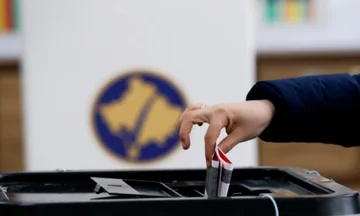
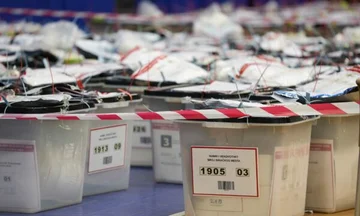
Political parties and their candidates for mayors should wait until Wednesday, when the Central Election Commission (KQZ) has warned that it will announce the final results if they eventually contest the results in certain municipalities.
The Supreme Court, rather than the Constitutional Court, is seen as the only opportunity for parties and candidates if they target the eventual contest of results.
Despite warnings of the results being made Monday, according to CEC spokesman Valmir Elezi, there were other reasons that affected the postponement for two more days.
In addition to complaints filed at the Election Panel for Anxiety and Parashtes about the election process in the Istog and Klokot municipality, Elesi said another reason for the postponement has to do with the fact that Tuesday is a holiday and narrows the gap to political subjects for complaints.
You know, Tuesday, it's November 28th, and as a holiday day, it's a holiday and if we were to announce the results today, the date of complaints would fall on holiday.
So if an answer was required from any subject regarding any possible complaint, there would be prolongime”, Elez said.
Political subjects have warned that they will use legal means to contest the election results in several municipalities.
The Democratic League of Kosovo is not compatible with the outcome of the elections in Pristina and Dragash, while the Democratic Party of Kosovo agrees with the outcome of the elections in Prizren.
Analyst Albert Krasniqi from the Democratic Institute of Kosovo told Radio Free Europe that there are two phases before the CEC, before the whole process of local elections is considered closed.
The first “is the declaration of results, but which are not certified and final, because there is expected whether there are complaints within 24 hours of political parties and their candidates for these results, whether there were irregularities, whether at the Accounting Centre concerning the management of the process or even with the overall results of”, Krasniqi said.
Then, he followed, there are 72 hours of the Electoral Panel for Ances and Parashtre (PZAP) to make a decision about complaints that have been submitted to him.
There are also 72 hours to complain to the Supreme Court about PZAP decisions, and the Court has 72 hours to complete the process.
After all these complaints are concluded, it will be seen if recounting, whether partial or comprehensive, must be required, Krasniqi points out.
In various interpretations, political parties had also warned of the possibility of opposing certain decisions in the election process at the Constitutional Court. Such an opportunity is mentioned especially in the Pristina case, where the LDK claims its candidate for Pristina chairman, Arban Abashi, has been damaged in the process.
But analyst Albert Krasniqi sees little chance that the Constitution will act in the current case. He recalls that in the 2010 elections, there has been a complaint with the Constitutional Court on the part of then AKR candidate Mimoza Kusari-Lila.
But the Constitutional Court had found that it had not exhausted all legal means to file complaints with the Constitutional Court and, in turn, rejected its complaint, because complaints at PZAP and the Supreme Court have gone on behalf of political subject rather than on behalf of the candidate.
The Constitutional Court has considered that only individuals are authorised to submit violations by public authorities regarding individual rights and guaranteed freedoms with the Constitutions. So whether they've been violated or not.
But, in advance, they must remove all legal means. So even in the case of the current election, his complaints have gone down. PZAP is heading towards the LDK and not as a candidate. Therefore, it is likely to go the same way as with Mimoza Kusari-Lila”, Krasniqi has estimated. Local elections in Kosovo are held on 22 October.
On that date, the mayors of 19 municipalities and new Asamps were elected in the 38 municipalities of Kosovo. While 19 municipalities went to the runoff in the mayoral race, revote was already organised in Klokot.
According to not yet final results, in the mayoral race, the Alliance for the Future of Kosovo has won in 8 municipalities, the Democratic League of Kosovo in 7, the Democratic Party of Kosovo in 5 and the Vetevendosje Movement in 3 municipalities, including Pristina, Kosovo capital and Prizren, the second largest city in Kosovo, the New Kosovo Alliance and the Initiative from 1 municipality, while in 2 municipalities have won independent candidates.
Meanwhile, from minority communities, the Serb List has won in 10 municipalities and the Turkish Democratic Party of Kosovo in 1 municipality.