4 minutes ago
Regon Thaci: Don't make any misunderstandings, this is the truth of my Special talk.

Periskopi(9 years ago)
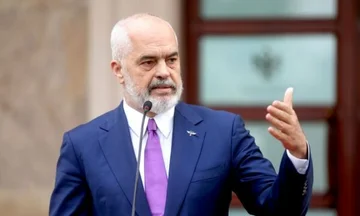
(9 years ago)Kosovo President Hashim Thaci has published his full speech, delivered to the Special Court days ago. He through his Facebook account has occurred about different criticisms and statements that Thaci has changed his attitude about the Special. The reactions of his speech, Thaci has called them deliberate. Look [...]
He through his Facebook account has occurred about different criticisms and statements that Thaci has changed his attitude about the Special.
The reactions of his speech, Thaci has called them deliberate.
Here's a full Facebook note:
Dear citizens,
The following can be my word held on October 9, 2017, at the conference on the release of the report “The Special Court's public perception: risks and possibilities”.
Surprisingly, this talk, based on the findings of the published report, has sparked a broad public debate and has been conveyed with various comments and reactions.
At worst, some of the reactions to this talk are the result of deliberate misunderstandings.
That's why I'm publishing it as a whole. HTH
Shit.
Today is a new opportunity to discuss a matter as important as is one that is now known in the daily jar as “Special Court”.
We have already testified that we will touch every subject and discuss every subject.
We have testified that there will be no taboo in our society.
Because we know where there is no communication, there is conflict. Where prejudice and ignorance prevail, there is conflict.
Today we're going to discuss the “Special Court”, about what we know and what we don't know about it, what we expect from it, but above all about what impact it can have on our society.
As your findings show, there are malnoforms, non-real expectations, deliberate disinformations, for what it is and what the Special Court will bring.
Under such circumstances, it is unlikely that the Special Court will manage to do what it intends, strengthen the sense of justice for the victims of war, but also for all those engaged and continue to engage in justice and equality before the law for all.
The war in Kosovo has ended nearly two decades, but many wounds from the war remain open.
Remember the sorrows of families of homeless people who have not yet found themselves at ease.
Remember the victims of sexual violence that have only now agreed to be known as victims and to understand their suffering.
But that is also true of families of victims who have not yet received justice for their suffering.
We have marked important steps in the right to justice, the right to know, the right to reparations, and the building of mechanisms that will ensure that war will no longer be repeated.
When we are at the right to justice, there are five mechanisms that have been operating in Kosovo already and two decades with an international executive mandate.
Kokova courts, UNMIK courts, EULEX courts, The Hague Tribunal, and now Special Court.
Despite all the effort, there is still a feeling that not enough justice has been done. Non-real expectations for the Special Court may cloud her efforts.
Consequently, this will diminish confidence in the entire justice, Kosovo and international system.
Your research has revealed many of these challenges, but it also gives recommendations on how to deal with these challenges.
But not only should Special Court itself be included in this campaign, but politics, state institutions, civil society, media, academic world.
The Special Court is an advantage for Kosovo. An opportunity to strengthen the sense of justice in Kosovo.
Let me start discussions about your report on public opinion perceptions about the Special Court.
In general public opinion in Kosovo and international relief factors, my publication of Dick Marty's report has not been accidental, but politically motivated.
A quick and quick vote on the Council of Europe has not been random, at the time when negotiations were held in Kosovo for the creation of the new government.
The publication of parts of the report in advance on several influential international media from the Russian oligarchs in Kosovo is understandable why it happened.
Untitled, the report for <x0fik organs from the Kosovo leadership” this report would have no meaning, either in the international public opinion or in the same way that Carla del Ponte's book would have meaning without referring to the realm of the ghost, the Yellow House.
The report is an expression of resentment toward the contribution of the United States of America and members of the Kosovo Liberation Army. This was no accident, because it was written by a man who was opening up against NATO bombings and Kosovo independence.
With the report being released, I declared that we would sue Dick Martin, while the senator was known to have Euro-deputes immunity, so the indictment did not happen.
Kosovo institutions responded with the highest state and democratic responsibility. They gave support to international justice for the investigation.
The decision to establish the Special Court came as an international political need, of international actors, rather than for justice.
Our admission took place under international diplomatic pressure circumstances on the part of our international partners, with the reasoning that we should have “satisfaction” Belgrade and Russia, lest this issue be delegated to the UN Security Council.
In order to maintain strategic partnership with the EU and NATO, I agreed to lead an unfair historical process towards Kosovo, despite the massive political opinion on the Court.
) We were promised by the international community that we could apply for membership in the Council of Europe, which would happen, rapid visa liberalisation, which we would have massive support for U membership. NESTO, that we would establish the Kosovo Armed Forces quickly, as well as have new recognitions.
Kosovo took word to establish the court. The international community failed to fulfill any of these promises, but Kosovo found the Euro-Atlantic journey difficult.
Kosovo, like no other country in the region, collaborated with international courts.
Contrary to Serbia, Bosnia and Croatia is already known as all accused surrendered voluntarily to The Hague.
Kosovo was shown the game, but was mostly punished.
A friend of mine who is here, discussing the special court told them that she is a hybrid court. He responded Jo is not hibdrid, because only the laws are of Kosovo, prosecutors and judges are international, while 80 thousand information, reports and files have been submitted by Belgrade, including parts from Dick Marty's report.
As far as the Court is concerned, we need to say exactly what we know. The Special Court will consider only claims filed for war crimes and crimes against humanity, as far as I know.
The Special Court has maximum and mutual co-operation with Serbia and the War Crimes Office in Belgrade, provided these stated by the Court, but also by Belgrade authorities.
With Kosovo, co-operation is minimal, symbolic and unilateral. Let's not say there is any co-operation at all, there is minimal procedure information from the Court for authorities from Kosovo.
Authorities in Belgrade claim they know who will be charged and why he will be accused by Kosovo Albanians.
I want to express consideration for regional governments that have collaborated with the Court, for Albania and Montenegro.
So we should say what we know and say correctly.
The Special Court will deal only with alleged crimes only individuals from UCK.
This results in your findings that about 80 per cent of citizens see it as unfair and lack faith in the Court, while Serbs fully believe because they are correctly informed that no Serb will be charged.
So it's an ethnic court.
Over 50 per cent of citizens are willing to throw themselves into protests, because they are aware that this Court will only deal with Albanians and no Serbs.
Thus, none of the 400 massacres committed in Kosovo by the state of Serbia will be considered.
None of the cases of over 20,000 women's violations in Kosovo will be taken care of.
There is no case of 12,000 Albanians killed, nor of the 2,500 missing Albanian persons.
This court will not deal with any of Serbia's crimes in Kosovo.
As president of the country, I am committed to truth and reconciliation.
But, the Special Court will only be one point of justice in the sea of injustice in Kosovo.
Is the question being asked will the truth be revealed and that bring interethnic reconciliation?
I spoke up.
Your data speaks that Albanians as much and as accurately as they are being informed, their discontent is growing, while in Serbs and Serbia, enthusiasm is growing.
In my opinion this is hurting Kosovo's interethnic reconciliation efforts and social and political stability.
We all speak and work so that no one is above the law.
Now this message by Albanians is seen with considerable distrust, because being an ethnic one, they are realizing that the perpetrators of genocide over the Kosovo population are immune.
This court is thought to bring a measure of justice to Kosovo.
I'm sure it will bring meaningful dialogue, as you have noted, about historical facts about the period of war.
In a debate that one of my students had these days addressed: This court may result in the deprivation of certain individuals from freedom for a certain time, but not justice and interethnic reconciliation. According to him, the Court will split even more Albanian and Serbian communities.
Whether it will have a positive political and social impact is expected to be seen.
Thank you.