2 minutes ago
Two parties elections in Kosovo cost over 10m euros

Periskopi(9 years ago)
(9 years ago)Over 10m euros have cost the state budget to two parties of elections that were organised this year in the country. But whether the country is being damaged when their organisation is at high cost, election monitoring organisations say whether the political class chosen by citizens is responsible [...]
But whether their organisation is being damaged with high costs, election monitoring organisations say if the political class chosen by citizens is responsible then the millions divided for elections can be recovered.
Albert Krasniqi, of the Kosovo Democratic Institute, tells of the reasons why elections are cost-effective, but according to him, the problem lies in irresponsibly leading to the election organisation.
If we choose a political class that is more responsible and can generate a better economy those costs we make for elections can recover, but the problem is that it leads to irresponsability which leads to election organisation often where it is being made to total personal whims for the current calculations of political parties and is not seen as a need to receive a confirmation of the support of the citizens, Krasniqi said.
In contrast, Arton Demhay from the Organisation “Arise”, estimates that the cost for the election could amount to up to 7m euros but says Kosovo's budget and society is high.
<x0m-Normically, the elections are expensive. I'm thinking the minimum that a set of choices can afford to go up to seven million euros, and that's normal and it's a cost that our poor budget and society is cost-poor is high, but when elections are asked, I'm thinking, this costs should be exhausted, but when we're dealing with extraordinary or premature choices that somehow falls down to the budget, because there's a tendency that's been kept more often held before being maintained, and the cost of the budget that is normally weighing the poor budget is always saying, Demas Deb.
Demhaja claims that two sets of elections always burden a country's budget.
“Normically it's high cost because we're talking about several million euros that have been spent on both sides of the selection and normally burden the budget, but still when we talk about fair elections, they need to be maintained and planned to keep, but when we talk about extraordinary elections it's an extra burden that has not in some way been prepare. But always when we have two sets of elections is the biggest budget burden because we are talking about a total of over 10m euros that can be spent on two electoral processes, he has said.
While the amount of two elections has cost over 10m euros, for organising the second round, The CEC will not need an additional budget, as in the budget earmarked for local elections, the possibility of the runoff is also planned.
Valmir Elezi, spokesperson for the Central Election Commission, has told of honours.info that 6.1m euros are planned for local elections, with the possibility of second round being planned under that amount.
“In the Law for Business for 2017 approved by the Kosovo Assembly, 6.1m euros are planned in the programme for local elections. Under that amount, there is also the possibility of having second round of elections”, Elez said.
Asked how much of the means are spent in the October 22nd elections, given that the second round of elections will be held on November 19th after half of the municipalities have gone to the runoff, Elez has said they do not yet know that.
We don't know yet. We'll have to wait for the report later”, he said.
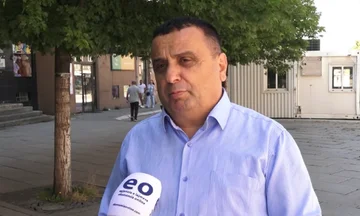
Hakki Shatri, an economics connoisseur, says elections are high costs, but expenses are necessary.
The “is true that each set of elections cost about 5 or 6 million according to the experience we have so far, but it's the necessary expenses because we're set for the rule of law, we're defined for political pluralism, and elections are a version that ensures that this is the definition of ion “, Shatri stated.
In the October 22nd elections, citizens' exit to the elections was 43.68 per cent, until the amount of means earmarked for this election is planned to be around 6.1m euros, including the runoff in 19 municipalities.
In early elections held on 11 June, the budget that has been set aside to organise elections has been around 5m euros.