8 minutes ago
Why does Kosovo have more voters than residents?

Periskopi(9 years ago)
(9 years ago)Kosovo remains among the rare countries or the only ones, which have more registered voters than residents. The number of eligible citizens, including persons over 18 years of age, according to the Central Election Commission's list, is 1 million and 890 thousand voters. While the number of Kosovo's population, according to the statistical yearbook [...]
Kosovo remains among the rare countries or the only ones, which have more registered voters than residents.
The number of eligible citizens, including persons over 18 years of age, according to the Central Election Commission's list, is 1 million and 890 thousand voters.
While the number of Kosovo's population, according to the statistical yearbook of the Kosovo Statistics Agency, in 2016 is over 1 million 783 thousand people.
But this list, consists of the general resident population, where the number of those living outside Kosovo is not counted.
Such a sharp distinction between the voters' list and the number of residents, according to political and economic states, shows that the percentages presented about the citizens' fair voter turnout in elections, is not sustainable.
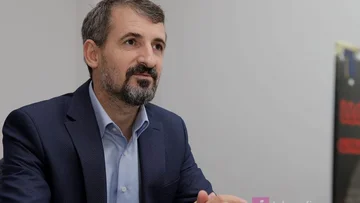
Former chief executive of the Central Election Commission, Adnan Merovci, told Radio Free Europe that the credibility of election results depends on the credibility of the voters' list.
Praising the list of incorrect voters, he says the list includes persons who have died, exiles and the number of minorities, namely Serbs, never known the exact number.
“This means that, if the CEC says that about 44 percent of local elections have participated, then we can freely say that over 60 percent of voters have participated in the elections, considering the number of residents and voters”, says Merovci.
Even the professor at the Faculty of Economics, the former director of the Department of Social Policy in the Kosovo Statistics Agency, estimates that around 150 thousand people are more represented on voter lists, including citizens living in the diaspora.
Bellaqa says it is necessary to clean up voter lists from deceased persons.
If we analyze statistical figures, using the population rating report published by the Statistics Agency of Kosovo, referring to the job force survey, where according to that poll the number of working-age population aged 15-64, as well as using the number of basic pensions and taxpayers, turns out that in Kosovo, more than 1 million and 700 thousand people are eligible. It means over 145 thousand voters are more”, Bellaqa says.
In contrast, the number of people under the age of 18 who have no voting rights is represented by 375 thousand (including the number of children in preschool institutions, elementary and high schools for 2016/2017).
And in 2016 the death toll reportedly was about 8 thousand and 500 percent.
However, in the diaspora census, the process launched by Kosovo authorities years ago, by September last year, has registered over 400,000 citizens.
On the other hand, Adnan Merovci says the difference between the number of residents and the voter list should be seen as distressing, as, he says, this number is potential manipulation.
“The struggle to eliminate this is well based on political will. We're talking about electoral reform all the time, but when the time for reform is coming it's not today. But we keep quiet. We go to elections, we start campaigns, we do many legal violations. And when elections end, we sleep. When I say we, I mean political subjects, civil society, because even this one has to say the word of” itself, says Merovci.
As for the number of voters, even the European Union's Monitoring Mission, has asked competent authorities to automatically issue death certificates in the future, not at the request of family members, as currently conducted in Kosovo.
Meanwhile, Central Election Commission Chairman Valdete Daka has said that this issue should be settled institutionally, since it does not belong to the CEC. / REL/