4 months ago
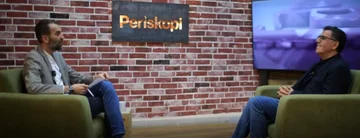
The interview with the literature nobelist, Kazuo Ishiguro: “I thought books would not survive in the period of television”

Periskopi(9 years ago)
(9 years ago)Kazuo Ishiguro is the author of five novels, including the “The Remains of the Day”, which won the “Booker Price” and became an international cyber-seller. His work has been translated into twenty - eight languages. In 1995 he received the Order of the British Empire for Literature, and in 1998 he was named Chevalier de IOrdre [...]
Kazuo Ishiguro is author of five novels, including “The Remains of the Day”, which won “Booker Prize” and became an international believer. His work has been translated into twenty - eight languages. In 1995 he took it The Order of the British Empire for literature, and in 1998 it was named Chevalier de lOrdre des Arts et des Lettres The French government. He lives in London with his wife and daughter.
His last novel “Never let me go” [scoffs. Never let me go” is a story about friendship and love. As a child, now 30-year-old Kathy lived in Hailsham, a private school of a picturesque English village where children were also sent from abroad, who were convinced that they were special and that their well-being was cultural not only for them, but also for the society they were going to participate in. Kathy had left behind this idyllic past, but when two of her friends reentered her life, she no longer resists the strength of memories.
Thus, when friendship with Ruth is revived, just as the feelings of earlier adolescence for Tommy begin to deepen and make her fall in love, Kathy reminisce of her time in Hailham. It describes happy events of boys and girls growing up together, in the untraditioned-even-even comfortable isolation of them. But it describes other events of the pashtu - of contentions and misunderstandings behind the dark educational facade of Haylsham. All three friends are thus forced to face the truth about their childhood and their actual lives.
What was the starting point? Never let me go?
In the past fifteen years I have repeatedly written parts of a story about a strange group of students in an English village. I never knew who these people were. I just knew that they lived in ruined farmers' houses, and although they did things typical of students fighting about books, working on essays, falling and getting into love there wasn't a campus for them or their teachers. I knew a strange fate would follow these young people, but I didn't know exactly what. In my studies, I have many parts of this brief, some dating back to 90. I would like to write a novel about my students, but I never went any further than that; I always found myself writing something completely different. Then, about four years ago, I heard a radio talk about advances in biotechnology. He usually stopped the radio when they started talking about science, but this time I heard it, so the incident with the students took place in my mind. I could see a way of writing that was simple, but pretty fundamental, about the sadness of human conditions.
This novel is located in 20th century England. Yet, it contains a certain disstopi, a fantastic dimension that is usually found in future stories [such as Brave New World]. Were you somewhat tempted to put the account in the future?
Never. Maybe this is a little personal. I don't get too excited by future stories. Besides, I don't have enough energy to think about what cars or stores or what other things there would be in future civilisation. And I didn't want to write something that would be misunderstood as prophecius. I would rather write a story in which each reader would find his own life in one way or another.
I've always seen the novel date somewhere in the '70s or '80s, which is the time of my youth. It's a long way off the Rolls Royce book.The Remains of the Day. I've always thought of England on a cloudy day, with fair fields, with few sunshine, dark streets, abandoned farms, and empty roads. Except the memory of Kathy's childhood, when she could have some sun and vitality, I wanted to paint England dreary, with a cool beauty that I could relate to rural areas and to semi-enlightened villages by the sea.
And yet, you might say that there is a novela dimension, either a coder or afantacir. But I think of it as an alternative story. It's more like: “What if Hitler had won?” or “What if Kennedy hadn't been killed?” Novela offers a version of Britain that could have existed at the end of the 20th century, if only one or two things had gone differently on the scientific front.
Kathy, the book's narrator, it's not nearly like some of the past Narrators [such as those in The Remains of the Day i n When we were the Orphans. When we were orphans... And it seems more reliable for the reader. Was that some sort of a preconception on your part?
One of the dangers you should consider as a novelist is repeating what you have said well in the past, except for the sake of their repetition. I've been praised in the past for the incredible, self-deceitive, and emotionally unstable narrators. At some stage it can be said that this was my distinctive trait. But I have to be careful not to mix my narrators with my identity as a writer. It's so easy, in all of life's steps, to be trapped by things you once got high esteem from.
I can't say that one day I won't use those narrators again if I have to. In the past, my narrators were incredible not because they were lunatics, but because they were ordinary self-dignified. When they looked back into their busy lives, they found it hard to see things in a completely right way. The self-deception of that kind is common to most of us, and I really wanted to explore that topic in previous books. But Never Let Me Go It's not of that kind of self-deception. So I needed a different narrator. An incredible narrator would ruin me.
Was it a different experience of writing from a religious perspective, and was it also difficult to write in the everyday language of the days-moden that in the formal language of the past time?
A: I don't care that much when I use a female narrator. First novel published, A Pale View on Hills [scoffs. A pale view of the hills was also shown by a woman. As a youth, I used older Narrathors who had lived in cultures quite different from mine. There's so many imaginary things that need to be done to realize an inferior character, and that only makes sex one of many things to think about and maybe it's not even one of the biggest challenges.
As far as style is concerned, well, she's somebody who's told in England today, so I had to do it right. There are technical things, like when actors exercise emphasis. The challenge is not to reach a voice that is more daily, or formal. The challenge is to present the character of the narrator. It's in finding a voice that allows the reader to respond to character not only through what he or she does in the story, but also in the way he/she speaks or does.
This novel, like most of the others you wrote, is shown through the memory filter. Why is memory so important to you?
I always liked memory. I like how a scene taken from the memory of the narrator mixes with all sorts of emotions, and it's open to manipulation. You're not simply telling readers: “this-and this-this happened.” You also ask questions like: Why did she keep that event in mind at this moment? How does he feel? And when she says she doesn't remember exactly what happened, but she tells us again, how much should we trust her? And so on. I like these delicate things that can be done through someone's memory.
But I have to say I think the role of memorizing in Never Let Me Go It's much different than in your novels. To Remains of the Day, The memory was something to look for through great discretion for those indisposed turns, for those sources of regret and regret. But in this book, Kathy's memories are more likely. They are basically a source of comfort. As she loses her time as the world is emptied of things that are dear to her, what she is caught up with is her memory of her two childhood companions.
The environment for the first chapter of the book is a school dorm, where you get a good grasp of the pressure of other people's eyes and consciousness in being children in that environment. Did you dig into your past on this? Have you had any other direct sources, like your daughter?
I've never been to boarding school, and my daughter doesn't go now too! But of course I dug into my memory of being a child and a teenager. And although I haven't inspected my daughter or her friends, being a parent affects the way I portray children.
But besides, I can't find a scene in that school based on my own events or my relatives. When I write for young people, it's the same thing as when I write about older people, or any other character that is very different from my culture and experience. I make it impossible to feel the way they feel and then see where this leads me. I don't think kids make any special demands on me as a novelist. They're just characters, characters, like everybody else.
The school environment, I have to add, is attractive because in a way it is clear physical manifestation of how children are separated from the adult world, and they are given small pieces of information about the world ahead, often with large doses of fraud. In other words, it serves as a good metaphor for childhood in general.
You've sometimes written scripts, including for the movie. The White Counts [White Count] And you've already seen your book The Remains of the Day to make a movie very popular. What about you? The relationship between cinema and novel? Is it productive or dangerous for a carpenter to work in both things?
It's so different to write novels and write about cinema. This is partly because writing novels is my trade, my job, and I'm kind of an enthusiastic amateur when it comes to scenarios. One key difference is that for the cinema, the story is basically shown through images and music words are just kind of an extension. In your novel, words are all you have. But these two forms of art have a lot in common, of course, and it's understandable that you can learn a lot about one another.
You said I wrote a script.The White Countys and I worked together in a movie published last year, the most sad music in the world.Oh. I get off the scripts because it's part of a collateral process, co-operative. It's a little unhealthy to write novels all the time. A novelist does not cooperate in the way musicists or theatre people do, and in time the lack of new influences can become dangerous. For me, working in a movie, with directors and actors, and maybe with other writers, it was a good experience to get influence from abroad.
I often wonder if I care that writing scenarios would make my novels like scenarios. But I think exactly the opposite. When I look back, my first novel, A pal view of Hills, I find that something similar to the technique used for scenarios. It moves forward from stage to stage, with short dialogues, with short descriptions of the environments, etc. But only after I finished that novel, I wrote two scenarios for the 4th Channel of British Television, and that made me very aware of the differences between writing and writing and writing. I was disappointed with the idea that I could write a novel that could be a movie. Then I felt that novels wouldn't survive as a form that they wouldn't be able to compete with TV and Cinema if they just focused on doing things that novelists do. Since then, I have been trying to write books that offer a whole different sense of what you can get in front of a movie screen or a TV screen. You can say that I want to write novels that can't become movies though I've been sharp enough to discuss the possible adaptation to film as soon as I finished a book! But when I write, I want my novel to be just novels, and the scenarios are just for film. ) - What?
October, 2005