6 minutes ago
Elections, institutional vacuum impact Progress Report

Periskopi(9 years ago)
(9 years ago)The European Commission's Country Report for 2017, known as Progress Report, unlike the current practice of publishing in recent months of the year, will be published in the coming year, Kosovo Government Ministry of European Integration officials say. The report, according to them, is expected in April of the year [...]
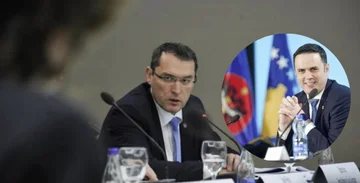
Demush Shasha, secretary general of the Ministry of European Integrations of the Government of Kosovo, speaking of Radio Free Europe, says that now about a month and a half, this minister has distributed all questions to the responsible institutions.
“Viti 2017 has been an election year, so this will be highlighted in the Country Report. But, at the same time, there has been concrete progress in some areas since the start of institutions. If we talk about rule of law, in this case, there has been a concept - document for the suspension and departure of officials who are involved in acts of corruption or organised crime and will leave public service. If it is about the Law to prevent conflict of interest, the government has already approved it. There have been a number of actions that the Government, in the short term has undertaken and we believe all of this will be reflected in the framework of the Country Report, as the immediate progress that has begun after the founding of the” institutions.
On the other hand, Emrush Ujkan, European Law professor, tells Radio Free Europe that the political crisis, which was followed by local elections, holding these elections, as well as local ones, has taken time, which can hardly be compensated for fulfilling obligations, primarily towards Kosovo citizens, but also in meeting the requirements stemming from the European agenda.
“Progress Report for Kosovo, I expect to address in the first place the issue of political instability, referring to institutions or institutional crisis, which has described Kosovo during 2017. Of course, then, the legislature's inability to issue necessary laws -- lack of ratification of the agreement on demarcation with Montenegro -- lack of empowering rule of law. The problem with implementing agreements with Serbia will likely be highlighted, without forgetting even the impasse in economic development, adequate reforms, implementation of the Stabilisation and Association Agreement”.
Professor Wolfani has added that there is still time for the country's institutions to adopt some of the laws and policies. But he has expressed a skeptical attitude that will happen.
The fact that we have a majority (parliamentary), which sometimes is close to numbers, may even be an obstacle. We will see how the Assembly will function in adopting these laws. I'm not very optimistic, although I would like to have a bigger dynamic, especially in adopting and changing laws, which are necessary”.
But Shasha expressed the view that one of the main difficulties is implementing legislation, although, as he says, legislative activity must be continued and the legal framework must go towards advancement in all sectors.
“Therefore, I don't consider that much of an obstacle, in the framework of the integration process, the lack of adopting new laws or meeting the existing laws. Important is effective implementation of the legal framework in force”, Shasha said.
He has added that European Integration Minister Gift Hoxha, on 3 November, will make the delivery formal of answers to the Country Report. Also, according to him, early next year there will be an opportunity for reporting on additional developments.