13 minutes ago
Election Reforms Remain in Review

Periskopi(9 years ago)
(9 years ago)Election reforms are necessary for Kosovo, say representatives of civil society and those of the Central Election Commission. Despite the fact that the country is going through election processes, reforms launched to change the Law on General Elections and for local elections are needed, they estimate. At the Central Election Commission [...]
At the Central Election Commission, they stress that existing laws have served to organise elections, whether parliamentary or those at the local level. But, according to them, reforms remain a goal for the future.
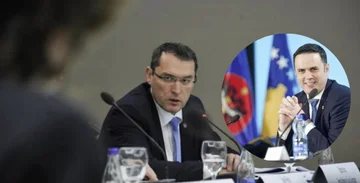
Central Election Commission Chairman Valdete Daka tells Radio Free Europe that in the current election process, lack of reforms will not affect the election.
Because we have now entered the process, I don't believe it has any impact [the lack of reforms]. It would be good to get done, because there are several issues, which would obviously have changed the circumstances, but now we've entered the process and there's no point”, says aka.
According to her, a proper reform would first help with certificate and decetification, but much more.
Swana Hapciu-Alijaj, project manager in the Development Democracy organisation, considers that competent Kosovo institutions are failing for years to adopt electoral reforms, as it is claimed.
She thinks this issue should be a priority and turn into a work schedule on responsible mechanisms.
Even in the June 11th elections, in addition to the fact that there were extraordinary elections there were no major irregularities. I can't believe that this time in local elections, as a result of lack of reforms, will have some negative effect. However, looking at the longer term, electoral reform must nevertheless be turned into agenda and initiatives that have been so far, not left in half, but continued and postponed before”, Alijaj estimates.
Kosovo President Hashim Thaci formed two working subgroups last year, one for amendments to the Constitution and another for electoral reform on both levels -- central and local.
In addition to reforms, he had also called for the adoption of the Code, which would help re-deciplify the political scene in the country through, as he has stated, the failure of all those under investigation to take public office or run in elections.
During November last year, the president organised the holding of two meetings with representatives of several political parties and civil society.
But, Swana Hapciu-Alijaj, who has been part of these groups, says that for the outcome of the work in this group, there is still no concrete response from the presidency.
“As part of this working group, we've given our proposals, which we think should be addressed. This initiative launched by the president and we have called as the organisation [D4D] for this initiative to be delayed and even continued and addressed by the Kosovo Assembly”, Hapciu-Alijaj points out.
Election reform is expected to also determine the number of election areas, as well as the issue of open or closed lists.
President Thaci's proposals are constitutional changes in terms of electing the president through popular vote and reducing the number of MPs, respectively, that the Assembly in the future will not have 120 seats, but 100 seats.
Also, through reforms in the future, Kosovo is expected to recognise both national and constitutional minorities and Montenegrins and Croats. Even these minorities, it is thought, would then seek seats in the Assembly.
However, for the reform vote in the Parliament, particularly the Constitutional ones, support of minority communities will be needed because double voting will be required, respectively, for reforms to receive 80 deputies' votes and two-thirds of minority votes.