an hour ago
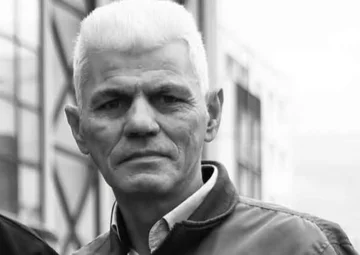
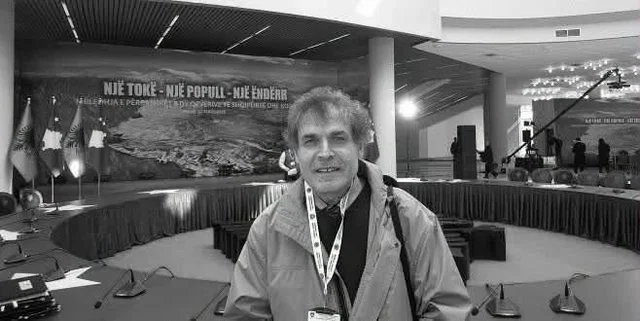
Behlul Jashari, resister forgotten by Kosovo and Albania
Periskopi(an hour ago)
(an hour ago)One of the best-known Albanian press journalists of the past 90th century, Behlul Jashari, has been separated from life.
The news has been made known by Demas, his brother, who has long lived abroad. Then they have expressed tribute to colleagues of his day, as well as young people, as well as some journalists ' organisations. Yesterday, he has comforted his escape, and Kosovo Prime Minister Albin Kurti, in a post on Facebook.
Behlul Jashari belongs to that plejades of Kosovo Albanian journalists who have tried it in their own skin and family, the violence and persecution of the Serbian regime, namely, that he did the task of reporting.
A representative of the literary talent shed of the 1970s, when it was the golden time of Albanian intelligence in Kosovo, Luli, as friends of his acquaintances called him, was called to the most important historical newspaper of Albanians in Kosovo-Rystalve.
Where she worked for a long time until her closure following the assessment of Kosovo's autonomy and its institutions by Slobodan Milosevic.
The Renaissance, with part of its journalists and other employees, moved to Tirana to publish in the line, meanwhile Behlul Jashari remained in Pristina. The reopening of an Albanian-language newspaper after the brutal violence of 1989 was a very difficult challenge, with major consequences for personal and family life.
But Behlul Jashari agreed to run the daily „Buyku”, a media headline that only logo was hidden under an agrarian organ, as it was a completely informative and political newspaper. For a long time, the Bujku run by Behlul Jashari remained media that reported all the resistance of Kosovo Albanians in the first Republic of Ibrahim Rugova.
Which Luli conveyed day by day to day in the Albanian Telegraph Agency's updates, which were immediately translated into at least two foreign languages: English and French, were conveyed worldwide.
These chronicties, which are common in internet archives, are a conventional and complete archive of the history of Kosovo resistance, written in a Western professionalism, where every emotional color or side content was missing.
Behlul Jashari was the only journalist to report from Pristina on the night of March 24, 1999, when NATO bombed the military targets of Slobodan Milosevic's machine.
Some of these targets were in the heart of Pristina: the most important were the headquarters of the Yugoslav Interior Ministry, the Republika Serbia Police Command, the secret service headquarters and the Yugoslav People's Army Command.
In a word, a large arsenal of bombs were dropped in Pristina, which, unlike Belgrade, where people were terrified, joy and enusiasm broke out in the Kosovo capital. These very moments were conveyed with full detail and accuracy by Behlul Jashari for ATSH.
The report is an opissary, since it is hidden in a flat that is not followed by the Serbian Secret Service, Behluli sends the sheet in which he wrote his reporting in Switzerland, faxed to his brother. Which is forwarded to Tirana to the Albanian Telegraph Agency. Which in time lightning is published by one of the most popular journalists, the late Maxi Sinemati, who also translates lightning into English and French in time. Luli's news will most likely be the first report from the site on the 24 March 1999. Thus marking a very important historical record for both Kosovo and Albania.
Behlul Jashari was a gentle character, humanist, a hedonist who did not complain about the suffering of the regime and life. He was both a kind and a philosopher. It is no coincidence that Ibrahim Rugova had both political and human chemistry.
After Kosovo's liberation, Renaissance reopens in Pristina, run by nearby people The KLA, which led a prominent political prisoner and journalist. Behlul Jashari went on and went on until the Renaissance came, with no problem with the new bosses, having no problem working with them. It led to the closure of the paper as a result of bankruptcy, but since then no one promised the media, whether public or private, of Kosovo, saw fit to bring one of the country's best-known journalists.
As the new times did not require a professional chronicst, but journalist „mistrec” that fits the new polarisation that Kosovo entered into the fierce political struggle, negatively imitating Albania.
ATSH, in the so-called reforms it made to reduce its staff, the first office to be cut was Pristina and Behlul Jashari. Even though it was the only correspondent abroad and the best-known international firm.
Tirana and official Pristina, the two Chancellors that Behlul Jashari served and increased their reputation in his reports, forgotten and removed. But Luli did not care too much, since his writings had not paid him a reward or a medal. Those high-value reports are there, being the memory of a golden period for Albanians, who have the Behlul Jashar firm. Which, he will never forget, because he is the chronicler of history...