6 minutes ago
Turkey arrests over 200 people before NATO summit
Periskopi(an hour ago)
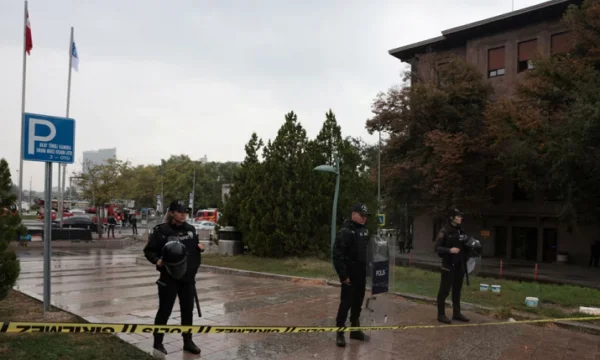
(an hour ago)Turkish police said on Tuesday they have arrested more than 200 people suspected of links to the militant group, the Islamic State, and with banned groups of the extreme left.
The operation was held on the eve of the NATO summit, to be held on 7 July and 8 July in Ankara.
The Prosecutor's Office in Ankara said 209 people have been detained in the capital, while another 32 remain on the run.
Of those detained, 185 are suspected of membership in several extreme left organisations named terrorist by Ankara.
Among them is the Revolutionary Centre of People Liberation (DHKP-C), which in the past has claimed responsibility for several attacks in Turkey.
Authorities said the operations targeted several groups, as part of broader security measures.
The Ankara Governor's office announced late Monday the ban on all protests from June 28th to the end of the NATO summit.
The summit is expected to gather leaders of 32 member states, including American President Donald Trump.
It will develop at a critical moment for European and Euro-Atlantic security.
In recent months, the Alliance has also come under pressure because of changes in US politics, which go beyond demands to strengthen NATO's European pillar.
Summit priorities are expected to include: defence and prevention planning (deterence); targets for defence spending and burden sharing among allies; further support for Ukraine, including delivery of equipment, financing mechanisms and long-term strengthening of resistance, as well as the Alliance's future direction.
Last week, the defence ministers of member states held their last meeting before the summit in Ankara.
Secretary General Mark Rutte said they have made good progress “on NATO priorities.
Spend more and better for the forces and capacities we need to protect every inch of the Alliance's territory. Today at the table I heard allies, one after another, explaining how they were increasing investment in defence”, he said.
The secretary-general also stressed the importance of European and Canadian allies taking on more responsibility for their defence, supported by the American power. / REL/