4 minutes ago
He was sentenced to 10 years in prison, Appeals retrial the case against war crimes indictees Shaqir Lutvija
Periskopi(an hour ago)
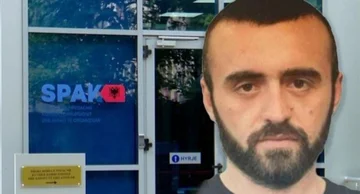
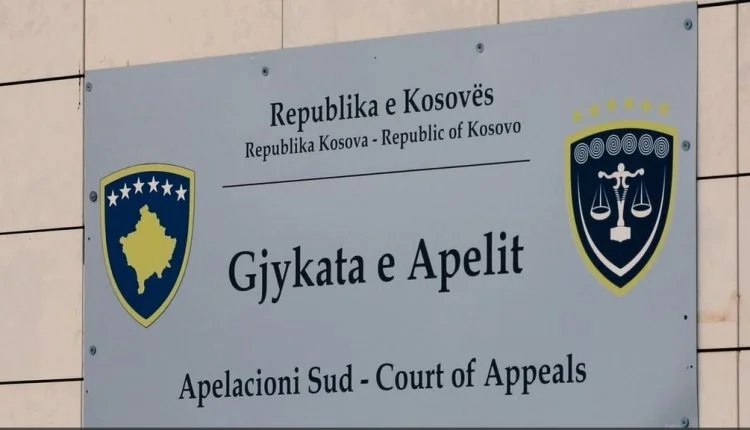
(an hour ago)The Court of Appeals has annulled the Constitutional Court's decision in Pristina, with which Sakir Lutvi was sentenced to 10 years in prison for war crimes. Thus, the case has become retrial.
The founder on November 11th, 2025, had declared a criminal conviction against accused Lutvija, condemning him to 10 years in prison, reports “Justice Vowing“.
“APROVOWED as based on the complaint of the defendant's defense, Shacir Lutvija, lawyer Jovana Filipovic, while the Constitutional Court Act in Pristina Special Department, SP.nr.77/24, dated 10,12.2025 ANULOUS, and the case goes back to the first-degree court in the retrial and decision”, the Apel verdict says.
Under the June 23rd 2026 Appeal decision, the accused continues the detention measure until the upcoming decision by the Foundation.
Towards the Foundation's decision, the complaint was filed by Luther's defender, lawyer Jovana Filipovovic, due to essential violations of criminal procedure provisions, violation of the Penal Law, error and incomplete proof of the actual situation and decision on criminal sanctions.
Filipovic had proposed that Appeals cancel the foundation court's act and the subject bring it back to retrial before another court or change the court's sentence and the defendant Lutvia in the absence of evidence release it from the prosecution.
The response to the complaint had filed with the Special Prosecutor, proposing that the defense complaint be rejected and the Constitutional Act confirmed. So did the Precaution Appeals Prosecution.
The appeal found that the Foundation's decision is involved in substantial violations of criminal procedure provisions.
According to Appeals, the bias lacks reasons for crucial facts, no clear and sufficient reasons have been given regarding the contradictions in witness statements, and the role of the accused in actions described in the device is not sufficiently justified. In some parts, however, reasoning is said to be contrary to the device of the act.
The appeal finds that the complaining decision is also involved in violations involving the wrong proof of the actual situation. It is said that it remains unclear what actions have been attributed to the accused, in which quality he has acted, to whom he has taken action and in what period of time, and how co-chairment is manifested.
The appeal estimates that the trial device contains the general description of incriminating actions.
“...by the grounds of the trial, it does not result that the first-degree court has adequately concreteised which of its actions has been taken by the accused Shacir Lutvija, in relation to whom those damaged actions have been committed, and with which evidence has proved its concrete participation”, is said in the verdict.
Clear and sufficient reasons, Apel says that the Foundation did not give up even on claims that it mistreated the injured by placing electrical power tools in the oxygen organs.
Sufficient reasons, according to Appeals, did not give the Foundation's decision even to link the accused to the death of the R.J. victim.
The second degree points out that the Foundation's decision also has a contradiction regarding the quality the accused acted on, since he allegedly worked as an inspector, in reasoning he did not work as a inspector.
The decision says that the foundation is enough with generalisation, non-stopting and not merely analyzing concrete contradictions resulting from the statements of witnesses given during various phases of the procedure, as well as the contradictions presented between the witness statements themselves.
The college recalls that witness statements cannot be assessed in isolation, but their credibility, accuracy, and authenticity should be appreciated after a thorough assessment of the statements given during the” procedure, the decision says.
In the retrial, Apel points out that the Foundation must reassign judicial examination, eliminate all violations outlined in this decision, and, after full administration of evidence, make a fair, legitimate, and rational decision on every point of the act of judgment.
At the initial session, held on September 17, 2024, Lutvija was acquitted of being charged.
The Special Prosecutor of the Republic of Kosovo on September 4th 2024 has filed charges against Shaqir Lutjija, who is charged with the quality of inspector and police at the Prizren Police Station, individually and in co-ordination with other persons of Serbian police forces during the 1998-1999 period in Prizren, during wartime in Kosovo, has been practicing the depressive measures of murder, arrest, beating, torture and inhuman treatment.
The Actakuz says that according to witness testimony: Murat Kabashi, Elmi Gashi, Sefer Ejupi, Vehbi Velija, Kemajl Kolari, Uke Kolgeci, Haxhi Gashi, Safet Gashi, Hasan Shala and Arsim Zuba, accused Lutvi from 28 September 1998 to 7 October 1998, in association with other members of police forces, have undertaken a campaign for their arrest in Prizren prison, in the quality of the Albanian national population, among them: R.J., and the tall ones.
All in accordance with the indictment, Serb forces after the arrest were sent to the Prizren Police Station, on whom the accused Lutviija, along with the other defendants, in the quality of the inspector of this station, questioned the injuries and during the interrogation process have beaten them with boxing and kick, with other strong means and other methods of inhuman treatment.
In the indictment, Lutvija and other defendants reportedly used electric power tools, which they placed on their hands and on their genital organs, with céçkarst as a result of this R.J., had died, while Murat Kabashi, Elmi Gashi, Sefer Ejupi, Vehbi Velija, Kemal Kolari, Uke Kolgeci, Haxhi Gashi, Safet Gashi, Hasan Shala and Arsim Zuba suffered serious bodily injuries.
With this, Lutvi is accused of committing a joint criminal act “war crimes against the civilian population” by Article 142 concerning Article 22 of RSFJ's Criminal Law.