24 minutes ago
Race: Serbia continues to block whitelight of missing in Batajnica suspected 58 victims
Periskopi(2 hours ago)
(2 hours ago)Access to the archives of Serbia's institutions and continuation of excavations at sites marked on Serbian territory remain two of Kosovo's main demands for whiteling the fate of missing persons hard during the war.
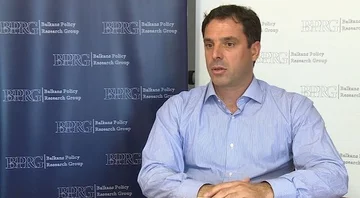
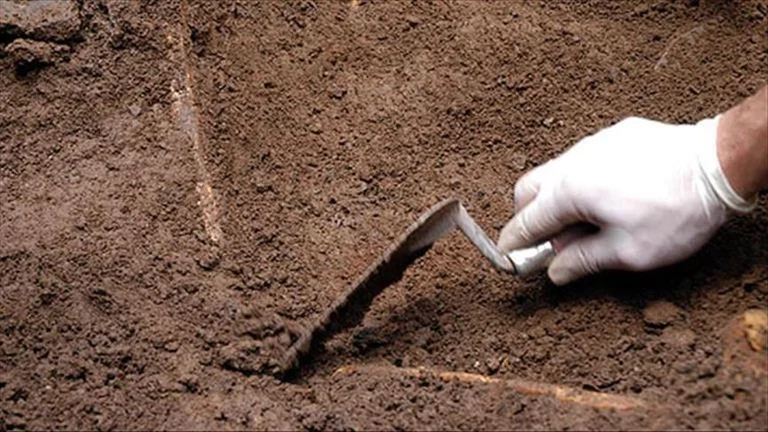
The leader of the Government Commission for Missing Persons, the Race Framework, told Online Economy that Batajnica's location remains a priority, as there is evidence that mortore remains can be found even of at least 58 other victims.
The race said that after many attempts to implement the Declaration on Missing Persons on May 2nd, the first meeting of the Joint Commission was held early this year, while then another meeting on the job.
After many attempts to implement the May 2nd declaration of the Declaration of Missing Persons, after much effort specifically on the part of the Kosovo delegation, is very important since the beginning of this year, sometime on January 22nd, the first Joint Commission meeting has been held in a sense, including officialisation or inauguration of the Commission as the mechanism set forth in the Declaration of May 2nd. The next meeting, then, I'm saying at a working level, so the working meeting at the level of the substitutes was held in April and certainly even in the application of the declaration or in the address of commitments that are due to the joint declaration, we've consistently stressed the requirements that were presented during that meeting. But even consistently during all dialogue meetings, even at the level of dialogue in Brussels, but also at the level of dialogue or meetings within the framework of other existing mechanisms, whether of the regional group for missing persons or even of the working group operating since 2004, he said.
According to Gara, Kosovo has consistently submitted its demands to Serbia, considering two as fundamental.
“If it can summarize there are two key requirements. The first is, however, the requirement for full access to the archives of Serbia's institutions above all in this case by stressing either with particular emphasis or prioritizing the request of Kosovo delegation chairman Mr. Hoti, on June 1, 2023, about a month after the declaration's adoption, addressed to Serbia's president, as well as to the EU, through which a full approach was required in the reclassified archive of the 37 brigade responsible for genocide-size crimes committed by Serbia on Kosovo territory, in the Drenica region. And this relates precisely to some of the excavations or locations that we had to say by performing or performing in this area and also connected with mass graves in Serbia's territory, in the Raska region of”, he said.
Speaking of mass graveyards discovered in Serbia, Gara said that until now, two locations of the mass cemetery in Rudnica and Kizevac have been confirmed in Raska region, where, in the wake of years, the capital remains of 61 war victims have been exhumed, mainly by the massacres of Rezalla, the Old Qikatova and the Low Zabel.
The race has stressed that data released by Serbian institutions in 2010 spoke of about 250 potential victims in mass cemeterys in the Raska region, which, according to him, indicates that other unadvanced locations still exist.
And we have two confirmed cases now, so here's about the Rudnice Stone site and the location near the former Miner in Kizevac, and the two locations that have been realised, for a period of about 10 years due to continued politicisation of this process from the Serbian side, so this delay has taken place for more than 10 years in these two locations. Exhumations have occurred and the remains of mortore or the remains of 61 war victims, mainly from the Rezalla massacre, the Old Qikatova massacre, and the Low Zabel. Of course, if we refer to the data since 2010 so when Raska's location was returned to the agenda, the data that comes to the media as well as Serbia, so the official statements of Serbian institutions officials as the government commission or even the war crimes prosecutor, were expected to be found in this location forever according to 2010 data, the mortotor remains or remains of some 250 victims. So we're currently talking about 61 victims being exhumed from this region”.
The “So it therefore means that there are also a range of locations in this area or in this space, so even this region remains still with many priorities or part of the agenda, and along with the demand for full access to the archives of Serbia's institutions, there is certainly also a demand for a return to the already targeted locations in Serbia's territory. We're talking about a return to this case, we're referring to locations which have been initiated, but apparently excavations or estimates have not yet specifically completed locations both in the Raska region and in the Novi Pazar region, or even the return or beginning of excavations at already marked locations for which there has not yet been any assessment of”, he said.
Speaking to Batajnica, Gara has said that despite the exhumation of more than 700 victims during 2001-2002, analyses conducted with international partners and satellite images show that there may still be mortorial remains of at least 58 other victims in the area.
When we're at the locations, one of the special priorities that is part of the agenda in the last few years remains the location of the mass grave in Batajnica. Despite excavations carried out during 2001-2002 and the exhumation of more than 700 war victims in Kosovo, based on all detailed data, thus analysed along with international partners who are part of this process, especially with the international Red Cross committee, based on satellite images that we have obtained from this area, or at this location or space, so Batnica continues to be mass remains with the mortore remains of the minimum or at least 58 victims. I am always using this minimum expression or at least the expressions as a result, because of family members, yet these are the statistics that we have presented even during the” meetings, he said.
He has announced that the Serbian side has refused to participate in the meeting of the Missing Persons Planned in Pristina during March, as well as has refused to hold a meeting at the level of forensic experts.
“When we are in these two other mechanisms, we have after a February meeting within the framework of the missing persons regional group, while for the meeting of the working group -- that is, with mediating the international Red Cross committee -- we have been willing to hold the meeting in March in Pristina, however, the Serb side has refused to participate in this meeting, as has the Serb side that has refused even to hold the level of forensic experts through the two delegations, to discuss the work plan and the dynamics that should be conveyed on the ground, he said.
The race said Kosovo will continue to remain an example in dealing with missing persons information in the region.
According to him, 14 locations have been addressed during the first six months of the year, of which 13 relate to the digging process in search of missing persons. Mortor remains belonging to at least 10 individuals have been found from these locations, while final identification is expected after DNA tests.
When we are in the ongoing dynamics, Kosovo will continue to be an example in the region and beyond, in handling any information that can contribute to resolving any case of missing persons. During these six months, we have at least 14 locations, which have been addressed in terms of assessment excavations, 13 of which are related directly to the search process and location of missing persons. Of course not all locations have resulted in the discovery and exhumation of mortar waste. However, of these 13 locations, we're talking about at least the minimum, which has been exhumed or recovered, remains of 10 individuals. Of course, after completing all procedures of examination by colleagues at the Institute for Legal Medicine and then waiting for confirmation through DNA analysis, the number of individuals or exhumed victims will be determined. And of course then it remains as the first step, the family announcement, always in the ongoing institutional effort to respect the basic right of families, to know the fate and whereabouts of their most loved ones”, he said.
He has stressed that about 2,700 locations for assessment excavations have been addressed on Kosovo's territory, naming the process extremely complex and related to the ongoing review of new information.
There are also a series of locations that are being addressed in a continuous manner, but let's not forget that we have up to 2700 locations in the territory of the Republic of Kosovo addressed in a sense of value digging. So, that is, never wanting this process to be interpreted into statistical terms, but it goes for 11,000 square miles, almost every four kilometers we have a location. As a result, any information we are accepting can be linked to a location that has been addressed in the early years, whether by the institutions of the Republic of Kosovo or even by international mechanisms that have had mandated in this process. And this takes a little more time in the sense of reviewing the data, along with colleagues from the Police Directorate for Investigation of War Crimes and colleagues of the Institute for Legal Medicine”, he said.
Speaking of Kozhle's location in Serbia, Gara has said the process is facing delays similar to those recorded earlier in Rudnica and Kizevac.
“The last location that has been addressed or has been made an effort to address during the past two years on Serbia's territory has been the location near the Cozhle waste depot. This location has been very challenging, and if we refer to or look at the statements two years ago, in the case of the beginning of the excavations of this location, we've expressed it, among other things, I'm also making a commitment or a concern. Our request was that the location in Kozhle should not be a bad copy of the locations or experiences we had in Rudnica Raska's Rudnica that I mentioned five years in the location, until the actualization or location of the mass grave. Or even the location in Kizhevac, Raska, which has also taken up to five years. And therefore the same story is conveying Kozhle's location, as well as other already marked locations on the territory of Serbia”, he said.
He said that during this year, there has still been no invitation for continuing excavations in Kozhle or other priority locations in Serbia.
So this year we still have no invitation to send the team of colleagues to the Institute for Legal Medicine to conduct excavations at this location. Or we have a date for the start-up or the possibility of continuing excavations at other locations, particularly in this case, as I highlighted the location in Batajnica, since it is one of the most priority cases we are addressing in our demands. So always locations on Serbia's territory have been a challenge”, he said.
The race has estimated that only the international community's greatest pressure on Serbia could bring concrete results in the process.
Therefore, it has been more than necessary and we are in constant co-ordination with international partners, since experience has shown that only greater pressure by the international community on Serbia can be put on, still very carefully using the word, progress or results in this process. So far we have five mass cemeteries on Serbia's territory confirmed. There are the first three mass cases or graves in the early years after the war -- that is, in the time of the Djindjic government, which was then linked to a pressure from the former Hague Trubunal, so we're talking about 2001-2002. And we have these last two locations, so Rudnica and Chizevac, that the location of the mass grave is made possible only with the support of the international community in terms of offering satellite images on the basis of which the location of the mass grave has then been managed to establish”, he said.
According to Gara, Serbian institutions had mentioned the existence of a list of about 16 mass cemeteries on Serbia's territory since 2000-2001.
He has said Kosovo has not seen this list and that it remains unclear whether the five confirmed tombs are part of it or not so far.
When we are addressing the first mass cemetery locations on Serbia's territory, so during 2000 and 2001. At that time, Serbia's government had established a working group within the Interior Ministry to address war crimes. And since then the list has been posted from about 16 mass cemeteries on Serbia's territory. Now we have five confirmed cemeteryes. We haven't seen the list, so we don't know if these five cemeteries are part of that list of 16. If there are, then we also have 11 mass graveyards on Serbia's territory. If they are not, then there are 16 mass graves on Serbia's territory. So there's a whole range of locations that are part of the agenda. I suggested the possibility of returning to Batajnica to address a range of locations in the Raska region and the Novi Pazar region. To locations like the mines in Staffal or the section related to the mine in the vicinity of Bor to other locations like the Maskatica of Surdulica. All of these are part of the agenda in terms of addressing the ongoing official requirements and presentation during meetings with all international partners. That's why I said there are two priorities in this case: access to archive data and allowing excavations at locations in Serbia's territory”, he said. /EO/