3 days ago
Supremeity and Victimization: Islamic Political Psychologicality
Periskopi(3 days ago)
(3 days ago)It says: Maral Salmas
For decades, the debate over Islam has focused on the wrong question.
Is Islam violent or peaceful? Is it essentially authoritarian or compatible with democracy? And is Islam his authentic expression, or a distorting of Islam?
These debates generate more heat than light because they start with theology. Civilizations are not revealed only through doctrine. They're discovered through history.
The question we need to ask is:
Why did Western civilization produce the vast majority of the scientific revolutions, technological innovation, constitutional governance and economic prosperity of the world over the past three centuries, while Islamic civilization did not?
Today, at each university, students and educators would name"colonialism"as the main factor in this asymmetry.
If colonialism was a decisive variable, why did India come out as one of the world's leading technological and economic powers after independence in 1947, while Pakistan is so far behind?
Egypt, Iraq, Syria and Lebanon owned schools, universities, courts, administrative systems, trade classes, and cosmopolitan cities. For a brief moment, some seemed to start.
But what followed their independence was the regress imposed by sectarian military regimes, Islam, corruption and the repeated destruction of individual autonomy. India, despite all its poverty and trauma, shows that colonial heritage was not the crucial factor in the impasse. So the question is what kind of human being and what kind of institutions reproduce a culture after independence.
Ideas matter - not because they're true, but because they form families. Families form culture. Culture forms institutions. Children inherit this architecture long before they question it. They become adults. And adults reproduce civilization.
This is how failure to function for centuries.
If a civilization consistently produces children's marriage, ritual bloodshed, gender apartheid, rape laws that protect men, persecution of apostates, hatred of Jews, oppression of minorities, contempt for individual freedom and repeated political violence, then we are not dealing with harmless"trades". We're dealing with barbarism reproduced as culture.
Tow ignore them as chance, colonialism, or the work of a handful of extremists is intellectually lazy.
Nor is it enough to quote peaceful passages of holy writings while ignoring institutions and associations that these sacred writings have historically shaped.
But I've heard worse: feminists that legitimize the worst crimes against other women and homosexuals under the label of religious culture or freedom.
A civilization must always be judged by the types of human beings and societies that reproduce constantly. Culture and religion can never be an excuse for fascism and cruelty.
If, from generation to generation, children are taught that obedience is superior to autonomy, that suffering is more sacred than prosperity, that the dignity of a woman is based on submission and motherhood, that questioning authority is sin, that outsiders are morally inferior, injected with anti-Hebrew paranoin, an obsession for real humiliation and imagined, ambition for past empires and a desire for revenge, and it is said that this life is merely preparation for the other, these toxic ideas inevitably establish a psychological architecture.
First class is not a mosque. It's family. The first authority is not the state. It's the parents. Early teachings are not abstract theology. They're emotional.
The foundation of children's understanding of who deserves obedience, who deserves authority, what it means to suffer, how women should behave, how husbands should behave, who belongs to and who doesn't, be formed by mothers in the first seven years of a child's life, which is also a critical window of development.
Ashur's Islamic ritual represents this process in concentrated form.
It is an intensive ritual of public self-flight, bloodshed and mourning in Shiite communities - especially in parts of Iran, Iraq, Lebanon and Pakistan. This is not harmless folk. It's a choreography of sacred suffering.
After the Islamic Revolution, these processions became a regular public ceremony in Iran. My mother never allowed us to go out in Ashur. She didn't want us to see them.
But one day, on my way to my aunt's house, I saw something that I still remember as a show of primitiveness and horror: a mother covered with blood carrying a little child that wept with her head covered with blood.
This image was impressed on my childhood memory.
I still remember the song, the cry, the blood that was leaking on the street and spilled into the canal. It wasn't commitment. It was an agonizing race.
The story after Ashur is Hussein's agonizing death, the third Shiite Imam, who was betrayed and left to die on the battlefield of Cerbella. During processions, flaglains do not mourn simply. They enter the stage. They imagine abandoning him in grief and guilt, reinterpreting his suffering with their bodies.
Thus, she is not remembered simply as history. It is installed psychologically through repetition.
And that's what matters. Repeated rituals transmit values before children can label them. They bypass the argument and go straight to emotion, identity and belonging.
Long before a child understands theology, he is already programmed to believe that suffering is sacred, pain is devotion, and martyrdom is glory.
The same is true of the broader patriarchal order of Islam.
Many women become the principal broadcasters of a gross sexual oppression system combined with male rights. A system that once subjected them continues by them - not because they designed it themselves, but because their dignity, status, and security were linked to its preservation.
In societies where a woman's worth depends on marriage, fatherhood, family honor, and obedience, the hierarchy becomes a survival condition. And survival often applies with amazing cunning and cruelty.
No authoritarian culture sustains itself only through tribulation. She needs mothers who raise obedient children, teachers who reward the conformity, religious authorities that sanctify hierarchy and rituals that transform suffering into virtue.
Only then can political order reproduce itself without constant strength.
One feature of Islamic civilization, however, stands out above all others.
For fourteen centuries Islamic civilization has come to understand itself as the ultimate revelation of God, the highest truth and, after all, civilization destined to prevail.
At the same time, however, his understanding is deeply rooted in confessions of suffering, humiliation, and persecution.
How can a civilization convinced of its divine supremacy determine itself simultaneously through victimization? The answer lies in the heart of his political psychology.
That's not contradictory. It's one of his most powerful mechanisms. Supremeia provides identity. The victimization ensures legitimacy.
A civilization that believes it is destined to triumph cannot easily explain centuries of political decline, military defeats or technological stagnation. The victimization solves this tension. Failure no longer requires self-examination; it becomes proof of persecution. Any obstacle can be attributed to hostile forces rather than internal shortcomings.
That's why primacy and sacrifice are not different. They're strengthening each other. One raises the collective above all others. The other sets him free from self-critics. Together, they create an extremely flexible political psychology.
All that follows - Ashura, martyrdom, jihad, Sheriat, Ummat, Davet, colonialism, collective memory, rejection of modernity, and continued resistance to reform - can be understood as expressions of that fundamental psychological architecture.
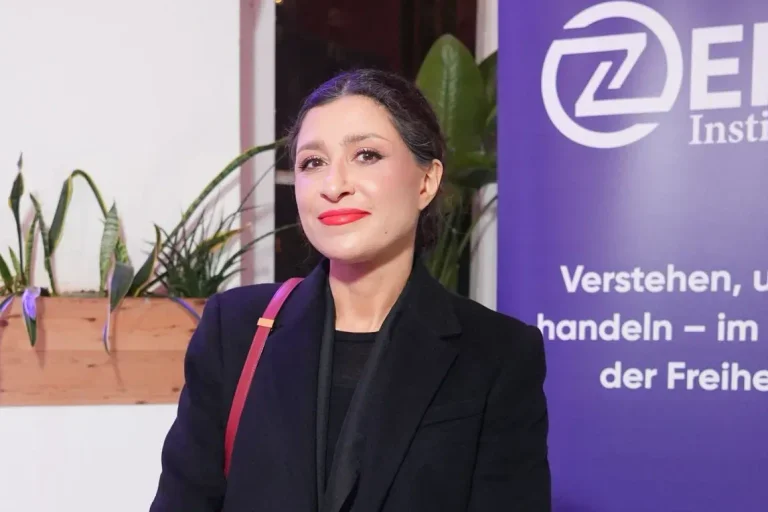
*Maral Salmass is Iranian publicist and executive director of the Zera Institute