an hour ago
What is behind the decline in election?
Periskopi(14 days ago)
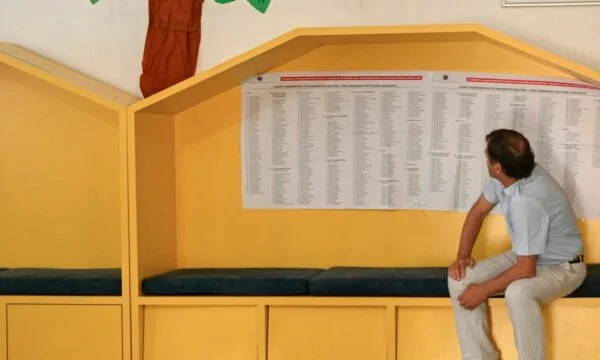
(14 days ago)Over 1.2 million Kosovo citizens chose not to vote.
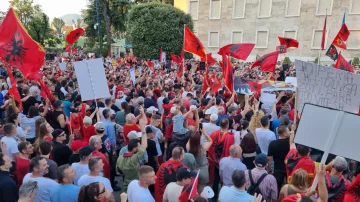
In a country where the election appearance has traditionally been high, this is not just a statistics. It's the alarm for the political system, say connoisseurs of political and social developments.
The June 7th elections produced one of the lowest levels of participation in recent years, raising, according to them, serious questions about representation, confidence and the functioning of democracy.
Out of 1,959,962 eligible citizens, only 726.071 voted, or 37.05%, according to the Central Election Commission.
Compared to about 45% participating in last December's elections, the decline is significant.
Abstinction as a revolt
Sociologist Besim Golopen from University “Isa Boletini” in South Mitrovica views this decline as a direct reflection of citizens' frustration toward the political class.
According to him, the fact that these are the third elections within less than a year and a half after those February 9th 2025 and the early elections on December 28th has produced the emphasis on electorate.
The frequent vote calls are perceived as a sign of a system that fails to function normally”, he estimates to Radio Free Europe, adding that this directly affects the reduction in motivation for participation.
Analyst Belgzim Kamberi from the “Mousine Koklari” in Pristina defines this phenomenon as a “abstenm revolting”.
According to him, citizens did not choose to punish only one party -- neither power nor opposition.
They simply felt that they were not represented by either side and stayed at home. This is a rational response to a policy that does not produce concrete” solutions, Camberi points out to Radio Free Europe.
Confidence crisis and endless cycle of crises
Beyond election fatigue, Golopen highlights another problem: the political crisis of trust.
The latest “Ves have been characterised by difficulties in forming and functioning institutions, repeated political crises and a widespread perception that, regardless of who wins the elections, the lives of citizens do not change”, he says.
This perception, combined with increased cost of living, economic uncertainty and migration, has shifted the focus of citizens away from politics.
“Mind moves from politics to daily challenges. And that makes participation in elections less or no priorory, especially for young people or for those who feel cut off from institutional processes”, he adds.
“Zile awake” for political parties
The decline in turnout was praised as concerns both by international missions and local organisations.
The observation mission of the Parliamentary Assembly of the Council of Europe (PACE) named this trend a “awake “for political subjects, though the election process praised it as calm and professional.
Organization “Democracy in Action” (DnV) also estimated that recent elections were held in a clear electoral fatigue climate and with a markedly lower interest compared to recent processes.
One of the factors, according to her, remains the lack of new political bids and recycling of the same figures and promises during campaigns.
The parties themselves did not directly address this phenomenon, while to draw attention to some diplomatic representatives in the country.
British Ambassador to Kosovo Jonathan Hargreaves praised for Radio Free Europe that “the apparent low turnout in Sunday's elections shows that citizens' patience with politicians is depleting”.
Results and Changes
According to the Central Election Commission's preliminary data, the Vetevendosje (LVV) movement came first with about 42% of the vote, followed by the Democratic Party of Kosovo (PDK) with about 21%, the Democratic League of Kosovo (LDK) with about 17%, the Alliance for the Future of Kosovo (AAK) with about 7% and the Serbian List with about 6%.
These results, although they do not include diaspora votes, conditional votes and those of persons with special needs, show some changes in position compared to the December 2025 elections.
The Organisation for Economic Co-operation and Development (OECD) considers high voter turnout to show civic engagement and legitimacy of the political system, while its decline, especially among young people, is trending in many countries.
In a report published by O The ECD in 2024 says that one out of four young people has no interest in politics, compared to one in five for all age groups.
“Midis early 1990s and early 2020s, participation in parliamentary elections across O The ECD dropped from 75% to 65% on average”, according to this report.
Similarly, an analysis of the United Nations Development Programme (UNDP) shows that global voter turnout has dropped from about 65% in 2008 to about 56% in 2023, reflecting the rise in scepticism to democratic processes.
How Can Faith Come Back?
For experts, falling turnout is a political challenge that requires deep solutions.
Kamberi cites the possibility of reforms in election legislation, including models such as mandatory, applied voting in countries like Belgium.
What is clear is that a review or a deep reform of the legislation in force for the” election is needed, Kamberi claims.
For Gollopen, the key lies in faith.
“Citizens should see that elections produce solutions, not crises. Only then can turnout increase”, he says.
He warns that abstention, though understandable in response, is ultimately a choice that could harm citizens themselves.
If we withdraw from electoral processes, we risk producing even more unfavourable situations for our well-being”, Golopen concludes.