6 minutes ago
The cost wave doesn't stop: Annual inflation in Kosovo totals 6.8%
Periskopi(13 days ago)
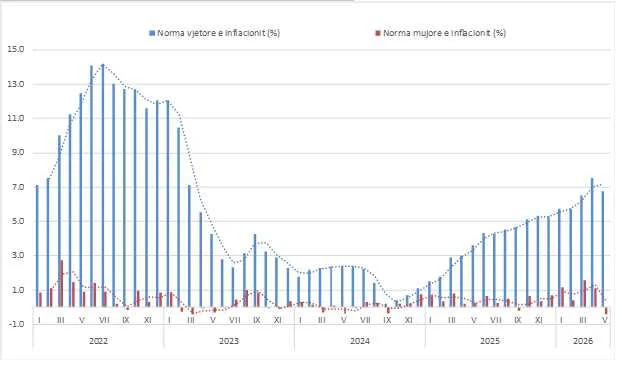
(13 days ago)During May 2026 prices in Kosovo have averaged 6.8 percent higher compared to May of last year. The largest increases are recorded in transport, energy, housing and food.
Life in Kosovo is becoming more expensive every month. Recent consumer prices published by the Statistics Agency show that annual inflation in May 2026 has reached 6.8 percent compared to the same period last year.
The largest price increase is recorded in transportation, with a total of 14.1 percent more than a year ago. This means that citizens are paying markedly more expensive for movement, derivatives and transportation-related services.
Soon after transport comes the housing sector, electricity, gas, and fuel, where prices have increased by 13.2 percent.
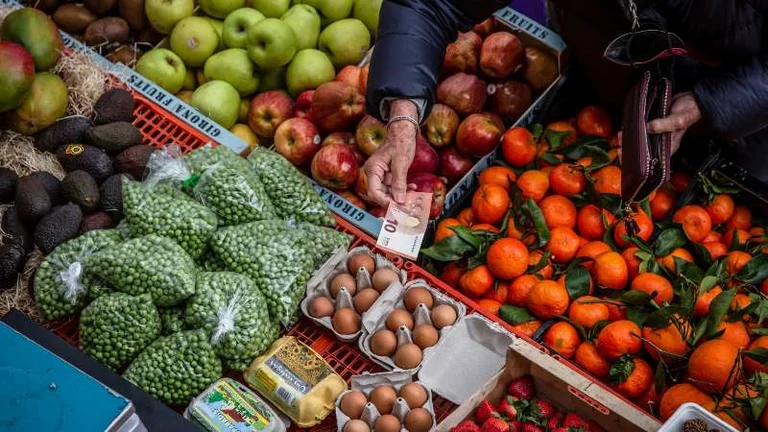
Food also does not stop at expensive. Food and nonalcohol beverages have increased by 5.1 percent, making basic consumer baskets increasingly costly. In addition to food products, the increase is recorded in alcohol and tobacco at 5.6 percent.
“in May 2026, the harmonised Consumer Prices Index (IHÇK) has increased by 6.8% compared to May 2025. The increase has been influenced by main groups of COICOP: transportation (14.1%), housing, electricity, gas and other fuels (13.2%), alcohol, tobacco and narcotics (5.6%), restaurants and accommodation services (5.3%), non-alcohol food and drink (5.1%), health (4.1%), household furniture and household maintenance equipment (3.6%), personal care, and various goods and services (3,0%), recreation, sports and culture (2.7%), clothing and shoes, and shoes, and (4% and communication) and communication (0%). ”
More expensive have been restaurants and accommodation services by 5.3 percent, while health has scored a 4.1 percent increase.
Other increases have been recorded in furniture and household appliances at 3.6 percent, personal care and services at 3.0 percent, recreation, and culture of 2.7 percent, as well as clothing and shoes at 2.4 percent.
On the other hand, the only sector that has marked price reductions are educational services, with a symbolic decline of 0.1 percent.
As for the monthly price movement, compared with April 2026, inflation has seen a decline of 0.4 percent. This decline is largely influenced by falling prices in transport (-2.0%), energy and housing (-0.7%), as well as food (-0.2%).
“Meanwhile, price increases are recorded in groups: alcoholic beverages, tobacco and narcotics (0.7%), health (0.7%), household furniture and household equipment (0.6%), information and communication (0.3%), clothing and shoes (0.3%) and restaurants and accommodation services (0.2%)”.
Annual figures show that prices have increased significantly in almost every sector associated with daily life. /Monitor