7 hours ago
“880m euros pending”, EU: Kosovo speed up institutional functioning
Periskopi(15 days ago)
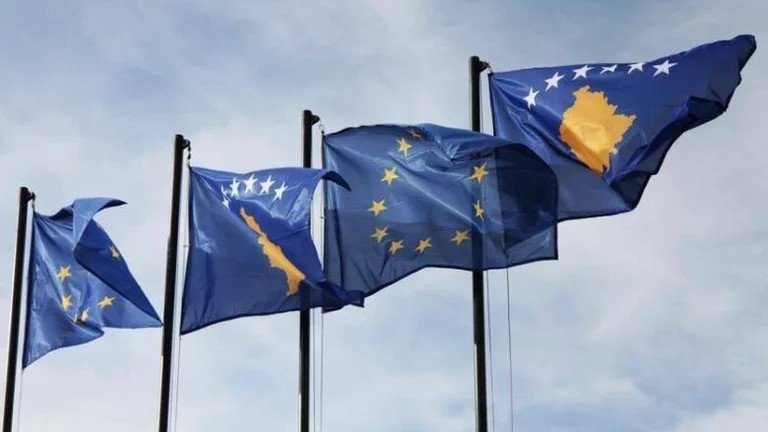
(15 days ago)Eva Palatova, the European Union's chief office in Kosovo taskmaker, said 880m euros are available for Kosovo under the European Union's Growth Plan, but stressed the need for speeding up reforms and functioning institutions.
We all agree that developing a powerful private sector in the Western Balkans is essential for socioeconomic development and regional integration. We also agree that NVMs and entrepreneurs are key drivers of inclusive and sustainable growth, job creation, skills development and innovation. That is why today's high-level discussion on policies that could further strengthen NVM competitiveness and productivity and create more friendly facilities for small and medium-sized businesses is so important”, she said.
“Under the Growth Plan I mentioned earlier, 880m euros over three years are willing to invest in Kosovo in exchange for reforms. Kosovo has presented an ambitious agenda of reforms in the area of private sector development and business environment. This area of reform agenda includes seven major reforms and 26 steps aimed at promoting investments and exports, a more simplified and effective regulatory framework and, at the end, promoting innovation and sustainable overall growth”, she said.
She added that acceleration of reforms and functioning of institutions is now needed to take advantage of the growth Plan potential.
“What needs to come now is a considerable acceleration of the pace of reforms. The reform agenda was approved by the Kosovo government at the end of 2024. We are now in the summer of 2026 and are seeing the first period of tolerance expire, where for the first time we can formally measure what Kosovo has accomplished during the first period. Therefore, we hope very much that Kosovo's political institutions will soon become fully functional so that Kosovo will fully benefit from this” potential, she said.
OECD Southeast European Division head Marzena Kisileewska said O's assessment The ECD for NVM is based on European standards and aims to bring the region closer to the European Union.
“But this specific assessment of the Organisation for Co-operation and Economic Development (OECD) is more European than any other, because it is based on the Small Business Act for Europe. So we in OECD have tried to translate a very advanced European policy into an assessment and combine EU standards and O standards. ECD in one. So this transforming power of assessment somehow draws you closer to both organisations”, she said.
Kisileewska said the OECD has changed the methodology of assessment to better reflect reforms and real changes in the region's economies.
Of course, during these 20 years, politics for The NVM evolved. Each time you've seen that we've somehow changed our approach, our methodology and we've also raised a little higher the standard of your progress. This time approach is somewhat revolutionary, because instead of a linear approach, we have applied groupings to better show and reflect better the real changes that have occurred over the years and many reforms that you have implemented in Western Balkan economies”, she said.
She said the report included the dimension of the digital and green NVM transition.
And we also have a new dimension, to reflect the changes of time, which is the digital transition of NVMs, and we have also much broader research into the sustainability and green transition of NVMs in your country. What I would say is the key feature of this whole process, the horizontal theme, is the sustainability of NVM”, she said.
Deputy Minister of Industry, Trade, Trade and Innovation Jeton Mehmeti said the document provides an important basis for the country's economic development and private sector.
“Today we are gathered to launch a very important document for the economic development of our country and to reflect on our progress and challenges our priorities in support of small and medium-sized enterprises as the main pillar of our country's economy”, he said.
Mehmeti said the OECD has played an important role in supporting economic reforms and improving the business climate in the region.
“O The ECD plays an important role in supporting governments in addressing economic, social and developmental challenges, promoting policies based on international standards, good practices and better regional co-operation. Through a regional programme for Southeast Europe, O The ECD has been an important partner for countries in the region in advancing economic reforms, improving the business climate and strengthening competitiveness. The Ministry of Industry, Trade, Trade and Innovation highly praised this co-operation and remains committed to harmonising its policies with European Union standards and OECD standards”, he said.
He added that the ministry aims to build a more competitive and stable economy through support policies for businesses.
“The Ministry of Industry, Trade, Trade and innovation has a key role in drafting and implementing policies that support private sector development, empowering small and medium enterprises, advancing innovation, increasing competitiveness and creating a favourable business environment. Through our policies and close co-operation with international partners, we aim to build an economy of stability, innovation and resistance to challenges”, he said.