4 hours ago
Warren Buffett's $400 billion movement is starting to bother Wall Street: It makes you wonder what he knows.
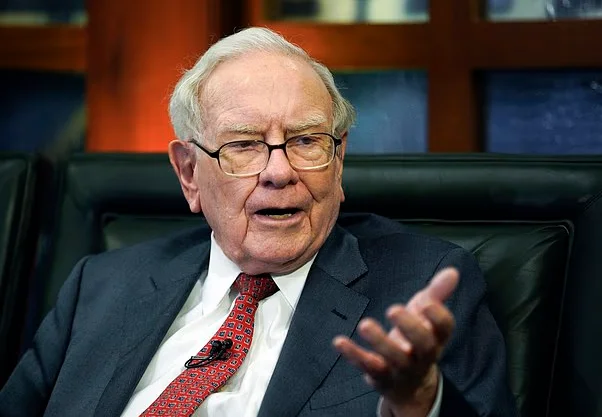
Periskopi(2 months ago)
(2 months ago)Over the weekend, many shareholders from Bershire Hathaway arrived in Omaha, Nebraska to participate in Woodstock for capitalists - Warren Buffett's name for his company's annual meeting.
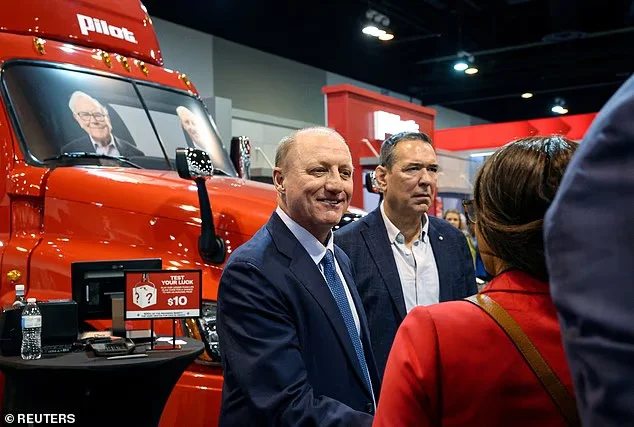
It was the first time that Greg Abel, the carefully chosen successor of Buffett, chaired the noisy celebration of Berkeley's success.
But despite the new boss, a part of Berkeley business is not changing: Its huge sum of cash. Since the end of 2025, Berkeley's cash has increased by another 6 percent to $397 billion.
Some Wall Street analysts believe Berkeley has built money reserves to prepare for a market crash.
The «makes you wonder what Berkeley Hathaway knows and what the rest of us not, said an analyst.
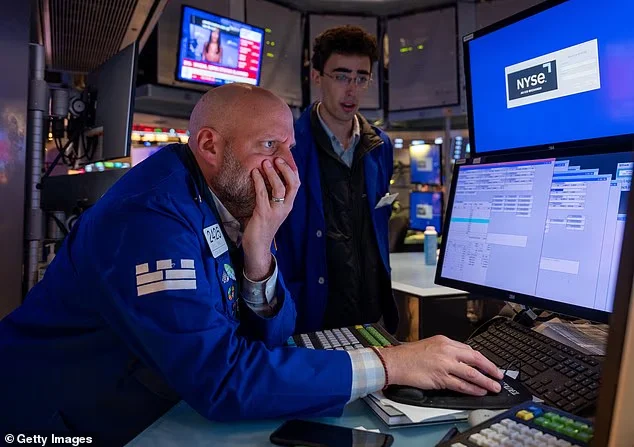
"They are amassing money at the same time that most people - big and small investors - are investing money in the stock market and taking it to record levels. "
The warning comes as S&P 500 and Nasdaq have reached record levels over the past two weeks, including today (February) after falling after the start of the war in Iran.
At the annual meeting, Abel told shareholders that all the money was “you said” to ensure that Berkeley is ready to undertake unmatched investments at any moment.
Abel urged his investors not to see the company's cash collection as a sign that it is not interested in new investment opportunities.
“allows us to act decisively, invest when others are insecure or fearful, and stand firm when financial storms” come, he wrote in the three-month update of Berkeley.
The current group of company shareholders exceeds its possessions during the break-up of can-com in 2000 and the 2008 financial crisis.
At the peak of the fall of can-com in 2001, Berkeley kept 68 billion dollars in cash, more than half the company's market value at the time. And when the US home market bubble began to explode at the end of 2007, Berkeley had $47 billion available in cash.
After the bubble of can-com blew up, Buffett used its 'rid powder' to make Berkeley's first purchase in the energy business, buying 76 per cent of MidAmerican Energy for $9 billion.
MidAmerican's acquisition led to a series of investments in the energy sector that are now grouped into a business unit called Berkeley Hathaway Energy, which Buffett has named one of four <x0); crown supplements” of his companies.
'It's not that we don't see extraordinary companies today, which we would like to see very much... but the price about the possibility, the economic prospects of that company and the risks associated with it -- we're not interested in buying those companies at that price," Abel said.
Berkshire's new executive director is not the only stone Wall Street concerned about the risks now - in a recent interview, the billionaire manager of the speculating funds Paul Tudor Jones warned that the stock market was surprisingly similar to the one before the 2000 fall-com.
Jones warned of a major correction of 30 per cent or more, and like Abel, he said estimates have come out of control.
'The assessment matters' very much, and the stock market is very high, and it will be very difficult to earn money from here, I think, with any long-term perspective," Jones said.
Bershire Hathaway's annual meeting began with a video room for Buffett, starting with a clip showing applause on foot that Buffett took last year after he surprised the shareholders by announcing he would resign.
Buffett praised Abel and said he is pleased to make the decision to promote him now.
“He is very, very smart for business”, Buffett said in a direct interview that was broadcast during the meeting.
Abel is known as a more demanding and active chief than he has ever been - he says that he asks difficult questions and offers advice that his deputies value, but he does not tell them exactly what to do.
And with Buffett remaining the chairman of Berkeley and its largest shareholder, it's unlikely that Abel will make any drastic changes in Berkeley's approach.