a minute ago
“There are no thoughtless US movements”, analysts comment on the convention resolution on Kosovo in NATO
Periskopi(2 months ago)
(2 months ago)Dora Vojka, an international affairs analyst, has talked about recent developments in the region. Vojka said Kosovo's entry into NATO and the recently published congressmen's request also relates to the current geopolitical situation. There are no coincidences in politics, no thoughtless U.S. movements. There's a movement in [...]
There are no coincidences in politics, no thoughtless U.S. movements. There's a movement in the complete union, a military movement on the part of the military and a civil movement on the part of American politics, where it joined the demands of congressmen”.
I want to get back to reality. I would be more reserved for reality. As for this to bring Kosovo into NATO in these short-term aspects, and I say so because, considering that spirit in the US, that spirit of politicians is not a spirit of NATO enlargement but of exiting NATO. They view it as a negative thing. All these demands have come from Trump because NATO views it as a burden. One possibility that this move is fast probably even happens to the fact of the war with Iran. One of the biggest banks. JP Morgan, says the reserves will last until mid-May. One of the reasons given attention to Kosovo is that the wet-held gunpowder in the Balkans can follow.” ) analyst Doran Vojka said at Euronews Albania, broadcasting Periscope.
Invited to a live link from Washington for the Balkan Talks” show, even publicist and journalist Keida Kostreci commented on the initiative of three US congressmen to submit a resolution to the House of Representatives supporting Kosovo's NATO membership.
According to Kostrec, any action of this kind in the United States is of particular importance, especially when support comes in a two - part manner.
“Every resolution supporting Kosovo in the United States, much more when we have a group of convention members from both parties, it is important because it brings focus on what remains Achilles' name in the Balkans,” it said.
However, the journalist stressed that beyond the political symbolic, the possibility of implementing such a initiative must realistically be seen, considering the existing obstacles within the alliance.
“We need to keep in mind how realistic this is, since four NATO member states do not recognise Kosovo and NATO decision-making is done by consensus,” Kestreci stressed, underlining that such a process will be and complex.
She added that global dynamics and American foreign policy priorities directly influence the issue.
“also should be seen how much interest the US administration has to deal with this topic, given other developments such as international tensions and complicated relations with several NATO countries,” said. Otherwise, Kosovo received a political push in its goal of becoming part of NATO, the military alliance that intervened in 1999 to end the war, as three American congressmen presented a resolution this week in support of its imminent aspirin.
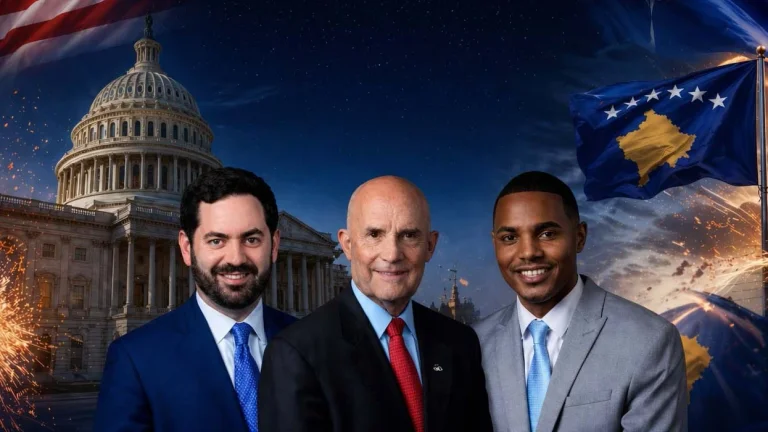
The resolution, presented on April 30th with two-party support from congressers Keith Self, Ritchie Torres and Mike Lawler, also sparked immediate reaction from Serbia, which regularly fights Kosovo's membership in international organisations.
Kosovo has not yet made a formal request for NATO membership, as it faces major obstacles, such as the lack of recognition by the four member states: Greece, Romania, Slovakia and Spain.
It is also currently turning the Security Force into a full army, which is expected to last until 2028.
Furthermore, Kosovo is not even part of NATO's Partnership for Peace programme, which serves as a way for any country that wants to become a member of the military alliance.
A new member's admission requires bias within the alliance, so even the resolution presented by congressers urges Washington to encourage these four member states to recognise the newest state in Europe. /Periscope