7 minutes ago
Oil, prices, traffic: How long would it take to get back to normal if Hormuz reopens now?
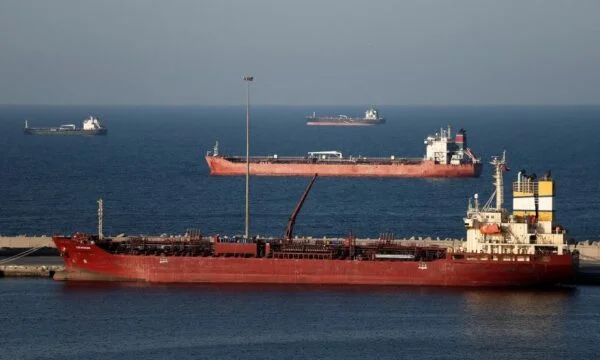
Periskopi(a month ago)
(a month ago)The recent story offers little precedent for the relatively complete closure of a strait because of war. But all examples from recent decades point in the same direction: it will not be quick.
A return to normality in a sea where fighting has happened always takes a lot of time and it's not likely this time it's different. Even if, in the coming hours, the United States and Iran announced the signing of an agreement, though temporary, by reopening the Hormuz Strait for unconditional navigation.
Bab el-Mandeb President
The experience of recent years suggests that it would be unrealistic to expect a different outcome. Finally, in 2023, Huthites, Iran-backed nuclear militia, launched a campaign to attack commercial ships passing through the Strait of Bab el-Mandeb, where the Red Sea and Suezi meet on one side and the Indian Ocean and the fastest route connecting the Mediterranean to China on the other.
The result was immediate: a traffic drop of approximately 70%. Since then, the governments of the European Union and the United States have led defence and naval surveillance missions in that strait, London and Washington have repeatedly bombed, and the Huth attacks officially stopped with the Gaza truce that the Hhut had called for a reason for their actions. But traffic through Bab el-Mandeb, and therefore Suez, remains 70% lower than in 2023.
Close the Suez Canal
Similar experiences were seen after the first US-Iraq war, when mines in the seabed took at least six months to restore freedom of navigation in the northernmost part of the Gulf. And after the Six-day War between Egypt and Israel in 1967, when the Suez Canal was shut down “temporarily” and was reopened just seven years later.
Transport pens and uncertainty about mines
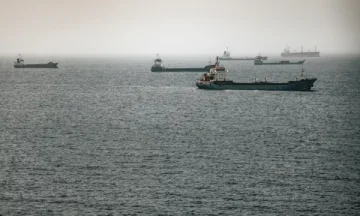
No one can predict for sure how long Hormuz will need to return to his normal frequency. Prior to the war, it was the ninth largest in charge of the world, with 32,000 crossings per year (Taivan is the largest in charge, with 88,000 commercial ships passing).
Now, traffic has dropped to zero for most days.
The uncertainty about mines Iran has placed on the seabed suggests recovery will not be easy. Some are designed to explode once their sensors discover floating steel objects on the surface. That's why Italian mineral-clearing ships will be so important, but it won't be a quick operation. Marine transport companies will certainly not be rushed to take back unnecessary risks.
Energy infrastructure damage
Furthermore, approximately 80 facilities of oil and natural gas infrastructure have been hit both in Iran and by Iranian fears and missiles in all Gulf countries. Some repairs will last only a few weeks, as was the case with Russian refinerys hit by Ukrainian fears in 2025 (Although Kiev is now able to cause more serious damage). Others will require between two and five years to be fully operational. This is especially the case with liquidation units at the Ras Laffan gas terminal in Qatar, whose production potential is currently reduced by 17%.
Urging to Recharge Stocks
Recently, there are internal dynamics within the oil industry itself that suggest a long term for a return to a normal flow of supplies.
During these three months, the international system has remained uncertainly balanced only because of its support in the reserve. Western countries have begun to release some of their strategic reserves, and China appears to have done the same, judging by a decline in crude oil imports from about 11 million barrels a day to 8.5 million barrels. That is also why the price of a crude oil barrel Brent has never increased well over $100, a high level, but evidently lower than predicted by experts at the start of the war.
Oil Price Evolution
If the used reserves were just over five million barrels a day, some 20 million barrels a day passed through Hormuz prior to the war, it is likely that the international system has already consumed a billion barrels of strategic reserves and private refinery reserves. Only their refueling will deeply undermine market functioning for many months.
Oil prices are likely to drop, initially by ten, and then by about $20 per barrel, if the deal the American administration is talking about today is actually signed. But any ceasefire remains temporary at the moment, in the context of a stable environment. A complete solution to this energy crisis may not be too close. / La Repubblica