7 hours ago
What is behind the failure to reach the price of electricity?
Periskopi(2 months ago)
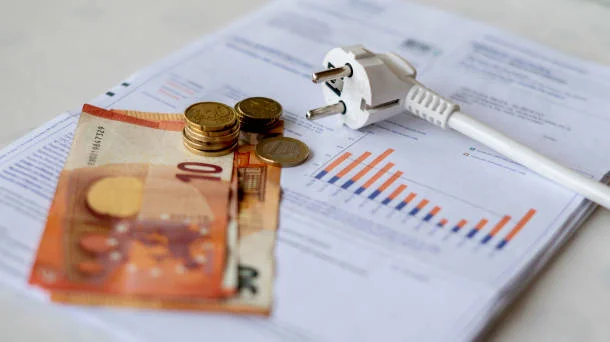
(2 months ago)Kosovo citizens eventually escaped a second consecutive increase in the price of electricity bill, but that does not mean they will not face a possible increase next year.
The Energy Regulatory Office (ZRRE) decided on May 5th against the price of electricity tariffs, despite the demands of key companies for electricity supply in the country.
This relief comes after the 16 percent expensive last year, which was preceded by further growth in 2023 and 2022.
Why didn't the electricity price rise this year?
The energy regulator decided to reject the demands of three key energy companies in the country for 20 percent growth.
ZERE CHAH, which conducts the annual review and definition of electricity tariffs in the spring, gave no specific reason for this, but indicated that part of the costs for electricity security is not included in this year's tariffs.
And that has enabled this year's expensive tariff avoidance.
Ymer Feyzullahu, chairman of the ZERE board, said that through a profile mechanism, additional costs are not included in the 2026 tariffs, but gradually distributed starting in 2027.
“This is done to ease the financial impact on consumers and, at the same time, to ensure the safety of electricity supply”, Feyzullahu said.
Could there be expensive in 2027?
Maintaining unchanged tariffs does not mean that there will be no demand from energy companies again for price increases.
Power tariffs may even increase next year, warns Adorim Haxhimusa, professor of economics at Switzerland's University of Applied Sciences.
“If Kosovo this year imports more energy than planned, then it is at risk for the tariffs to rise in 2027 much more than” has been expected, Hadzimusa told Radio Free Europe.
Kosovo cannot provide the needed energy for over 1.6 million of its inhabitants only with production from the Kosovo Energy Corporation (KEK), so import is inevitable.
KEK - state corporations and the country's dominant power producer - can produce up to 800 megawatts per hour, while the country's needs, in one winter day, reach up to 1,300 megawatts per hour.
Therefore, the country is forced to import electricity from outside to cover consumer needs.
Kosovo Customs data shows that the country had imported electricity worth about 248m euros in January-November 2025, while exporting around 48m euros.
What were the demands of energy companies?
System, Transmission and Market Operator [ COMM STT], Kosovo Electricity Distribution Company. [ KEDS] and the Kosovar Company for Electricity Supply [Electronic Energy] KESCO, called for tariff price increases, as they are common annually.
K E SCO - power distributor - demanded more than 20 percent increase in electricity rates for 2026 by being called to the large amount of electricity import.
KEK, meanwhile, has said in the application that it has envisioned the continuation of the rehabilitation projects of generation units, this time at the Kosovo B thermal power plant, with a planned duration of about eight months.
K E SCO was argued that this situation is expected to limit local production and increase dependence on import.
How much is the current in Kosovo?
According to current tariffs, consumers who spend up to 800 kilowatts per month pay 9.05 cents per kilowatt, while those who spend on this threshold pay 15.43 cents per kilowatt.
Free fees used at night between 11:00 and 0800 a.m., consumers for a kilowatt pay 3.88 cents for those who spend up to 800 kilowatts.
Meanwhile, those who spend more than 800 kilowatt pay 7.28 cents per kilowatt.