5 hours ago
“cmp
Periskopi(a month ago)
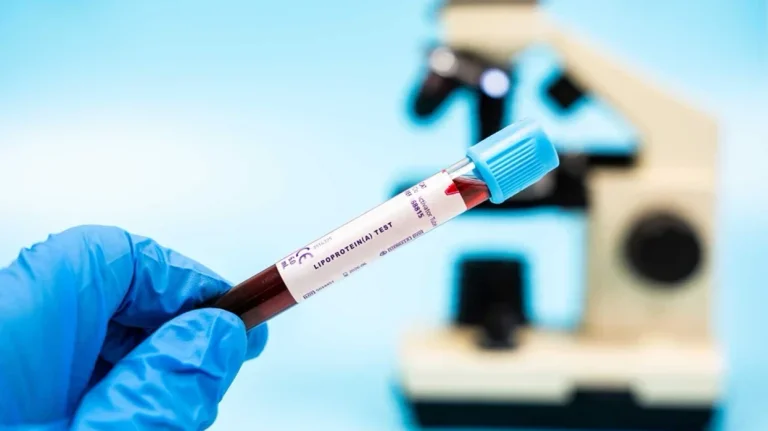
(a month ago)Lipopproteina, known as Lpéa, can increase the risk of stroke and cardiovascular death even when the classic blood fat profile seems normal
Scientists have identified a particular level of “shatur” of cholesterol, which, despite other factors, can serve as an accurate indication of the risk of premature death and serious diseases of blood vessels.
For decades, the primary attention of medicine has been focused on the LDL, known as the “However, the latest data shows that a less - known particle related to cholesterol can have a very important role in assessing cardiovascular risk.
This particle is called lipoprotein, or Lpéa. It can also signal danger when standard blood fat tests seem enjoyable. This opens up a new direction in preventing heart disease and blood vessels.
One in Five Can Be in Danger
About one in five people has increased levels of lipoprothesia, but most are not aware of that, because it usually does not give symptoms. Although its relationship with heart disease is known to scientists, it has not been fully clear to how well it can predict danger in individuals with or without previous diseases.
A extensive data analysis involving more than 20,000 patients has shown that Lpéa's increased level of growth is linked to constant danger, even to patients who already receive therapy described by the doctor.
The new data has been presented as an important discovery at the Society's scientific sessions for Cardiovascular Angoography and Interventions, SCAI 2026, as well as at the Canadian Association of Interventional Cardiology Summit, CAIC, held in Montreal at the end of April.
What is lipoproteina?
LDL and Lpéa are a blood indicator that is directly related to heart health, but they differ in how they can harm the organism.
LDL, widely known as “
Lpéa, on the other hand, is very similar to LDL, but there is a key difference that makes it more dangerous. It contains an additional protein called alypoproteina, which is linked to LDL particle.
This additional protein adds harmful effects to the heart and blood vessels in two ways:
- It speeds atherosclerosis, because it can be more easily deposited in the walls of arteries and create plaques;
- It stimulates blood clotting because its structure can make the natural decay of clots difficult, increasing the risk of blocking blood vessels.
The biggest problem with Lpéa is that its blood level is determined by about 90 percent of genetics. This means that physical food and activity, which greatly contribute to LDL reduction, have far more limited impact on Lp therefrom.
Moreover, most people do not know that they have an increased level of Lpéa because standard biochemical tests do not usually involve this measurement. Unlike the LDL, there are currently no widely approved treatments for the specific landing of Lpé.
Details of New Research
Researchers analyzed plasma samples preserved by 20,070 participants aged 40 and older. The analysis included participants from three major studies of National Institutes of Health, NIH, United States of America.
The samples were tested in a specialised laboratory using a standardized test. Participants were divided into four groups at Lpéa level:
- less than 75 nanool per litre, nmol/ L?
- From 75 to 125 nmol/ L?
- From 125 to 175 nmol/ L?
- 175 nmol/L or more.
Disturbing results: brain stroke and cardiovascular death
During the average four - year chase, 1,461 major cardiovascular events, including heart attacks, strokes, and fatal outcomes were recorded.
The results showed that the high level of this particle is linked to specific health threats.
People with Lpéa level) 175 nmol/L or more had:
- 64 percent greater risk of stroke;
- 49 percent greater risk of cardiovascular death;
- 31 percent greater risk of major cardiovascular events.
Interestingly, this level of Lpéa was not directly linked to greater risk for the heart attack itself, but his role in showing a stroke was more pronounced. The danger was markedly higher in those who already had history of heart disease, with 30 percent increase in risk, compared to 18 percent in individuals without previous heart disease.
Why can the test be important?
Experts stress that these findings can change the way cardiologists value the risk in patients.
For the first time, we can determine a specific level of Lpéa, which exposes patients to an apparent higher risk of large cardiovascular events, especially for strokes and deaths”, Dr. Subhad Banerjee, lead author of research and interventional cardiologist at Baylor Scott & White Heart Hospital in Dallas.
New Talent Guides, published on March 13 in the magazine JACC, it is recommended that all adults at least once control Lp therefrom level.
According to Dr. Apart from age, patients can do a simple and free blood test to see if they have this genetically defined condition. If high levels of Lpéa are discovered, they must cooperate closely with the doctor to more aggressively reduce LDL cholesterol and control other cardiovascular risk factors better.
This information is especially valuable because new options are emerging on the horizon.
Future research will focus on individual groups of patients, including people with chronic kidney disease and those with peripheral arteries, to determine more clearly which patients are most endangered.ApoB and Lpéa): Two tests for more accurate risk assessment
Contemporary science is increasingly showing that measuring cholesterol in blood is often not enough to evaluate the danger of heart disease correctly.
A major study of over 200 thousand people, led by researchers at the University of Technology and Harvard University, shows that the number of cholesterol particles may be more important than cholesterol itself.
In other words, B, orB, and Lpéa provide a deeper and more real view of cardiovascular danger.
So it's not crucial just how much cholesterol you have, but how much “barta” of this cholesterol circulates into your blood vessels.
Studies have shown that orB is one of the best indications of cardiovascular risk because it directly reflects the total number of harmful particles. Some experts even predict that in the future or the B can replace classical cholesterol as standard risk indicator.
Two can have the same level of bad “colesterol”, but different number of particles orB and, therefore, different risk for heart attack. /Periscope