a minute ago
Camber for FAZ: Serbia's democratisation cannot be based on reproduction of old nationalist models
Periskopi(a month ago)
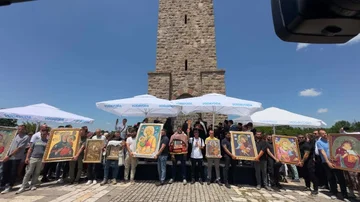
(a month ago)In an article on developments in Serbia, the well-known German newspaper “Frankfurter Allgemaine Zeitung” (FAZ) stresses that a part of the student protest movement is characterized by a nationalist tone.
Recently, it was made clear through the adoption of a <x0mordium“student, which in a confusing ideological language repeats Serbian nationalist narativa for Kosovo and essentially requires that the already independent state be restored as province under Belgrade's sovereignty.
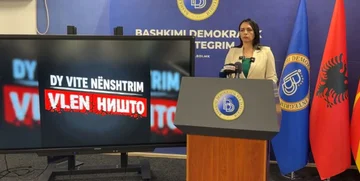
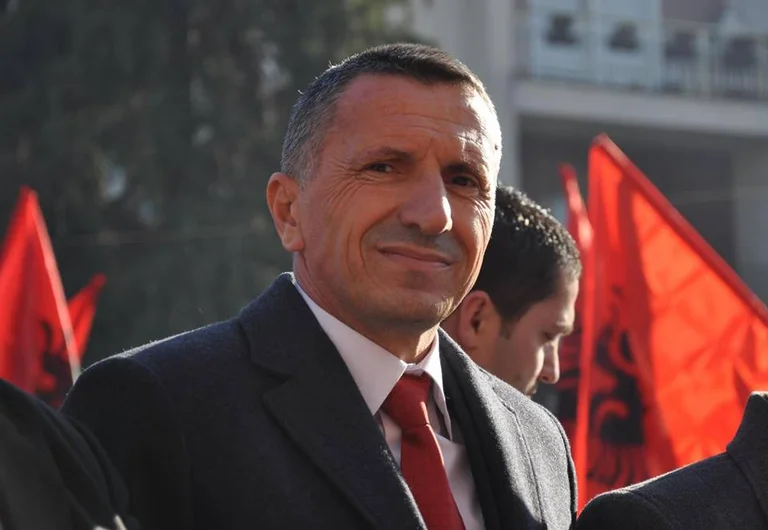
One politician who refuses this is Shaip Kamberi, the only Albanian MP in the Serbian parliament, writes “Frankfurter Allgemen Zeitung”.
Kamberi comes from Presevo Valley, which borders Kosovo southwest of Serbia. There is a majority of the Albanian population in the valley.
All in the south, around the border city of Presevo, Albanians make up more than 90 percent of the population. No wonder Kamber sees the events from an Albanian perspective.
Although he does not reject in principle their student protest movement, reports “Frankfurter Allgemeine Zeitung<18x1>, he certainly refuses their „memoride for Kosovo“and similar accompanying nationalist phenomena: Serbia's „democratisation cannot be based on the reproduction of old nationalist models even when they come ambalmed with a new political package“, he says.
He says he understands the pragmatic argument that it is necessary to replace Aleksandar Vuciqi's “authoritarian regime”, but experience from the new Serbian history has shown „compromises with nationalism produce, in a long term, new crises, new injustices and new instability“.
With that he alludes to the ninetyth and beginning of the two thousand years. In September 2000, the united Serbian opposition had managed to defeat violent ruler Slobodan Milosevic (the minister of propaganda whose current president at the time was Aleksandr Vuciq) in the election. After Milosevic refused to accept the results, he collapsed at a popular uprising in October of that same year. But the price for changing power was high. In the election, the pro-European opposition had made a pragmatic alliance with Serbian nationalist Vojislav Kostunica, who in the years ahead as Yugoslav president and later as Serbian prime minister, pushed Serbia away from the EU and approached Russia.
Kamber does not want such developments repeated with the student movement.
A democratic Serbia must be based on civic values, the encounter with the past, and the equality of all peoples”, he says.
Of course, the student movement is not homogenous, and it would be a mistake for all students to be considered nationalist.
However, the problem arises when dominant symbols, messages or documents leave the impression of a continuation with the old national narracies that led the region into conflicts.“It is no surprise, then, that minorities in Serbia are becoming concerned about „that basically nothing is really changing“.
Student supporters argue that their insistence on Kosovo's return to the Serbian state implies only respect for the Serbian constitution.
That's formally accurate, the German newspaper underlines. As prime minister, Kostunica initiated a successful referendum in October 2006, the result of which Kosovo has since been ranked an integral part of Serbia in the preamble of the Serbian constitution.
The call to the constitution itself is not problematic, Kamber says in this analysis published by “Frankfurter Allgemen Zeitung”. But the problem arises when man is called into the constitution „pa faced reality on the ground and without understanding the historical context. Kosovo today functions as an independent state, recognised by most of the democratic world.“In the face of these facts, he estimates that insistence on constitutional judicial formulas keeps Serbian society „in a permanent conflict with reality“.
The claim that there is a „open issue of Kosovo“on status, speaks more about Serbia's domestic political dilemma than about Kosovo”.
Because the illusion that historical processes can go back does not serve Serbia or the region.
Another argument that advocates or defenders of the rebel students bring is of pragmatic nature: Serbia, according to them, is a country where without a strong dose of nationalism cannot win elections. The student movement is adapting to this reality.
Kamberi also rejects this argument: “The claim that without nationalism cannot be won elections in Serbia speaks of the depth of the problem in Serbian society. If logic is accepted that nationalism is a necessary political tool, the scope for real democratisation is shut down. However, political leadership must change social awareness and not adapt to it in an opportunistic way”.
It is not enough just to defeat Vucciki, Kamber says.
Serbia needs a break from politics that brought the country to its current political situation. Therefore, the Serbian protest movement is ahead of a historic decision: “Does it just want a change of power or a real change of Serbia?
Kamberi sees a necessity to make a clear “incompatible with „ideology that have produced war, ethnic conflicts and systemic discrimination. This envisions a confrontation with the past”.
But he cannot tell enough about the students.
In fact, as highlighted in the article of “Frankfurter Allgemeine Zeitung: Very few of the Serbian students who cheer the biggest on Kosovo's affiliation in Serbia have ever set foot on Kosovo soil.
They do not recognise Kosovo, nor do they recognise any Kosovo Albanians. Even less is their knowledge of the crimes committed against Kosovo Albanians by the generation of fathers of today's Serbian students.
One example is the massacre of Meje and Korea in April 1999. In these two Kosovo villages, Serbian troops -- in retaliation for four former Serb police members -- shot about 350 Albanian men. But whoever asks Serbian young people about it, will mostly receive only a wrinkle of shoulders. Meya and Kornica? They've never heard of them. It is similar with other Serbian war crimes in Kosovo.
Such ignorance or unwilling to know also contributes to the capital's student protests being attended with a poor interest in Albanian-run border areas in southwestern Serbia.
Albanians in the Presevo Valley have hardly found their political and social concerns in the dominant messages of protests, Kamberi describes the mood in his eastern region.
The reason for this is the feeling that minority rights issues, discrimination and inequality are not enough in the agenda of the student movement. Therefore, Serbia's Albanians did not even participate in protests”. /Periscope