3 minutes ago
Serbian Day of Vidovdan ends in Gazimestan
Periskopi(2 hours ago)
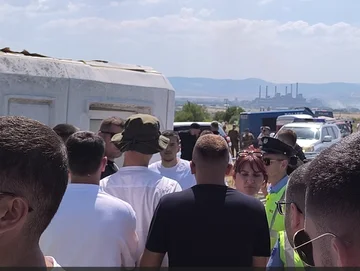
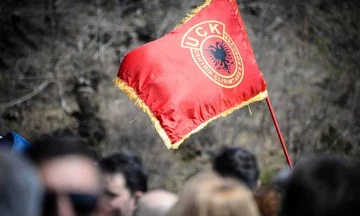
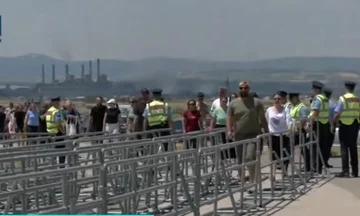
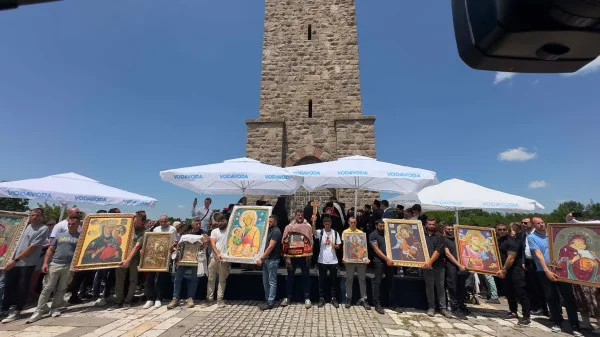
(2 hours ago)With song and prayer, the festival of Serbs in Gazemistan has ended. Hundreds of Serbs from Kosovo gathered in the marking of the so-called “Vedovdan” holiday.
As a cause of the gathering of Serbs in Gazimestan, located near Obilik, long columns were created in the Pristina-Mitrovica magistrate.
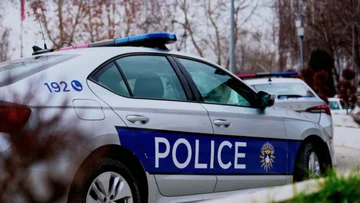
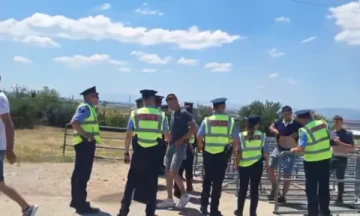
Police checked whether they carried any symbol that promotes interethnic hatred, reports EO, broadcast Periscope.
According to police officials on the ground, the situation has been calm.
June 28th marks the development of the Kosovo Battle, where the Balkan Peoples' Army coalition suffered losses from the Ottoman Empire.
After this defeat, Balkan peoples were either occupied by Ottomans or forced to become vasals of the sultan.
The Albanian princes continued to fight, and the most prominent among them was Skenderbeu. Serbia became part of the Ottoman Empire.
The Kosovo Battle took place on June 28th (June 15th by the old calendar), 1389 in Kosovo's Fusha, between the Balkan Peoples' Army Coalition, led by Prince Lazar and Ottoman forces led by Sultan Murat I (king 13605089).
The battle was fierce and both leaders, Prince Lazarus and Sultan Murati were killed, as well as many other princes. Both armies almost disappeared.
But the Ottoman Empire had resources to establish a new army for a shorter time.
The Balkan peoples could not recover quickly, and most of them eventually fell under Ottoman rule.
There is little data on the Battle of Kosovo, and most of these data are contradictory.
Hence, this event is more known to its myths than historical facts.
Under Sultan Murat I, the Ottomans expanded their rule from Anadol to the Balkans.
In the summer of 1389, Sultan Murati arrived in Kosovo, where he faced the coalition of princes.
Although the battle is described as a battle between Serbs and Turks or between Christians and Muslims, the facts say quite otherwise.
On one side were the Ottomans, whose army was made up of soldiers of the peoples and their vasal princes, including Christians.
On the other side was a coalition of the princes of Balkan peoples, among them many Albanian princes.
Prince Lazarus is known to have been killed in battle, but the circumstances he was killed in are unknown.
The other Serbian prince, Vuk Brankoovic, seeing that the battle could not be won and knowing he had to save as many soldiers as he could, withdrew from the battle.
In Serbian accounts, Brankovic is named a traitor and his betrayal a trigger for the death of Prince Lazar.
Sultan Murat I, believed to have killed Milos Obiliki, one of the main heroes in stories and legends about the Battle of Kosovo, has also been killed in the battle.
The son of Murat I, Bayazit I, became Sultan and continued the campaign of expansion of Ottoman occupation in the Balkans for a time, but in 1403 was defeated near Ankara by the Mongol troops of Timmulang.
This enabled Albanian masters to strengthen their positions. At this time families like Balsaj, Zechariah's Dukagjinas in northern Albania take the stage; Kastriots, Topiaj, Arianite, Mozakaj and Gropath in Central Albania; Swords, Zenebish in southern Albania.
By this time Venice was able to take up coastal cities from Kotor Bay to Golden. Budva, Ulcinqi, Shkodra, Lezha, Durres, Parga, who were important shopping centres and exchange with the interior parts of the country became part of what is in history known as the Venice Arberia. /Periscope