20 minutes ago
Joseph: Kurtu gives up divisive populism and takes advantage of Vuciki's weakening
Periskopi(3 months ago)
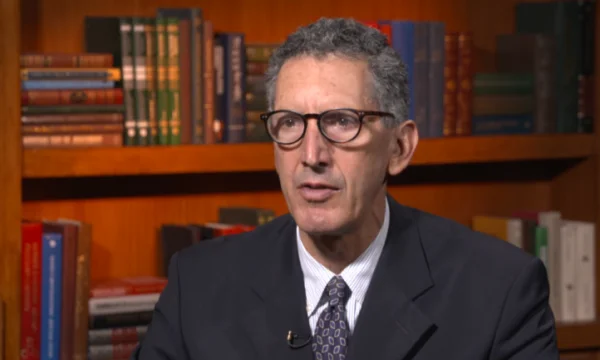
(3 months ago)Victor Orban's loss in elections in Hungary creates a new window of opportunity for Kosovo, estimates Edward P. Joseph, legalist at Johns Hopkins University in the United States and conflict management expert. He describes the Hungarian leader's departure after 16 years in power as a “hit” for Serbia's president, Aleksandar Vuciq, by [...]
He describes the Hungarian leader's departure after 16 years in power as a “hit” for Serbia's president, Aleksandar Vuciq, stressing that he has been a key factor that has given Belgrade maneuvering space within the EU.
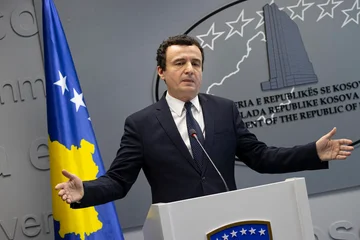
According to him, Kosovo Prime Minister Albin Kurti must exploit this “loss of Vuciqi”, show state responsibility and position Kosovo as a factor of stability, leaving divisive approaches behind.
“Just as the Trump administration is not interested in the Vuciki Games, it is not even interested in Kurti's. The suspension of Strategic Dialogue last September was evidence for this”, Joseph says of Radio Free EuropePeriscope broadcast.
Joseph also speaks of clashes between the US and Europe and their possible influence in Kosovo, at a time when calls for more autonomy in the field of defence are increasing in the EU.
However, according to American expert, the role of the United States remains crucial as the main axis of NATO and the main guarantor of security in the Balkans.
In some recent statements you have said Western politics in the Balkans is often unclear and uncontainable. In Europe, discussions on lowering dependence on defence issues are increasing. How do you assess the consequences of this trend for Kosovo security?
Edward P. Joseph: Unprecedented tensions in transatlantic and NATO relations, stemming from the war in Iran and other controversial issues, have influence throughout Europe, including the Balkans.
For now, I am hopeful that there will be no changes in the US approach to [the NATO Commission in Kosovo] KFOR. Renowned members of Congress from both parties, Republican and Democratic, have written to the Secretary of State [Marco] Rubio, asking that there be no changes to the US presence in KFOR.
However, dyvergence between Europe and the US continues, and despite that, Europe still needs the US for general security. Washington Remains main axis NATO, while NATO remains the focus of security in the Balkans.
You have often stressed the importance of a stable US engagement in the Balkans. If Europe takes a more autonomous role in the field of defence, do you expect any change in Washington's commitment to Kosovo?
Edward P. Joseph: I, like many others, believe that any withdrawal or reduction of the US presence in KFOR is completely premature.
Yes, it is important that Europe build more capacities for its security, and Europe is doing so. However, Europe does not enjoy US credibility and credibility is the key ingredient for maintaining stability in the Balkans.
Continued arms increase in Serbia, including the purchase of Chinese supersonic missiles, is a serious concern. What threat is intended to combat these missiles?
Continued and exaggerated alarms in Belgrade for the Joint Security Declaration between Albania, Croatia and Kosovo are also disturbing, as Belgrade seems to be using it as an excuse to arm and artificially create a sense of danger within the country. Radio Free Europe: You have earlier warned of vagueities in Western politics towards Serbia. The current debates on the EU's <x0 strategic economy”, can you unwittingly create Serbia or Russia opportunities to test how united the West is in the region?
Edward P. Joseph: No, I see no link between strategic European autonomy and Western policy towards Serbia. On the contrary, I see a delayed austerity of the EU's position on Serbia.
[EU Enlargement Commissioner] Marta Kos has criticised Belgrade for the laws in the judiciary. Also, the possibility of suspending a significant portion of EU funds is being seriously discussed.
At the same time, the Trump administration does not seem interested in the Vuciki games.
Washington has surprised Belgrade with its strong stance on getting Russians out of [Night Industries] NIS. It is hoped that elections in Hungary will speed up NIS's sale to [the Hungarian company] MOL.
Russia and its leading supporters in Serbia cannot be happy that [the outgoing prime minister of Hungary] Victor Orban will no longer be the one who oversees MOL and control of NIS.
The loss of Orban's Fidesz party in the elections in Hungary could only encourage the EU to finally hold Belgrade and President Vuciq responsible for reforms, internal repression and destabilising policies against Serbia's neighbours.
In the context of the dialogue stalled between Kosovo and Serbia, can a stronger EU defence position improve its political impact? Or the EU's lack of internal unity remains the main obstacle...
Edward P. Joseph: This second is the real obstacle to EU political influence in the Balkans.
In fact, as I have written and declared earlier, the four NATO countries that do not recognise Kosovo -- Greece, Romania, Slovakia and Spain -- keep this hailing and keep the region blocked.
These four NATO member states actually hand over influence to Serbia, effectively giving Belgrade a kind of veto on Kosovo's moves towards NATO and the EU.
There is no need to consider any military strengthening from Europe, when Europe is still politically divided because of Kosovo. In SAIS, I published two works to resolve this issue.
First, Ukraine can recognise Kosovo, which would promote recognition by Greece, and then by Romania and Slovakia. Spain would then naturally follow that path.
Second, the US could offer a path to Serbia and Kosovo's NATO membership. This would immediately be transformative for the entire region.
But to achieve this, Europe must first overcome the current crisis in relations with the Trump administration.
In this changing environment, what should be Kosovo's top strategic priority?
Edward P. Joseph: Kosovo's strategic priority should be precisely to exploit Vuciqi's difficulties to appear as a pillar of stability and co-operation in the Balkans. After his meetings in Paris and London, it is now time for Prime Minister Albin Kurti to stabilise the situation in Kosovo.
Kurti must show state responsibility and co-operate with the opposition for a compromise solution for the president.
Kurti, too, must take special steps to show his strong commitment to non-US communities.
He must visit Serbs and declare his full commitment, that health services and other services will continue without interruption, until the once Serbian institutions are integrated into the Republic of Kosovo.
While Vuciq faces increasing attention from the EU, he no longer enjoys the protection of Victor Orban ʹ Kurti can exploit this situation.
Now is the time to put Kosovo's interests first and to show state capacities both within the country and in the international arena.
Has Orban so far been one of the main factors that has given Serbia room for maneuvering within the EU?
Edward P. Joseph: Yes, Orban has been the key factor, but not the only one who has given Vuccikit space to maneuver within the EU.
First, Orban's great election loss is another blow to Vucinqi. The impact in Belgrade is much greater than the arrest of Nicolas Maduros in January, which also came as a surprise to the Serbian president. This time, the impact is felt both in Washington and Moscow, hitting the entire populist-authorial agenda and prorus.
Second, the loss of Orban is an impetus for the opposition in Serbia in an election year. The comparison is obvious to all: if Hungarians can take Orban away, then Serbs can take Vuciqi and SNS away.
Thirdly, this loss increases the EU's self-confidence, just as Vuciq is facing an ever greater scrutiny. The Venice Commission is expected to give an opinion on the contracting laws for the judiciary, while the European Parliament is expected to publish a report likely to address Belgrade's pressure on journalists, activists and opposition.
In short, Orban's loss robs Belgrade of its main defender within the EU, while also weakens Vuciqi's allies in Washington and Moscow.
And, as it has been seen, the Trump administration has not offered Vucinic the strong support he has given to Orban.
Budapest received a year-long extension for the import of Russian oil and gas, while Belgrade faced sanctions against NIS, which led to the closure of the refinery in Pancevo. This means that there is now even less reason for Washington to support Vucinqi.
You said a little earlier that now it is time for Kurt to put Kosovo's interests first and show state skills both at home and abroad. Given that Kosovo remains the most outdated country in EU integration... what concrete benefits can it really expect in return?
Edward P. Joseph: The elections in Hungary create an important opportunity for Kurt if he can use it.
With Aleksandar Vuciqi weakened and Serbia entering a tense election period, under an increasingly large survey by the EU, Kosovo could emerge as a source of stability.
To accomplish this, Prime Minister Kurti must give up his divisive populism. It must build consensus for a new president, avoiding repeated elections that are unnecessary and distracting.
In exchange, Kosovo can expect new support in Brussels, the EU capitals and Washington.
Just as the Trump administration is not interested in Vuciki's games, it is not even interested in Kurti's. The suspension of Strategic Dialogue last September was evidence of that.
Kurti has the opportunity to change the perception of a perception that undermines Kosovo because it is a problematic driver. Instead, he can show that he and Kosovo are valuable partners for the EU, NATO and the United States. /Periscope