19 minutes ago
With a Trump statement dropping fuel prices on international markets
Periskopi(4 months ago)
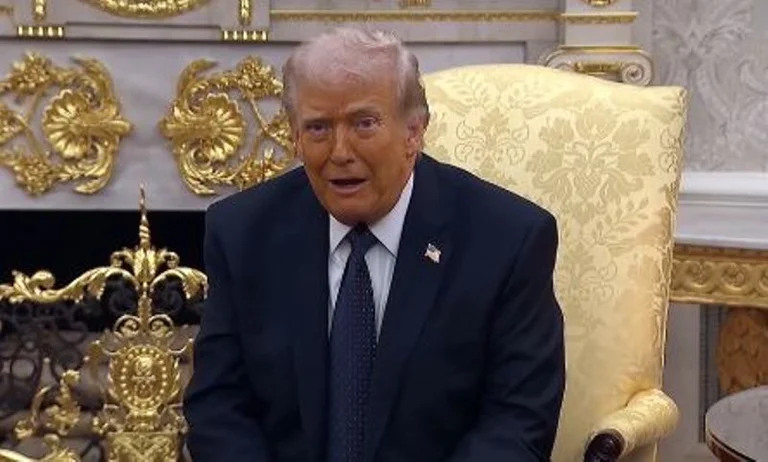
(4 months ago)American President Donald Trump has declared that the U.S. Navy will soon begin escorting the tankers passing through the Strait of Hormuz, “if necessary”. He stressed that this move aims to ensure the safety of navigation and to protect American and international interests on one of the most important sea routes for [...]
He stressed that this move aims to ensure sea safety and to protect American and international interests on one of the most important maritime routes for global oil transport.
With immediate effect, I have ordered the U.S. Development Financing Corporation (DFC) to provide, under very reasonable conditions, security of political risk and guarantees for financial security of all maritime trade, especially of energy going through the Gulf. This support will be available for all shipping companies”, he wrote on the Social Truth.
If necessary, the United States Navy will start quickly escorting the tankers through the Strait of Hormuz. Whatever the situation, the United States will guarantee free flow of energy to world markets. The United States' economic and military power is the largest in the world and will follow other” actions, he added.
Oil prices reached the highest level in the last 13 months in Europe, after Iran closed the Hormuz Strait last night, key sea routes for oil transport, writes Skynews.
Iran also pledged to attack any ship that tries to cross this waterway.
The president's announcement had immediate responses to financial markets, where global oil prices erased much of the day's increases.
Brant oil, the international standard, at its peak was about 8 percent higher during the day but then increased by 2.9 percent, standing just below 80 dollars per barrel before the U.S. market closed.
Hundreds of tankers usually move at any moment through the Strait of Hormuz, between the Persian Gulf and Oman Bay, with Iran in the north, and Oman and the United Arab Emirates in the south.
This is the only sea outlet for leading oil producers in this region, including Iran.
In 2024, about one fifth of all global oil went through this narrow waterway equivalent to 20 million barrels a day.