25 minutes ago
Internet access remains severely limited in Iran
Periskopi(5 months ago)
(5 months ago)Internet access to Iran has again been severely restricted, hours after the launch of large-scale US and Israeli attacks on Iranian territory and Tehran's revenge attacks Saturday, the BBC reported. Data from Kentic, a company monitoring global internet traffic, shows a significant drop in connection [...]
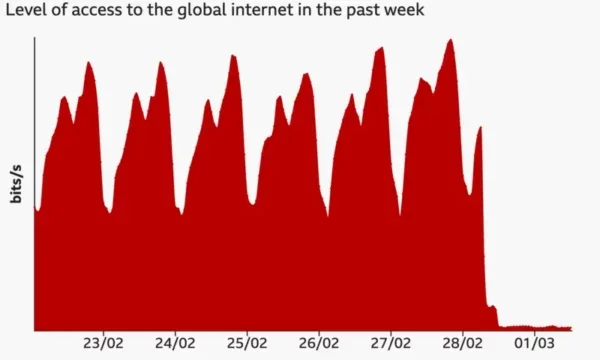
Internet access to Iran has again been severely restricted, hours after the launch of large-scale US and Israeli attacks on Iranian territory and Tehran's revenge attacks Saturday, the BBC reported.
Data from Kentic, a company monitoring global internet traffic, shows a significant decline in connections across Iran following the attacks. The firm estimates that approximately 99% of the country's access to the global internet has been cut off. This is reflected in social media, where only a limited number of accounts primarily belong to Iranian officials or other trusted individuals seem to remain active.
Doug Madory, director of Internet analysis at Kentic, said that internet traffic volumes fell at 7:06 GMT and again at 11:47 p.m. GMT on Saturday, leaving only minimal connections in the country.
Reports suggest that access to web sites and domestic services, such as internal message platforms, remains available, increasing the possibility that domestic networks are still functional despite the almost total disruption of international ties.
Iran has previously established comprehensive internet closures during periods of unrest in January 2026. Following recent protests, internet access was completely cut off across the country. When the global connection was later restored, traffic levels turned to only about 60% of their pre-scheduling levels.
In the last 24 hours, some users have been able to use the VPN to connect to the outside world, as a small portion of international access continues to exist. This minimal data transmission has allowed some users to direct traffic through the VPNs