3 hours ago
“Enigma” which led to the killing of Khamene in just 60 seconds, the key role of the “CIA and operational tactics
Periskopi(4 months ago)
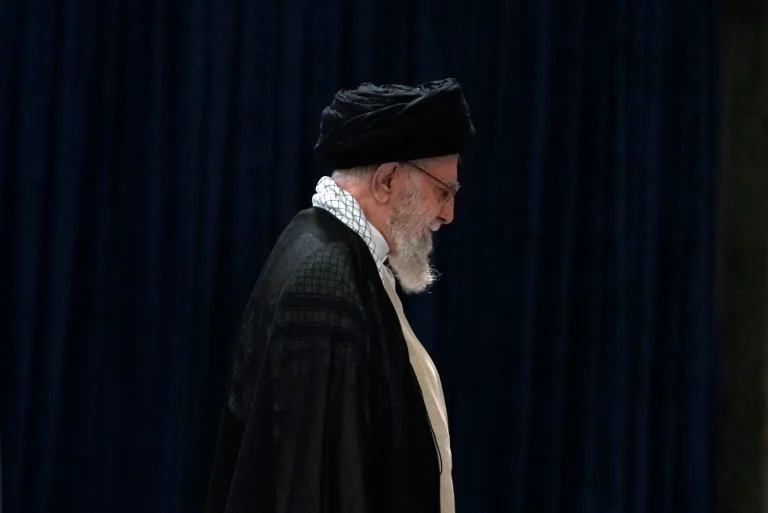
(4 months ago)Iran's Supreme Leader, Ajatolah Ali Khamenei, is being described by experts and former intelligence officials as the culmination of decades of systematic intelligence collection by Israeli intelligence agencies, with significant technological assistance and operational support from the CIA and other American agencies over the past six months. According to Israelite military officials, [...]
According to Israeli military officials, referred to as “The Guardian”, 86-year-old Khamenei was killed along with seven members of “Iran's top security leadership” that had gathered in different parts of Tehran, as well as about a dozen members of his family and close circle.
The attacks occurred almost simultaneously, within 60 seconds, media reports in question. At the same time, 40 other senior Iranian officials reportedly have lost their lives.
The killing of Khamene was the start of the Israeli and US air campaign aimed at overturning the theocratic regime in Tehran, dipped the Middle East once again in a cycle of instability and violence.
Surprise element and CIA contribution
Israel's former military intelligence head, Amos Yadlin, described the attack as a <x0 tactical and operational framework”, as it was widely believed that Israel would attack at night, as in the surprise attack that opened the 12-day war in June.
The information the CIA allegedly collected about a meeting of senior Iranian officials at a leading complex in Tehran's heart on Saturday morning is considered crucial. According to reports in the New York Times, the American service allegedly informed the Israelites that Khamene would be present at the scene and the exact time of the meeting.
At the same time, Israeli intelligence had monitored Khamene for years, creating a detailed file on his daily movements, family customs and associates, and people responsible for his safety.
As a CIA veteran with years of experience described in identifying high profile targets, the process resembles “a large enigme”, combining small pieces of information: from how someone gets his food to what happens to his waste.
We all leave a trace. Everything he does leaves a trace of”, he said.
Former CIA officer Reuel Gerecht argued that the United States had impressive technological skills, but Israel had built networks of agents on the ground over the years, capable of providing human intelligence and conducting secret operations within Iran.
The role of Mossad and his networks in Iran
Mossad has concentrated in Iran for decades, building deep networks of informants and operatives. Past uses include the murder of a senior Iranian nuclear scientist with a remote-controlled machine gun, cyber attacks in critical parts of the Iranian nuclear programme and the theft of a nuclear archive.
In 2024, Hamas' political leader Ismail Haniyeh was killed in Tehran by a bomb placed in a government reception home.
During the 12-day war in June, Israeli agents had found the homes of Iranian nuclear scientists, intelligence officers and military commanders, allowing them to be killed in a first wave of unexpected attacks.
Israeli analyst Yossi Melman said Mossad had changed strategies about 20 years ago, recruiting local agents in Iran and equipping them with advanced technologies and training.
The agency's current head, David Barnea, established a special department for a “, foreign legislation” agents who were deployed on sensitive missions in the Middle East.
According to Melman, recruiting in Iran was easier because of the presence of elements opposing the regime.
Strike or strategic error?
The decision to kill Khamene seems to have been taken into consideration in the past, but Donald Trump is said to have been cautious last year, due to fears of regional escalation and reactions by allies.
After the end of the brief conflict that followed the US attack on Iranian nuclear facilities, the reserves appear to have softened, while Israeli officials speak of “enhanced co-operation” with the US on the Iran issue.
However, some experts and intelligence veterans warn of a possible strategic error. Yossie Melman pointed out that Israel “wants killings” and that eliminating leaders is not a permanent solution, as they are replaced. A CIA veteran calling murder a strategic mistake:
When deleting a leader, it does not solve the problem. You create a new”.
Mossad's former anti-terrorism chief, Oded Ailam, stressed that the 60-second operation was the result of years of preparation. The modern battle scope is not determined solely by tanks and planes. It is determined by data, access, trust, and time. One minute it could change a whole region”, he said.
The question remains whether the elimination of Iran's supreme leader will accelerate the regime's weakening or pave the way for new, even more radical developments in the Middle East, now fragile.