9 hours ago
From B-2 to Patriot, the weapons the US is using to attack Iran
Periskopi(5 months ago)
(5 months ago)Ahead of US-Israel attacks on Iran, Washington garnered its greatest strength and some of its most powerful weapons in the Middle East in decades. President Donald Trump had warned that the United States was prepared. US Central Command (CENTCOM) published on Sunday a list of American weapons used until [...]
President Donald Trump had warned that the United States was prepared.
US Central Command (CENTCOM) published a list of American weapons that have been used so far in fighting Iran on Sunday.
Here's a look at the assets used so far in what the Pentagon calls “Operation Epic Fury”.
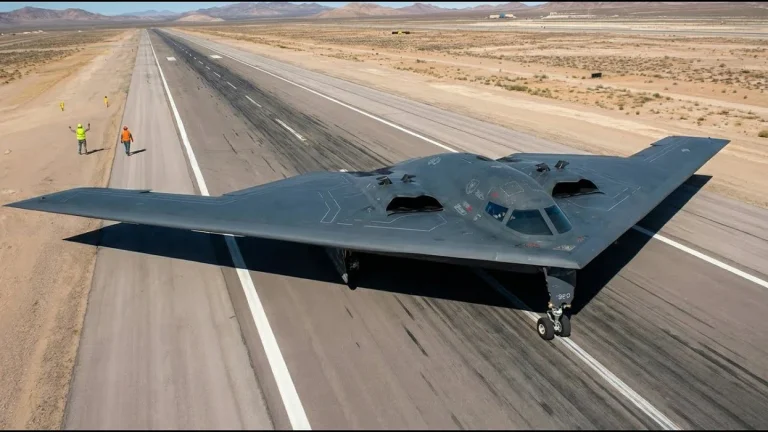
Secret bombers B-2: Bombers with wings like bats, at a price of over a billion dollars each, are the most powerful platform in the U.S. Air Force. Armed with four jet engines, B-2 can carry conventional or nuclear weapons, with intercstinctural radiation and fuel air supply.
Flyn by a crew of two, B-2 usually flies from their home at Whiteman Air Base in Missouri, as they did last year when Iranian nuclear complexes hit.
This mission last June was undertaken from seven out of 19 B-2 in the fleet, while others were used for a false trip to Hawaii. They used the largest conventional American bomb ? . . . .
This time they used 2,000 pounds to crack down on Iranian ballistic missiles, according to CENTCOM.
Drons Ones HACAS: Operation Epic Fury marks the first use of fears in combat for the United States.
American warship: CENTCOM has announced that aircraft carriers have been in action during the war.
Two American aircraft carriers, USS Abraham Lincoln and USS Gerald R. Ford, they were in the Middle East when the Iran attacks started. The Lincoln ship was in the Arabian Sea and that Ford in the Mediterranean near Israel.
Iran has claimed to have hit Lincoln's ship with ballistic missiles, something CENTCOM called “GET”
Images published by the American Army also show devastating Tomahawk missiles. American Arleigh Burke-class destroyers, a number of whom are located in the region, can hold as many as 96 Tomhawk rockets.
The Patriot and THAAD missile defence systems: Patriot and THAAD are used to combat the coming Iranian fears and ballistic missiles.
Fight plane: CENTCOM says a range of fighter planes have been in effect in the early days of the war. They include F-16s, used by the Air Force, and F/A-18, used by Marina and Navy Corps.
CENTCOM said the invisible F-22 and F-35 Air Force aircraft, which are flown by the Air Force, Navy and Navy Corps, are also involved without providing specific missions.
Also deployed in the country are air Force A-10 aircraft with two engines, writes CNN.
Electronic Attack Planes EA-18G: Based on a fighter plane F/A-18, EA-18G Growler carries radars to identify and suppress enemy electronic threats. Two - engine aircraft may also be armed with rockets directed at electronic broadcasts such as radar and communications centres.
Early warning aircraft and Air Control (AWACS): The U.S. uses two types AWACS, Air Force E-3 Sentry and Navy E-2 Hawkey.
AW Air Force ACS are four engine aircraft based on the Boeing 707 airline platform.
AW The ACS can identify and track enemy planes and ships and monitor detailed information of the American forces' battlefield. Information is shared with command centres and ships at sea.
Air Communication plane: CENTCOM gave no specific details, but EA-11 Air Force planes BACN (air communications on battlefield) was seen in the Middle East in the weeks ahead of air strikes.
EA-11 is often called “Wi-Fi in Heaven” and uses “to connect sound and tactical data between the air and land forces, while overcoming obstacles such as mountains, harsh terrain or distance”.
Air Control Airplane P-8A: Based on a commercial air carrier Boeing 737, two - engineed Navy jets called Poseidon are used for war against submarines, as well as intelligence, surveillance and discovery.
Intelligence aircraft RC-135: With a crew of more than 30 people, including electronic war officers, intelligence operators and even air maintenance technicians, RC-135 has been a constant tool in American military operations since the Vietnam War.
MQ-9 Responses Air Force describes MQ-9 drones with a turbohelic engine, piloted from a distance, mainly as an attack plane to hit “high-value, fast and sensitive targets to the time”. They carry Hellfire missiles and cruise bombs that can be used against enemy personnel and move around in the field of battle for discovery and intelligence.
M-142 HIMARS: The Army's high-powered Artile Arterial Systems are mounted in a three-accetics truck and offer what the manufacturer Lockheed Martin calls a <x0fectal capability and go”, which means they can shoot and move quickly into a new position before facing a counterattack.
HIMARS can carry missiles with a range of more than 480 kilometers depending on the mission.
Fuel supply assets: These include both air tankers and sea supplies.
The U.S. Air Force flies with two types of tanks, KC-135 with four engines, based on a Boeing 707 air structure, and KC-46 on two engines, based on Boeing 767. The fuel supply during the flight would be critical for B-2 bombers who would perform the long flight to the Middle East from the US continent. But planes in the region can be supplied with fuel in mid-fly to stay closer to the battlefield.
U.S. warships are supplied with offshore fuel from ships. Fuel supplies take place as ships are on the move with water pipes thrown through the water from cargo ships to warships, more or less like a gas station in the middle of the ocean.
Cargo planes: Reform aircraft C-17 Globester and C-130 Hercules sent most of the ammunition to the Middle East and many of the troops used in the attack on Iran. /Telegraphy/