2 hours ago
A priestly municipality in the highlands of northern Albania
Periskopi(5 months ago)
(5 months ago)As the medieval town of Drivastos in today's north became a post of Catholic culture and disappeared in the Ottoman invasion In this blog post, historian Oliver Jens Schmitt traces the history of the northern Albanian town of Drivistto. It shows how a center of Catholic education and Latin culture developed on the lips [...]
Like the medieval town of Drivastos in today's north became a post of Catholic culture and disappeared in the Ottoman invasion
Disaster struck the city on September 1, 1478. After several days of heavy artillery promotion, the last Christian defenders of the northern Albanian mountain town of Drivastos surrendered to Ottoman circlers. By order of Sultan Mehmed II, the conqueror of Byzantium, the prisoners were executed outside the walls of the northern Albanian monastery of Shkodra, which made fierce resistance to the Ottomans. This ended the story of a very remarkable city.
Northern Albania is now known for Austrian travellers, and the Valley of Valbona becomes a real walking camp for Central and Northern European mountaineers during the summer. Few will know what cultural treasure they are missing when traveling directly from Shkodra to their walking destinations.
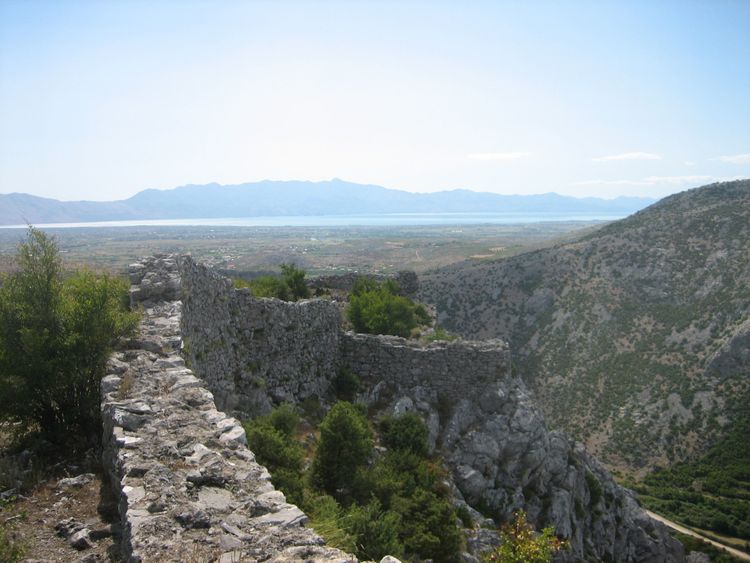
A little less than six miles [10 km] outside of Shkodra lies the village of Dresse. As is often the case in Albania, orientation becomes difficult even near large cities when you leave the main road. And since the Albanian government makes little effort to develop cultural treasures in the north of the country, Dresti still sleeps a rare sleep troubled.
Center of Catholic Education on Mountain Coasts
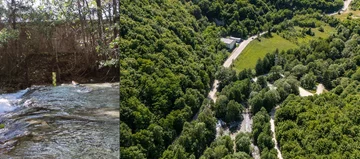
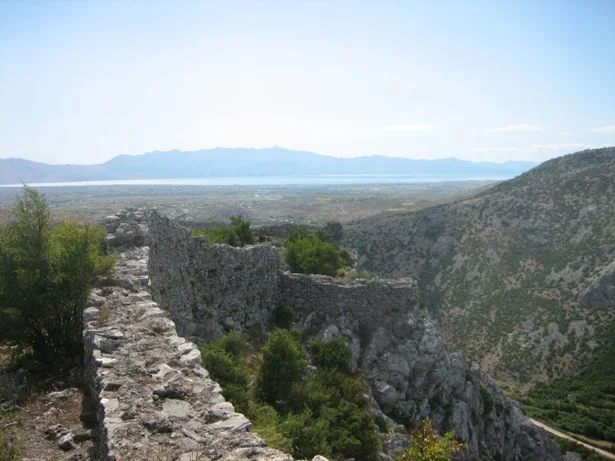
In the Middle Ages, a center of Catholic culture and Latin was established here. Drivastum, Latin, has been documented as a special diocese since the 10th century. The city is located at the entrance of the Albanian mountains. It is divided into a lower city, today a small village, and the upper city, today an area ruined by no real path. Visitors must climb over the rocks and maquis to the ridge of the hill, from which a magnificent view is opened: in the northern Albanian mountains on one side, to Shkodra and Lake Skadar on the other; and far west you can feel the Adriatic Sea, from which the Venetian galleons sailed up into the river, which is called Buna in Albanian and Bojana in Serbian/Montenegrin in the Middle Ages.
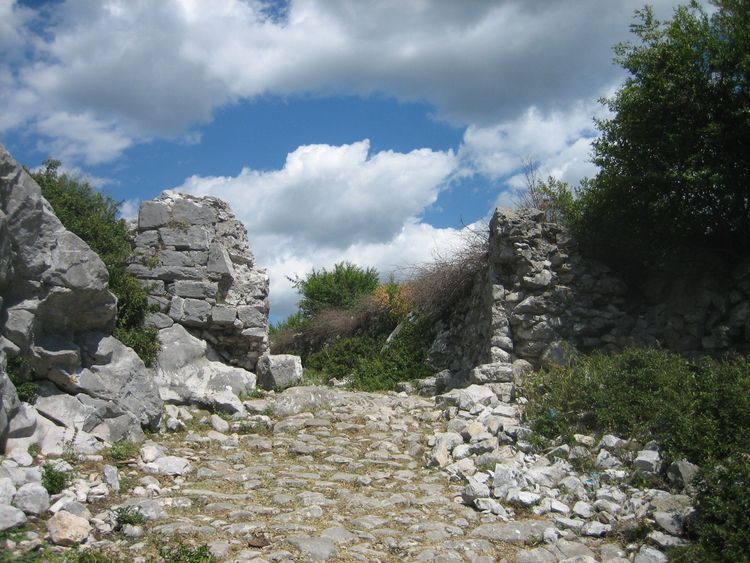
The Ottomans had destroyed a city that had numerous Catholic churches, patriarchian houses, the palace of the Venetian governor, massive fortifications, and also a Latin school. Drivalsto was widely known for this one in the Middle Ages. For generations Catholic priests were trained in it, who found jobs as immigrant workers in Dalmatia, especially in Dubrovnik, but also in mining cities in the internal Balkans, where they cared for German miners and businessmen in Dubrovnik. Drivalsto emerged in the Balkans as a post of Catholic culture and Latin, which was Orthodox and southern Slavics in the vicinity of the city. The Catholic cathedral chapter had its own statutes, which were preserved and evidence that people on the edge of the Albanian mountains participated in the culture of the Roman universal church. Catholic priests viewed themselves in an extenuating manner as a Catholic Church post against the Orthodox Balkan world.
The clergy also played a major role in the city's political and economic life, as much as somewhat exaggerated, he referred to as a priestly municipality. In fact, the clergy acted as swimmers and tax collectors, and they also represented their city abroad as diplomats.
Amid migration, Polyglot and urban autonomy
Drivalsto hardly participated in the major caravan trade between the Adriatic coast and the part of Kosovo. Its inhabitants lived from vineyards, considered the most important product, agriculture, and livestock. Therefore, work migration was necessary, and the city took a unique position here because it sent out highly educated immigrants. They were easily integrated into both the cities of Dalmatia and the Serbian despotat (principal) because they knew both political worlds well. Drivalsto was organised as a municipal council, with its city statute, the elected authorities, its patriarchs. Apparently, the Romans made up a considerable part of the population in a cultural environment in which Albanian, Serbian and Romanly Balkan were spoken, respectively, by shepherds half nomads (the sitters) and residents of the town. In Drivalsto, the legacy of the Roman Empire survived linguistically.
Politically, the city experienced turbulent times in its later life. By the end of the 12th century, it was under the rule of the Serbian dynasty Nemanjaid, whose power outside the ethnic Serb area was of a more formal nature. When the short-lived Serbian Zartumi was finally dissolved after 1371, the municipality had to state itself among noble regional families such as Balsha/Balshiić, Serb despots from the Lazarević and Brankovilić, and major powers of the time, Venice and Ottomans.
Between Venice and the Ottoman Empire: The Fall of Drive
Venice had taken the town from a Balsic to 1396, but the Serbian principalate tried to retain power over the city for more than half a century. The Republic of St. Mark also ruled since 1396, near Shkodra. But without Driviston, this property was worth nothing, the Venetian senators knew it, because the city was dangerous near the great caravan route along which silver was transported from Kosovo to the coast and, in the opposite direction, precious salt was transported inland without salt. Serbian despots, on the other hand, hoped to have access to the Adriatic Sea through Drivistos.
Not only did Drivros citizens distance themselves from Orthodox in their neighbourhood, they also wanted to keep Albanians out of their economic lives - that is, above all members of the northern Albanian tribes, who appeared slowly in the 15th century. The city also wanted no connection with Georg Kastriota Skenderbeun, who organised Albanian resistance against Ottomans at the time. The high urban class, which had revolted against the new tax pressure ten years after taking power from Venice, had no choice but to reconcile with the Republic of St. Mark about 1450. In 1459, the Ottomans had destroyed the Serbian despot; the most powerful Albanian nobles in the highlands -- Leka Dukagjin -- was the terror of residents of northern Albania; and as Catholics, the dravasteinians saw no possibility of a compromise with the Ottomans.
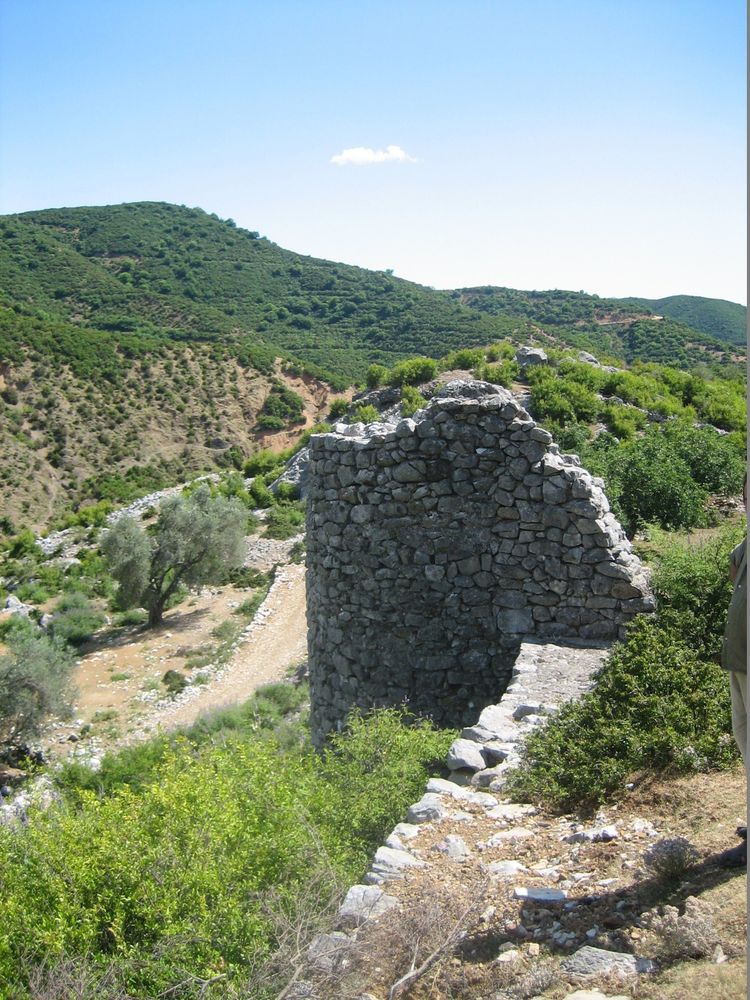
Hence, the city refused to surrender when in the summer of 1478 a large Ottoman army under Mehmet II surrounded Shkodra and systematically destroyed all its small towns. Protectors were protected with the courage of despair. The Governor General of Rumelli (i.e. Balkan Osman) lost his thumb from a bullet bullet bullet; but soon the walls of the lower city collapsed under the fire of Ottoman artillery. The city commander, a member of the Hungarian patriarchate family, was killed in battle. The defenders withdrew to the upper city. But when the Ottomans climbed the opposite mountains and opened fire from there, the Drivastinians lost courage and opened the gates. Under Islamic military law, they could hardly hope for mercy, having refused to surrender without war. Discrowded dravato was not repopulated by Ottomans, the city seemed too insignificant for them. The memory of Christian Drivastos was taken to Venice by political refugees who worked as journalists in Italy's Renaissance they had brought their Latin smooth with them from home. Education made it easier to integrate them into a new country. (Oliver Jens Schmitt, 26.2,2026) /Periscopi/