6 hours ago
Kosovo Army in final test
Periskopi(6 months ago)
(6 months ago)The powers have changed, so have the commanders, but the military idea remains. In a often divided political scene, building the Kosovo Army is one of the rare processes that has continued without stopping. This institutional consensus has provided continuation in transition, sustainable investment and continuous approach to NATO standards. [...]
This institutional consensus has provided continuation in transition, sustainable investment and continuous approach to NATO standards.
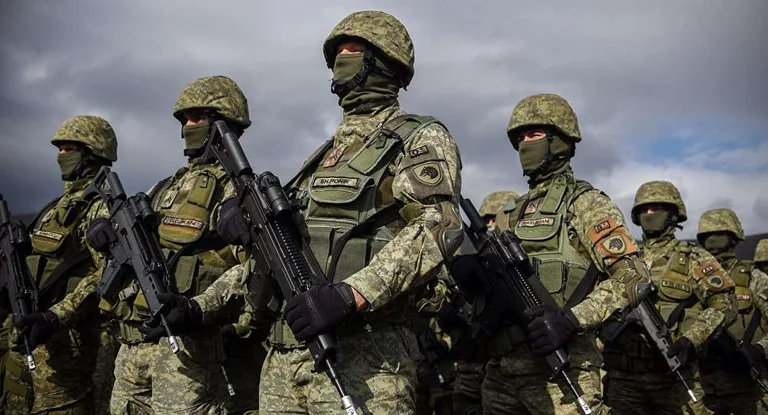
According to retired General Naim Haziri, who has closely followed several stages of development of the Kosovo Security Force, this force operates today according to modern war doctrines, has functional capacities for the current risks and is expected to complete the transition to the military by 2028.
I'm very optimistic, even though this is the most important phase of force building. Air capacities are currently developing and war regiments are strengthening, with supporting elements of operations. I am convinced that the KSF will achieve full operational capacities in the projected time and will be a creditable force, interoperable with all NATO armies”, Haziri says.
This journey began in 2018, when Kosovo's Assembly adopted laws that opened the ten-year process of transforming the Kosovo Security Force into a full-fledged army.
At that time, NATO Presented in Kosovo with peacekeeping mission since the post-war termed this decision as an inappropriate “at times”, due to tense relations between Kosovo and Serbia.
Unlike it, however, the United States supported by this step, citing the KSF transition as <x0historic” and confirming their commitment to support its professional development.
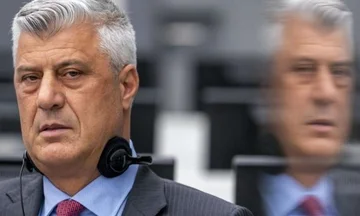
Hashim Thaci, then president of Kosovo and supreme commander of the KSF, said the establishment of the Kosovo Army is the result of a century of sacrifice.
“assured all communities in Kosovo, especially the Serb community, that the KSF will continue to serve all citizens, without ethnic distinction”, Thaci said in December 2018.
The institutional discussion KSF as a force in service to all Kosovo citizens was kept unchanged even under the presidency of Vjosa Osmani.
“Days and girls of our Force are ready to defend our territorial integrity and sovereignty of the Republic of Kosovo ♫ x1>, Osman said in December 2022.
KSF, even today, has to get permission from mission NATO in Kosovo, KFOR, to operate in the northern part of the country, where the majority population is Serb.
This operational restriction was imposed by former President Hashim Thaci in 2013, through one card Sent to then NATO chief, Anders Fogh RasmussenAnd it remains in force.
Radio Free Europe asked the Kosovo presidency if it is considering reviewing KFOR's grant of permission for KFOR's operations in the north, on the eve of completing its transformation into the military, but so far received no response.
Contacted by REL, a spokesman for NATO only said that “since 2016, the Consultative and Interconnector Team NATO has provided considerable support for the development of the Kosovo Security Force, under its initial civil defence mandate, through capacity building, education and co-ordinating training”.
Over the years, the Kosovo Security Force has participated in a series of regional and international missions and activities, mainly under humanitarian, training and peacekeeping operations.
Recently, incumbent Kosovo Prime Minister Albin Kurti indicated that the KSF will also participate in the International Stabilisation Force for Gaza.
Currently, according to the Defence Ministry, it is under way to examine the shape and capacity with which this peacekeeping force can be contributed.
Acting Deputy Defence Minister Shemsy Syla confirms that KSF has already met the target of 5,000 regular troops, while still remaining to meet the 3,000-member reserve component.
Although the complete composition of KSF weapons has not been made public, the officially confirmed equipment ranges from armoured vehicles to drones.
According to Syla, capacities are built in close co-operation with international partners, and weapons and equipment are in line with NATO standards.
“Aleates from whom we bought weapons include: The United States, Turkey, Croatia, Great Britain, Germany, Italy and others. Today, at this stage of establishment, but even tomorrow when we have full capacity, we will be willing to offer security”, says Syla.
The defence ministry's budget has marked significant growth in recent years, ranging from 67.3m euros in 2021 to 207.8m euros last year.
Republic of Kosovo Security Strategy for 2022-27 clearly identifies Serbia and its territorial claims as the main threat to national security.
Since the beginning, the creation of the Kosovo Army has faced strong opposition from Serbia ʹthe country that, over the past five years, has spent mostly on the military throughout the Western Balkans. Serbian President Aleksandar Vuciq has charged Pristina that “is playing war drums” and is jeopardising the Serb community.
This discurs has fostered continued resistance among the Serb community to the decisions of the Government of Kosovo, actions of security forces and the extent of state authority, especially in the north. The culmination of this clash has been the armed attack on the Kosovo Police in Banjska in 2023.
According to retired General Naim Haziri, Serbia remains the main threat for both military and non-military Kosovo. It also specifically mentions hybrid threats, including cyberattacks, but stresses that the KSF, even now, has enough capacity to respond to any threat.
When an army defends and an army attacks, then the proportion of forces is according to engineering that prepares, three with one, five with one, eight with one... And the KSF, with its capacities today, is ready to defend the territorial integrity of the Republic of Kosovo” at any time, Haziri says.
However, he emphasises the need for greater investment in KSF personnel, underlining that its welfare is a key factor to the effectiveness and readiness of force.
I think there's more space to do for personnel. In the second phase, investments have been focused on armaments purchase, but it should not be excluded from even investment in personnel so that members are more motivated for responsibilities exercising”, he says.
Salaries at KSF vary according to degrees of the lowest for young and highest recruits for subcolonels and generals. The law allows voluntary evacuation of members, and the Defense Ministry's data shows that dropouts occur every year with a significant increase between the 1920s, when 50 soldiers left, and 2023, when their number reached 134.
The incumbent deputy minister, Shemsi Syla, stresses the importance of continuing support from international partners to provide training and equipment for soldiers. He adds that the KSF has managed to integrate all communities into its ranks, though challenging the Serb community's participation remains.
The biggest problem the Serbs have caused us. With threats and blackmail, some members have managed to dismiss them. In the contests we've announced, there's been constant interest, but there's still a fear of”, says Syla.
Thanks to co-operation with international partners and NATO standards, Syla says the KSF is already prepared to join the Alliance a goal expressed since the beginning of the transformation. The same attitude is supported by retired General Naim Haziri.
Kosovo is much more powerful than is thought and seen by someone in all aspects of”, according to him.
And, from NATO, the Free Europe Radio confirms that the <x0 coalition represents significant military contributions to Kosovo”, but that “The path to lasting peace is political”. So, “NATO continues to strongly support dialogue facilitated by the EU” for normalising relations between Kosovo and Serbia... even though this process has long been blocked, without advances that would bring it out of the several-year stalemate. /Radio Free Europe