43 minutes ago
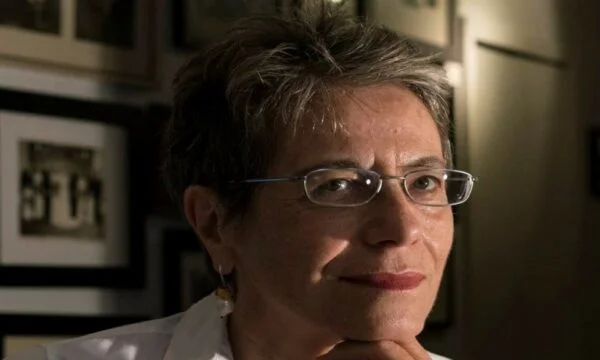
Anna di Lelio for the Kosovo war: Memories of War Not Die
Periskopi(5 months ago)
(5 months ago)The book “The Strongest Link” by Anna Di Lelio and Garentina Kraja is a deep attempt to hear and document the voices of women who have survived sexual violence during the Kosovo War (199899). Through oral stories, the authors allow painful experiences to be related by survivors themselves, giving readers an approach [...]
The book “The Strongest Link” by Anna Di Lelio and Garentina Kraja is a deep attempt to hear and document the voices of women who have survived sexual violence during the Kosovo War (199899).
Through oral stories, the authors allow painful experiences to be related by survivors themselves, giving readers a direct and human approach to the consequences of war.
In an interview for Radio Kosovo Anna Di Lelio says this book is not only a historical document but also a reflection on the strength and sustainability of women who have survived these traumas, as well as the importance of institutional and social recognition of their suffering.
Radio Kosova: In book “The Strongest Link”You place the voices of survivors of sexual violence at the center. Why was it important for you to use oral history as the main methodology?
Anna di Lelio: Well, these are two questions, and thank you for this conversation. “The Strongest Link” is the title inspired by an old Italian book, a oral story of rural women in the mountains of Peemont. When I read the book, I realized that the stories we were hearing with Garentine were very similar to the stories of these Italian women who experienced all kinds of difficulties during World War II. They were poor, lived in a patriarchal society, yet they showed so much strength. For that reason, we wanted to title this book The Strongest Link.
The strongest ties are women, not only women who protect their family, raise their children, and have to fight for themselves, who are marginalized and who continue to live and give great strength, but also women who have helped them all these years. We know that during the war in Kosovo there has been widespread and systematic sexual violence against women and girls, now we know there has also been against men. We're focusing on women now because we've talked to women, but we know that men are also affected by this crime. That was almost 30 years ago, now 2728 years ago, and these women, in fact, were marginalized, but they were not left entirely because there were other women who helped them. The women who created organizations gave them psychological services and were with them, supporting them morally and personally. People like Kadire Tahiri from Drenasi, Feride Rushiti, Mirlinda Zada in Gjakova. These are women who, along with their staff and psychologists, have helped survivors of sexual violence who have suffered greatly because of this crime.
Why did we use oral history? Because oral history allows you to actually hear the voice of survivors, of the people we interviewed, directly. In fact, we have written this book mainly using their voice. And it's not true that we give them a voice. In fact, they gave us their voice. You can hear their voice talking through the book. Oral history also allows them to give a subjective perspective. We can talk about sexual violence in war in general. We know it's a weapon of war, used with political intentions and also has psychological impact. But we really cannot understand what it really is if we do not hear from people who have experienced it.
Radio Kosova: What the title “symbolizes for youThe Strongest Link” in the context of survivors of sexual violence during the Kosovo war?
Anna di Lelio: Well, it symbolizes women's strength in this case, but also all those in Kosovo who have survived the war. I was thinking, you know, I was born in 1953, so after the war I belonged to a generation that did not know war in Western Europe. My parents knew him, but we didn't know the war. We lived our whole life in peace, and our lives always improved, they always got better, and when I came to Kosovo I began to understand the history of Kosovo, especially the latest one. I faced the experiences of people who have survived so many wars and so much suffering, and they are still there, they laugh, they still live, they still try to live for themselves and they still believe in a better future. I'm amazed because I often think, what would I do in their country? So I am inspired by the power women show, the survivors of sexual violence, but also all survivors of war in Kosovo.
Radio Kosova: How did you build your faith with survivors who were willing to share such personal stories with you?
Anna di Lelio: Yeah, there's two things here. Of course, Garentina and I were helped by workers, as I mentioned, all these years with women. The interviews were held in front of their psychologist, so if they felt that they could not continue, or feel good during the interviews, there was a psychologist there who supported them. This created a faith that was also eased by people like Feridya and Kadirya. Kadir herself did four interviews, and everyone believed her. But there is also something that, although we were outside, and not only me, but also Garentina was outside, because neither did she have similar experiences, she lived all her life in the city. Most of the women we interviewed, almost all except two, come from the villages. So we were both a little weird, you know, foreigners in this world. But we were willing to listen, and that's what survivors needed. They need a conscious ear. People wanted to hear them and understand them but not judge them. So we had empathy for them. We felt their pain. I know that when Garentina interviewed some of them, she also wept with them, and it happened to me, because it's impossible not to participate in their suffering and emotions, and when she does, everyone is willing to talk to you.
Radio Kosova: Were there moments during interviews that changed your sense of war?
Anna di Lelio: Yeah, yeah, sure. I've been involved in Kosovo since 1999, so I've been in refugee camps, in refugee camps in Kukes, so I haven't actually heard their stories, but I've heard other stories, so I realized what happened during the war. But nobody fully understands if you haven't experienced it yourself, but we can get a little closer to people, at least when they tell their stories, and that's when you feel really closer to them and understand them, because you're there and you share that emotion at that moment. Of course, I couldn't share that emotion when the crimes were committed to them, but I could share their emotion when we spoke to them, so this added a deeper understanding of the experience of war in Kosovo.
Radio Kosova: Are you? Facing ethical challenges in recording evidence of sexual violence?
Anna di Lelio: As I mentioned, we tried to act carefully, introduced survivors of women who have worked with them for many years. We also interviewed them with the presence of a psychologist. So if we asked the wrong questions which I don't think we did to the psychologist correct us. So sensitivity was always present. But I would say there's something else, because people often ask me: How did you feel? Did you feel shocked? How could you do these interviews? Was it hard? And again, most of the interviews were made by Garentina, and she told me that sometimes she couldn't sleep at night, because, you know, of course, she didn't experience these crimes, but she was in Kosovo during the war and was a refugee. So she knows that it could have happened to her, it could have happened to anyone. For me, actually, and I think about Garentine, if I can talk about her, the interviews made us feel no worse, but better, because at least we could do something for survivors. We could listen to them and just give them, again, not because they have their voice, but we gave them, so to speak, a position to speak, a platform where they could talk not only about Kosovo, but about the world, because the book is published in English by “Oxford University Press”Which is a very important academic publishing house. I have to tell you, six months after the book was published, the first printing was sold out. We sold over 350 copies, which is remarkable for an academic book.
Radio Kosova: Do you believe that Kosovo society has done enough to recognise and support survivors of sexual violence during the war?
Anna di Lelio: Yeah, I think it's done a lot. Of course, we can always criticize, and people in Kosovo always criticize, and we have to criticise for doing better. But I think they really did a lot. If you think this crime destroyed Germany during World War II, it destroyed Italy during World War II, and for 50 years no one ever talked about it, and the victims never retired. They were never recognized as civilian victims of war. In Kosovo, this happened relatively quickly, within a decade or two. So things have been done at the institutional level, but we have to do more, of course we can do even more. So we need to keep talking about the matter. That's why we have to continue to abort, so women like Feride Rushiti and Mirlinda Sada and Kadire Tahiri are so important because they continue to arrive. What survivors need is definitely institutional recognition, like retirement, but they need social recognition as well. They must be treated with respect within their families and outside them.
Radio Kosova: How can oral stories contribute to transitional justice processes?
Anna di Lelio: Well, it really contributes in general, because it really does, and it makes people understand what the victims have been through and they continue to pass. This type of crime has long-term consequences and is more specific than all crimes you know, death, extinction. These are terrible things that happen to people. If you are not one of them, you do not fully understand the situation unless it is revealed and explained to you. Transitional justice has been important to them, again, in the sense of institutional recognition, but survivors still do not have full justice. Perhaps they will never have justice, for their belongings will never be found. And the next thing I'd say, when we talk about how survivors don't talk and their crime is covered with silence. We should remember that victims of sexual violence may not even talk about what happened to them, but the perpetrators of these crimes are definitely the ones who will never speak. They don't speak individually, they don't speak collectively. I think complete transitional justice for the victims will be achieved when Serbian authorities -- namely, Serbian security forces, the army, police -- recognize what they have done. And that seems to be too far away.
Radio Kosova: In your opinion, what role should the State play in preserving these evidence?
Anna di Lelio: Well, to be preserved in the form of testimony, to know that the state may not preserve the evidence, but to recognise this story that is part of Kosovo's history. Cadire Tahiri says very well, “you cannot write the history of the Kosovo war without a chapter for sexual violence.” I mean, you can't write any stories of a war without a chapter about sexual violence because sexual violence is present before, during and after the war in very different forms. But what the state can do is really help these survivors. And it's not just retirement, because retirement is very limited. Some of these people are dying now, let's be honest. You know, if you were 50 today or you're old or dead. But there are many still young, and they need, in a poor country like Kosovo, where there is so high unemployment rates, for stronger economic and health support. These are people who have many health, mental and physical problems, and Kosovo has no health insurance. I interviewed someone who said he spent 40 euros a month on medication. Now, if you have a pension of 200 euros per month, 40 euros is too much. So they need more support. The state can do what Ambassador to Belgium Agron Bajrami did, organise a book presentation and a discussion on the issue in the European Parliament or any other institution, or other countries, as Ambassador Ilir Dugolli did in Washington, DC.
Radio Kosova: How do you respond to those who say that returning to painful memories risks opening old wounds?
Anna di Lelio: I would tell them that memories don't die, they don't disappear, they're always there. When there is a death in the family when something terrible happened to someone near you, you can move forward and live. Everybody does this, but you never forget it. You don't forget your dead boyfriend. You don't forget what happened to you, and so silence is like playing the ostrich game. You know, you can't put your head in the sand and say it's not there because she's there. Maybe, I think it's much better to use it collectively. Also, these crimes in Kosovo are collective. There is collective trauma in Kosovo. People were not raped or tortured only individually. Yes, that happened, but there are so many of them, the whole society is involved. So, ignoring doesn't work.
Radio Kosova: What impact do you hope this book of yours and Garentina Kraja will have on the new generations in Kosovo?
Anna di Lelio: Well, really, to understand what happened during the war, to understand the long - term consequences of what happened, because even they, even though they don't seem to talk about it or they don't, suffer some of these consequences, because trauma, especially collective trauma, is transmitted over generations. So the meaning of painful experiences can help you to move on and live better, even though those times and challenges have been very difficult.
Radio Kosova: What role can the media and journalists play in reporting with responsibility on sex violence stories during the war?
Anna di Lelio: Well, they play a big role, and I really see that there has been an effort in Kosovo. I mean, I remember the name of Serbze Hadziaj, who wrote on this subject. The media has been involved in the retirement campaign, with the law passed, and they keep history alive. They've had a lot of sympathy with the victims. So the media have been close to people like Vasfije Krasniqi-Goodman, people like Ramadan Gashi. So, I mean, there's this attention that's in there, and I think they're doing a pretty good job.
Radio Kosova: How has the international community reacted to the record of these stories?
Anna di Lelio: Many people do not know that Kosovo has also been a case of widespread and systematic sexual violence. They always think about Bosnia. When Garentina and I discuss this book in either the United States or Italy, they think we're talking about Bosnia. So many people don't really understand what happened in Kosovo, even because of the propaganda that is now said to be victims are Serbs who do not live in Kosovo. It is very important, indeed, that people understand what happened in Kosovo. I think we're making a contribution to this because every time we have an event in the United States or elsewhere, this book, this one, it has very much attention. People say, well, we didn't understand this world. People who have read the book did not understand this world, but now they know a little more.
Radio Kosova: Do you see parallels between Kosovo and other post-conflict societies that you studied?
Anna di Lelio: Well, you know, I've heard about it, of course, I've read about it, but I understood it much better when I started talking to Kosovo women, with Albanian women in Kosovo. This happened during campaign organisation “I think of you” artistic instation very, very important by Alketa Xhafa. She did an amazing job, and we worked together then, I mean, with support, of course, doing this campaign throughout Kosovo. On this occasion I first met the survivors, and they talked to me, and there I heard their stories, and then I really understood and became more involved. When the war started in Ukraine four years ago, I immediately knew what would happen there, and that's an awareness I wouldn't have had without talking to Albanian women.
Radio Kosova: What lessons can other countries learn from Kosovo's experience with recognition of survivors?
Anna di Lelio: I think they can learn a lot of lessons, and I know people like Feride Rushiti are already involved in training women or organisations from Ukraine on how to deal with the situation, because they have accumulated a lot of experience over the years. And now there's an international network thanks to the “mugawi Foundation.” Mugawi was an African doctor who won the Nobel Prize a few years ago if I'm not mistaken. And so there is a global network, and Vasfije Krasniqi is a big voice to this organisation. So, yes, Kosovo women can share with others what they have learned all these years. And they're doing it.
Radio Kosova: What message would you give to survivors who are still reluctant to speak publicly about their experiences?
Anna di Lelio: I don't know if I can give you advice. I can only give support, honestly. I can tell them to be strong. I can tell them they're beautiful. I can tell you that you shouldn't be impressed by the criticism of others, but, you know, it's hard to tell people who live there, and to me, I don't live in that kind of world. So I just want to give you the support I can give. And I think one of the things I can do is talk to everyone about what they say or refer to what they say. So when I tell stories, it's only when people understand. When they read their words from the Book, people understand. In abstract ways, it doesn't really explain emotions.
Radio Kosova: According to you, how does the gender shape the wider Narrative of war in Kosovo?
Anna di Lelio: Yeah, you know, when we worked on this book, we interviewed only three men, because it was five years ago. It takes much time to publish a book in the United States. But later, for another research, Garentine and I have interviewed men. I interviewed four of them myself. And we know that men are always victims of sexual violence, except they call it torture. And I think we should start calling it sexual violence, rape, torture, because that's it. But men want to call it torture. I think it would be very important if more men were to talk about it. A man told me: “I understand it's not women's fault. I couldn't defend myself, and I'm a man. He ran a gun. And what am I doing? Many people say: “I'd rather die,” but nobody wants to die. And that, you know, is understandable. So when you threaten like that, you can't protect yourself. This really helps to put sexual violence on women in a different perspective. So men explain this and also understand what women go through. A man told me: “is different for me because I can still get out. I can still continue my life, go to work, but these women are locked in the house.” Also, because men shouldn't tell, you know, a young woman who marries after the war has to tell her husband, but husband doesn't have to, husband doesn't tell. He can keep the secret, and that's how he feels less stigmatized, even though it certainly never works, because when they go to cafe between men, they know the conversation. They know how they talk about survivors and feel on the side of survivors. So, the more men come forward, I think the better it is for people to understand what women are going through.
Radio Kosova: If you could change one thing in Kosovo's approach to coping with the legacy of war, what would it be and why?
Anna di Lelio: Well, just hearing more voices about war. After the end of the war, no one wants to hear a history of sacrifice, because people have been victimized enough. So the story of heroism always comes out, not just because people want to talk about what they did, how wonderful they were, but because society will not accept victimization. But it has to be talked about, so all voices need to be heard, understood, and embraced, because it's the whole place that's been through this. So it's a matter of public record. It is a matter of intervention, helping all who need support both morally and economically. I think this is a big demand for society, because it's not a special occasion. Kosovo is like any other country. In fact, Kosovo showed a lot of unity, but what is happening in Kosovo is somewhat normal and we can seek it, but there are also limits on what such a traumatic society can do./Periscopi/