4 hours ago
180-year prison requirement for former KLA leaders, Alija from FHDK explains special court obligations
Periskopi(6 months ago)
(6 months ago)With the launch of final words in the process against former KLA leaders in The Hague Specialised Chambers, the prosecution has sought sentences of 45 years for each of the accused, while monitoring the process have stressed the importance of the individual assessment of evidence and application of the most favourable law. Lawyer Amer Alija from the Fund for [...]
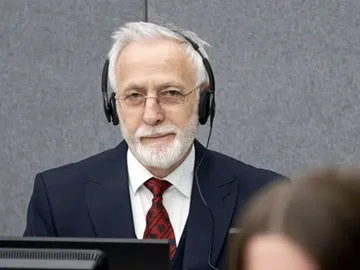
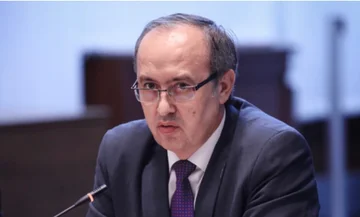
Lawyer Amer Alija from the Fund for Humanitarian Law in Kosovo (FDHK) has clarified for the Online Economy that the procedure envisions that the final words first present the prosecution, then the damaged side and finally the defence, adding that the special prosecutor at the introduction has made a summary of what will be presented during the argument hours and has cited the demand that each of the accused be sentenced to 45 years in prison.
“Yes, as you know, today the final words of the parties in the procedure have begun and, as the procedure requires, are initiated with the initial presentation of words by the Prosecutor, the damaged side, and then the defence. In the opening address, either in the final word or in the first part of that word, the Special Prosecutor has made a brief summary of what prosecutors will reflect and present in, during these hours of warning of the final word. And in the middle of the information, she said that she's asked everyone to be punished for 45 years, the slime has been translated into Albanian, and of course, the prosecution claims and insists that the prosecutor defends the charges he's charged with four defendants”, he said.
Alija said that if the court finds guilty evidence, it is obliged to apply the principle “Lex Mitior” -- that is, the most favourable law for the accused at the moment of pronouncing the sentence, given the punishment practice for war crimes.
He explained that in local courts the sentences have moved between five and 15 years in prison, while in The Hague Tribunal from 14 to 22 years, mainly for the Serbian forces' superiors, adding that the law of Serbia RSPJ, which was in effect at the time of performing the works, is considered more favourable in terms of penalties.
If the court finds the guilty evidence that the Prosecutor's Office charges with, of course, the court is obliged to apply the Lex Mititor principle, the most favourable law in the case of application of sentence. The court should also consider the punitive practice of such criminal acts. So, as far as war crimes are concerned, two practices have been created; so we have the practice by local courts, which are implemented by national courts, as well as the penal practice of TPNJ (The International Criminal Tribunal for the former Yugoslavia). For criminal acts linked to war crimes, and those who have been tried for such criminal acts either near local courts or near The Hague Tribunal, penal policy has gone to local courts of 5 to 15 years in prison; at The Hague penal policy has gone from 14 years to 22 years, where chief or responsible Serb forces have been sentenced to these, such years in prison. Now, of course, the law which has been in force at the time of the criminal offence has been the law of RSPJ, which is the most favourable law in the case of applying convictions for persons who are tried for these criminal acts”, he said.
According to him, the process has been characterised by a high level of protection of prosecution witnesses and editorialised hearings for the public, which has created difficulties for monitors and media in full prosecution of the procedure.
Lawyer Alija stressed that, due to the lack of full access to the paperwork, the monitors and the public have limits on assessment of the evidence and that only the court, after analyzing each evidence and evidence, can make a merit decision.
“Yes, we as we have seen, this court process, especially the prosecution witnesses, almost 50% of witnesses have been protected for the public, and hearings have been in a large proportion edited to the public. Of course, it has been difficult for both monitors and media to monitor these judicial processes from beginning to end. Of course, we, as monitors, have limits on evidence, we have limitations on, testing assessments, and of course, regarding this court, after analyzing each test separately, of each evidence separately, will make a merit decision. Of course, for those of us who don't have full access to the subject paperwork, it's not professional to be released in court decisions”, attorney Alija said.
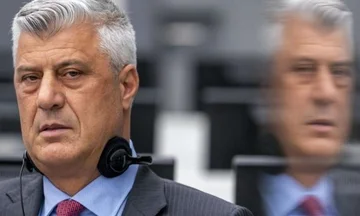
The chief prosecutor of the Specialised Prosecutor's Office, Kimberly West, has sought a separate 45-year sentence for Hashim Thaci, Kadri Veselin, Jakup Krasniqi and Rexhep Selimi. West asked the Special Court to consider the weight of each accused's actions.
We're looking for the punishment of concrete persons so we don't demand a conviction for the General Staff, but for concrete persons. Z The SP demands condemnation of all provisions of the indictment with a unique sentence of 45 years based on individual crime contributions committed or committed by each person: Hashim Thaci, Kadri Veselini, Rexhep Selimi and Jakup Krasniqi. These crimes are war crimes and crimes against humanity and are serious crimes, and these charges have not lost their value over time, they still continue to be very serious”, West said.
Former President Hashim Thaci, former Prime Ministers Kadri Veselin and Jakup Krasniqi, as well as former Vetevendosje deputies chief Rexhep Selimi, are charged with joint criminal enterprise in connection with war crimes and crimes against humanity. On the basis of the SPS indictment, published in February 2023, Thaci, Veselin, Krasniqi and Selimi are charged with joint criminal enterprise in connection with about 100 murders, then with torture and cruel treatment at about 40 detention centres during 1998-1999.
The SPS claims it carries out joint criminal enterprise that links with six counts of war crimes: Persecution, imprisonment, other inhuman acts, torture, unlawful murder, extinction by violence, as well as four counts of crimes against humanity, including illegal or arbitrary arrest and detention, cruel treatment, torture and unlawful murder. Most of the crime victims, according to the SPS, are Albanians, civilians and members of the Democratic League of Kosovo.
According to the SPS, the indictees have been aware or should have been aware of the cause of leadership positions in the General Staff, concerning allegations of crimes that have been committed and intended to take power in Kosovo through them. Former KLA General Staff leaders have denied all these charges. They have said the KLA had no such hierarchy, since they had the weight of the commanders in the areas and that it was intended to fight Serbia, not civilians.