8 hours ago
What does the Peace Board Charter say?
Periskopi(6 months ago)
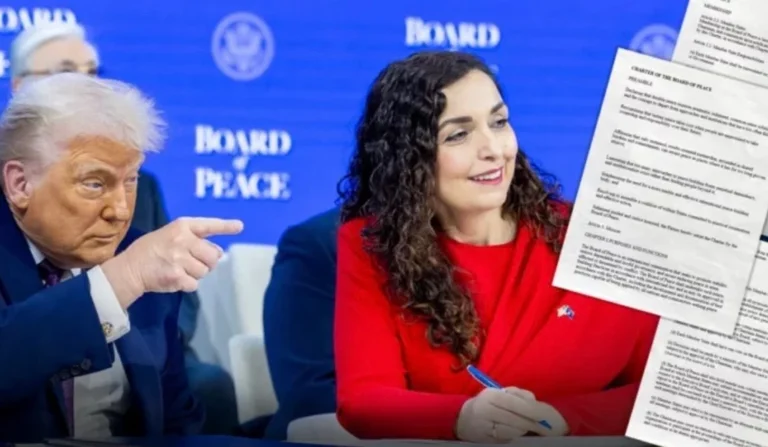
(6 months ago)Kosovo is included among the 19 states that have signed participation in the Peace Board initiated by US President Donald Trump on Thursday, at a ceremony in Davos, Switzerland. The Peace Board is the new international body initiated by Trump, aimed at overseeing the implementation of peace plans in [...]
The Peace Board is the new international body initiated by Trump, aimed at overseeing the implementation of peace plans in conflict areas, with the initial focus on the Gaza Strip.
Under the Trump peace plan for Gaza, the Peace Board is described as a new international transit “organ, which will help oversee the reconstruction of the Palestinian enclave. Members of this board are expected to be world leaders, with President Trump at the helm. The UN Security Council has formally supported the establishment of the Peace Board through a resolution drafted by the US in November, giving this mechanism international weight and legitimacy.
But what about this document signed by President Vjosa Osmani?
The preambula points out that the document serves as a result-oriented guide to ensure peace in places where it has long resulted in elusive.
The document contains 13 mothers. The first article speaks of mission, goals and functions.
In this article, the Peace Board is the <x0); international organisation aimed at promoting stability, restoring reliable and legitimate governance and ensuring lasting peace in the affected or threatened areas of conflict”.
The Peace End will take peace-building functions in accordance with international law and as may be approved in accordance with this Charter, including the development and spread of the best practices that can be implemented by all nations and communities seeking peace”, the article says.
The second chapter discusses membership. It stresses that membership is limited to the states invited for participation by the mayor and begins with the announcement that the state has agreed to be connected by this charter, in line with chapter XI. Each state should be represented by the head of state or prime minister. Each member state must support and assist the Peace Board operations in accordance with their respective domestic authorities. Nothing in this Charter should be interpreted as giving the Board jurisdiction within member states or asking them to participate in specific peace-building missions without their consent.
Every member state can serve no longer than three years since this Carte's entry into force, with the possibility of renovation by the mayor. The three-year membership mandate will not apply to member states that contribute more than $1 billion to cash funds ready for the Peace Board within the first year of entry into force.
As for the outcome of membership, it notes that it ends in the earliest case, whether by the expiration of the three-year mandate or the withdrawal, which is the decision by the chairman depending on the veto by a two-thirds majority of member states or the dissolution of the Peace Board. Whoever ends his mandate ceases to be a party on the Charter, but such a state can be restored to membership again.
Each state is stressed that it may withdraw at an immediate decision, offering written notice to the mayor.
Chapter three is about governance. It emphasises that the board consists of member states and that this board votes on proposals in the agenda, including those on annual budget issues, establishment of auxiliary subjects, appointment of senior officials and key policy definitions, whether for the adoption of international agreements and the pursuit of new peace-building initiatives.
The Peace Board will call voting meetings at least once a year and at extra time or place when the mayor considers them eligible. The agenda is determined by the executive board, depending on the announcement and comments by member states of approval by the chairman. Every member state has the right to vote. The decisions deal with the majority of votes of the present and voting states, depending on the president's approval, which could also cast a vote in his quality as chairman, when there are cases of equal votes.
The Peace Board will hold regular meetings without the right to vote at the Executive Board. At these member states meetings, recommendations and instructions for activities can be presented, and the Executive Board will report on the operations and decisions of the Executive Board. Such meetings are called at least once in a quarterly time and place defined by the executive director of the Executive Board. Member states may choose to be represented by an alternative high-ranking official at all meetings, depending on the president's approval. The mayor may issue invitations to relevant regional economic integration organisations to participate in the work of the Peace Board, under conditions and deadlines he considers appropriate.
The point for the chairman is clearly emphasized by Donald J. Trump will serve as the inaugural chairman of the Peace Board and will serve separately as the inaugural representative of the United States of America. It emphasises that he has the exclusive right to create, modify or distribute assistive subjects according to the need and adaptation to fulfill the Peace Board mission.
The mayor must always appoint a successor for the role of chairman. The replacement could occur only after voluntary resignation or as a result of the disability, as determined by unanimous voting by the Executive Board, at a time when the deputy should immediately assume the chairman's position and all relevant duties and authorities of the mayor.
The mayor has the right to establish subcommittee and assign mandate, structure and governing regulations to each.
The Executive Board will consist of the chairman and contains world leaders. Executive Board members have a two-year term, with the possibility of being dismissed from the chairman and renewed mandate, in its discretion. The Executive Board must have an Executive Director, appointed by the chairman and confirmed by majority votes by the Executive Board. This director holds meetings of the Executive Board every two weeks for the first three months after the establishment and later every month. If necessary, he calls for meetings more often. The decisions there deal with the majority of votes of members present and voting, including the executive director. Decisions enter into effect immediately, except when veto is used by the mayor at any time. This Executive Board defines its rules of procedure.
The Executive Board reports to the Peace Board on its activities and decisions every quarter. He is tasked with exercising powers to implement the Peace Board mission.