2 hours ago
EULEX chief: The situation in the north is stable, there are potential drivers for tensions
Periskopi(6 months ago)
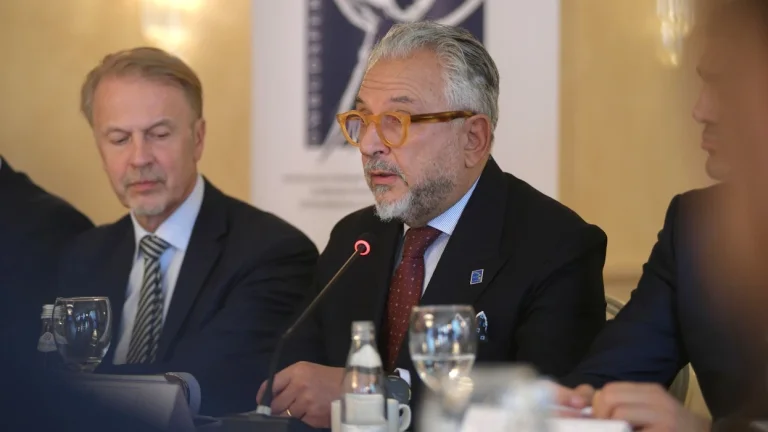
(6 months ago)EULEX mission chief in Kosovo Giovanni Piestro Barbano declares that the security situation in the country's north is calm and stable, however, considers that there are still challenges and the possible “trigger for tension”. Local authorities, he says they must address these and be resolved through dialogue. In the Kosovo interview, Barbano [...]
Local authorities, he says they must address these and be resolved through dialogue. In the Kosovo interview, Barbano says why there is no more executive mandate, role EULEX in the event of tensions is the second security responser.
He also speaks of vote manipulation in recent elections, rule of law and whether Kosovo is able to fight corruption.
The leadership in northern municipalities has changed from the 12 October local elections. There the Serb List, which enjoys official Belgrade support.
EULEX mission chief in Kosovo Giovanni Pietro Barbano shows whether this can affect the security situation in the north.
The security situation in Kosovo in the last period can be considered calm and stable. We see positively the return of Kosovo Serb leaders to office after local elections and the opening of communication channels between them and the Kosovo Police. Of course there are still potential challenges and incentives for tension, but through dialogue and support from European institutions, we believe they can be addressed peacefully...
There are still challenges to address, especially in the full integration of minority communities and guaranteeing their rights within the Kosovo system. This requires regulations, agreements and discussions that can only be resolved through dialogue”, Barbano declares.
In the event of tensions and escalation of the situation in the north, Barbano shows what the role of EULEX.
Our “Role is the second security responseer. If, hopefully no, serious civil unrest occurs and Kosovo police call for help, we can be deployed to maintain public order and control of crowds. But this is the last measure; we use dialogue, mediation and negotiation tools”, he says.
On the other hand, the recounting of votes for parliamentary candidates continues throughout Kosovo, as it has proved there has been manipulation of the vote.
Even on Friday in Prizren, an action was held by the Constitutional Prosecutor, where 109 people were detained.
Barbano tells Kosovo that “is unfortunate”, which has had such cases of abuse.
“As far as developments are concerned after the last elections, I would not comment much in this area, as it is not part of our mandate and there are other responsible institutions. However, a single remark is that it is very positive that Kosovo institutions have been able to identify the shortcomings themselves and address them. This proves that the democratic system is stable.
It's a shame this happened, but, as I highlighted during my meeting with the National Co-ordinator of the State Prosecutor, Mrs. Laura Pula, the fact that she has been discovered and treated at the right level is a very positive development. The responsibility for handling these cases is fully due to prosecutorial authorities and Central Election Commission”, he says.
Early elections have been held on December 28th, for which Barbano says they are carefully following these developments and that they expect the quickest formation of institutions.
“First, we expect the assembly's constitutionalisation to take place quickly and without obstacles, in line with the Constitutional Court's guidelines for resolving certain issues, and for a functional government to be formed as soon as possible. Of course, there are some challenges related to recounting votes as well as short deadlines before the president's election. Therefore, we are carefully following these developments, as their solution is essential to institution building and legal framework for the future....
From the new government and institutions, including the new Assembly, we expect that long-standing leadership positions have been maintained with task advisers to be met with regular managers, in order to ensure a long-term vision of ongoing projects and needs”, he points out, among other things.
The European Union's Mission for the End of Law in Kosovo has no executive mandate in Kosovo since 2018. Now, Barbano says the main goal is to monitor the entire chain of justice.
The implementation of the law in Kosovo, according to him, often faces challenges for reasons as he mentions <x0-procedural and inappropriate interventions”. These challenges, Barbano says, have been clearly mentioned in last year's report on monitoring justice.
Kosovo's “System of justice relies on a highly developed and advanced legal framework inspired by the highest standards in Europe and the world. However, there is a difference between the legal framework and its implementation, which sometimes turns out challenging for structural, procedural reasons, due to inadequate interventions or other” factors, Barbano says.
Among other things, Barbano in the Kosovo Press interview shows whether there has been an increase in cases requiring EULEX intervention.
“Although we no longer have executive function, especially in the security field, we still have the role of the second security responser, which is activated only at the request expressed by Kosovo Police. It also requires the ability to be conscious of the situation and to identify potential tensions on the ground. For this reason, we have the presence of our police units, mainly in the north, but also in other parts of Kosovo when necessary, through surveillance patrols.
We constantly train with the Kosovo Police and KFOR to ensure interoperability and co-operation in cases of need. During local elections, we also deployed the reserve police unit, but fortunately there was no need for intervention, as elections took place quietly and without serious incidents”, he says.
EULEX chief in Kosovo also mentions delays in the trial in high profile cases.
During this monitoring we have identified several shortcomings, including the capacity to handle high profile cases, length of judicial processes, frequent retrials, tackling corruption, justice for minors and domestic violence. We have also monitored the police's capacity to ensure accountability in cases of poor treatment, as well as the way hate language regulations are implemented and interpreted in relation to freedom of expression”, Barbano declares. / KP/. /Periscopi/