2 hours ago
FIFA considering change over penalty kick
Periskopi(9 months ago)
(9 months ago)A change of order that can rewrite football history is reportedly being discussed in FIFA. With a view to modernising the game -- similar to the introduction of the VAR in Russia's 2018 World Cup -- the ruling football body is considering to change one of the most dramatic moments of sports: penalty. [...]
A change of order that can rewrite football history is reportedly being discussed in FIFA.
With a view to modernising the game -- similar to the introduction of the VAR in Russia's 2018 World Cup -- the ruling football body is considering to change one of the most dramatic moments of sports: penalty.
The former Spanish employee, Eduardo Iturralde, discovered in the “Cadena Serés Carrusel Deportivo” that the arbitrage head at FIFA, Pierluigi Collin, is promoting an idea that would radically change the way penality is executed.
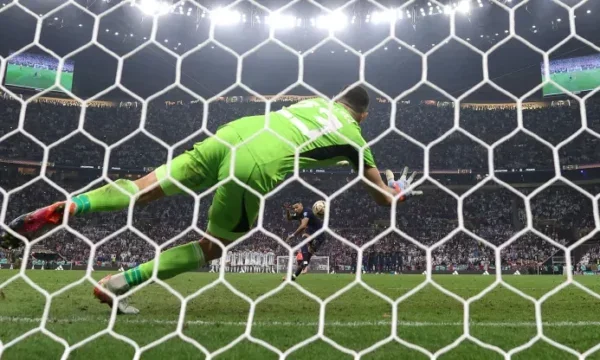
According to the proposal, if the goalkeeper stops a penalty, whether by catching the ball or pushing it, the game will stop immediately.
The attacker will no longer be able to track the recovery of the ball from a return.
Instead, the defence team will resume the game with a goal kick.
A still unclear detail is what happens if the ball returns from the pillar or the bars without being touched by the doorman.
According to reports, this aspect should be clarified if this change of order is to be adopted.
If the proposal gets approval, it will not go into effect until after the FIFA World 2026, which will be held jointly by the United States, Mexico and Canada from June 11th to July 19th.
This means that the historic tournament in North America will be the last World to be played according to the current penalty regulations.
It is important to note that FIFA does not have full control over game rules.
The responsibility for this belongs to the International Football Board (IFAB), the only organ authorized to create, change or remove Game Laws.
The IFAB consists of eight members -- four out of FIFA and one of four British football associations (Algli, Scotland, Wales and Northern Ireland). Because football originated in the United Kingdom, these associations have equal voting rights.
To approve a change of order, at least six votes are required.
FIFA's four votes give it an effective veto power: if all four FIFA representatives oppose a proposal, it cannot move forward, even if British associations vote for.