19 minutes ago
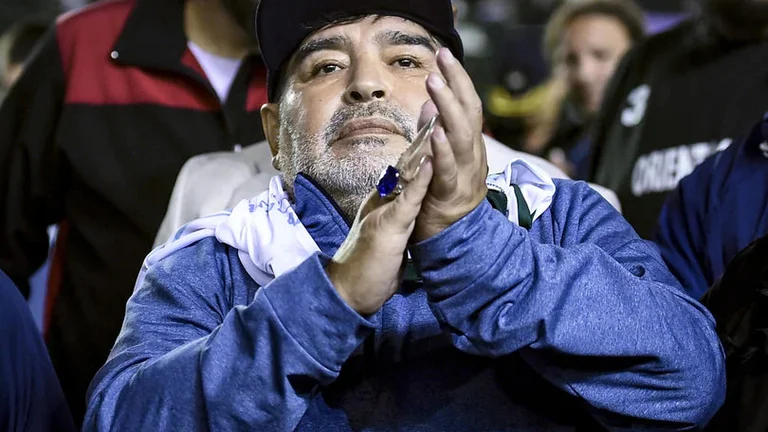
Maradona was a patient who was hard, high-risk, doctors say.
Periskopi(a year ago)
(a year ago)Diego Maradona died in November 2020 after serving cardiac arrest. Seven health care professionals are on trial for allegedly underachievering the late Argentine football legend. Doctors who testified in a court of medics who handled Diego Maradona before his death said Thursday that the former star [...]
Doctors who testified in a trial of the medics who treated Diego Maradona before his death said Thursday that the former Argentinan football star was considered a patient with “high risk” and “very difficult” to deal with.
Maradona, 60, died of cardiac arrest at his home near Buenos Aires on November 25th 2020. He was recovering from brain surgery for a blood clot after decades fighting cocaine and alcohol addiction. Seven health - care workers are accused of neglect for his death. The defendants face 8 to 25 years in prison if convicted for the possible “assassination by will”. But they denied the accusation against them. Call DW.
What did the witnesses say to the court?
Sebastian Nani, head of cardiology at the Olivovo clinic where Maradona had an urgent brain operation on November 3rd, said in court that the former footballer was “a high-risk patient who was experiencing withdrawal symptoms and demanded considerable care”. Nani also said hospital authorities had not agreed with two of the accused -- neurosurgeon Leopoldo Luque and psychiatrist Agustina Cosachov who had recommended that Maradona continue his recovery outside the hospital.
During a court hearing last week, Maradon's former wife and a doctor had also questioned decisions to transfer the World Cup winner to a private house instead of being admitted to a rehabilitation centre. Nan added that as soon as he was released from the clinic, Maradon's responsibility “was 100% of Luque”. Luque was Maradon's personal physician during the last four years of his life. Cosachov described his drugs, which he took to death. In addition to Luce and Cosachov, psychologist Carlos Diaz, doctors Nancy Forlin and Pedro Di Spagna, Mariano Perron, representative of the company offering nursing service and nurses Ricardo Almiron.
What else did the court hear?
The court also heard testimony from neurosurgeon Rodolfo Benvenut, who had interacted with Maradona while he was hospitalised in the weeks before his death. Benvenut said Maradona was “a very difficult patient” who had a “challenger approach” to his treatment and should be persuaded to scan the CT before his brain operation.
The Witness also described how Luque had crashed with hospital authorities over who would conduct the Marathon operation, accusing Luque of forging a surgery report saying he had been the leading surgeon. Benvenut also said he had met with Maradona's relatives and his medical team when it was decided that the former football star would continue his home treatment, agreed that Luque “would intervene whenever Maradona refused treatment or medical care”. He said Maradona wanted to leave the clinic as soon as possible and that “ai would not accept” anything other than “a stay at home”.
Benvenut also said that a daily “assessment by a klinist” at the house of Marathon would be sufficient. But the evidence presented at the trial so far has shown that clinical visits were conducted only once a week and that Maradona had refused to be seen during one of those planned visits.
The trial will continue next Tuesday. /Periscope/