a minute ago
Col Norway is building the world's longest tunnel, up to 390 feet [390 m] below sea level
![Col Norway is building the world's longest tunnel, up to 390 feet [390 m] below sea level](/cnt/019de2fa-c7e3-7b4a-8b00-a431d225f513__m.webp)
Periskopi(a year ago)
(a year ago)Norway is building the longest and deepest underwater tunnel in the world, one of the most ambitious engineering projects in Europe, which is expected to significantly improve the country's ties and transport infrastructure. Crossing the country's fjords, the Rogland tunnel will be about 267km [...]
Crossing under the country's fjords, the Rogaland tunnel or Rogfast will be about 267km long and reach up to 390m deep below sea level.
After completed in 2033, this tunnel will cut travel time between Norway's two largest cities -- Stavinger and Bergen -- with 40 minutes. Periscope.
The Rogfast project, which is nearly halfway construction, is part of the main 539 European highway, which runs along the western coast of the Nordic country. Connecting cities such as Christianisand, Stavanger, Haugsund and Bergen will also replace ferry crossings and make Norwegian road travel more relaxed, according to the Norwegian authority of the project that it has drafted.
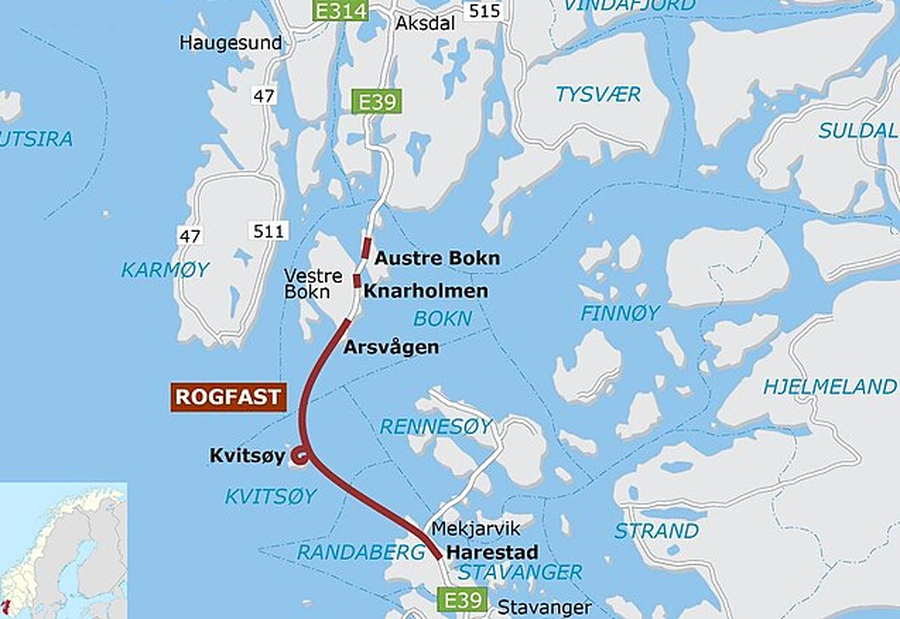
“Stavinger is the fourth largest city in Norway, and Bergen is the second largest, so we hope that this project will also help cut travel time for workers travelling daily between these two cities”, said Oddvar Kaarmo, project manager Rogfast at the Norwegian Public Road Authority.
A Siege Under an Island
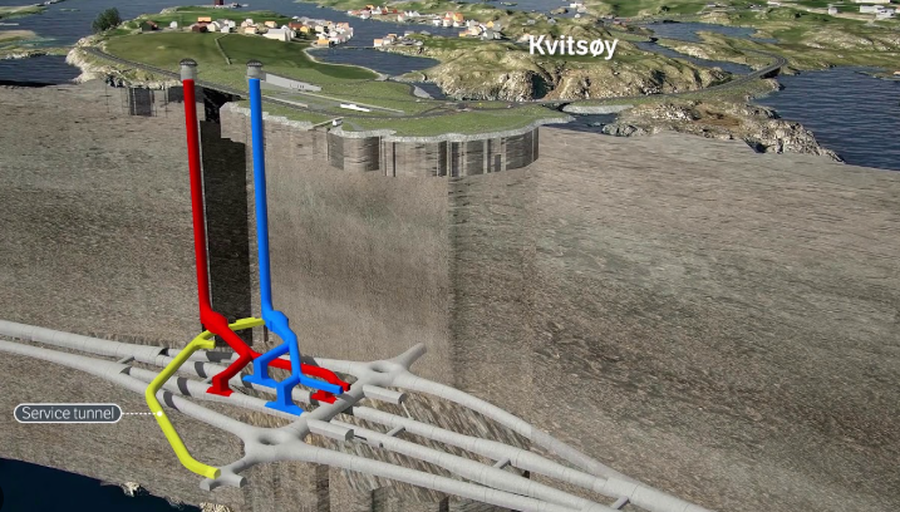
One of the main features of the design of the new submarine highway is its entourage, where a branch connects the island of Ktime, Norway's smallest municipality, with the main tunnel under the island's rock.
The Rogfast Tunnel will have two lanes in each direction. Under Kvitshy, lanes will be connected through two rounds that are being built 260m below sea level.
We built roundabouts in the tunnels before. But this could be one of the first constructions where we have a section with two fences at a tunnel intersection. For all I know, I haven't seen two rolls in a single section of the tunnel before, Kaarmo said.
Both sub-intractions will allow traffic circulation even when one of the lanes is closed.
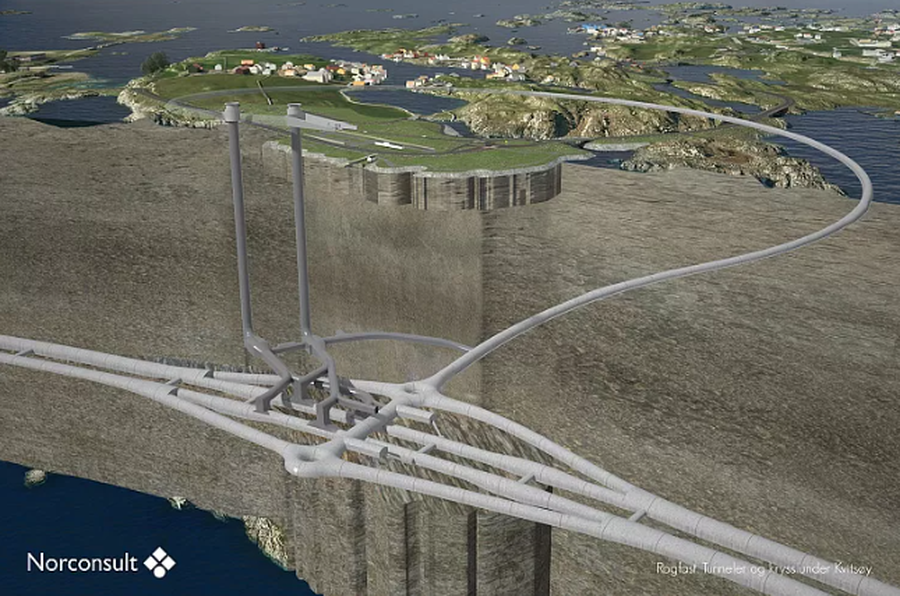
If something happens and we have to close a section of the tunnel, we can still keep the tunnel running using just one tube and allowing circulation in both directions in”, He added.
The two- pipe facility is also a security measure. If a truck goes on fire in front of you and you can't go back out, you can head out these green doors with exit marks... and you can walk towards the next tunnel tube. And we have a camera system that tells us exactly where you are. And we can come and get you and get you out of the” tunnel, Kaarmo said.
Norwegian tunnel construction capacity
The Rogfast Project, which is being built in phases at a cost of 25 billion Norwegian Coronas (About 2 billion euros), currently half finished as the work started in 2018.
“On the north side, about 65% of the tunnel is built and is now the stage of tunnel drilling and explosion. At the south end of Randaberg, there's about 45% finished”,Kaarmo said.
Unlike the fixed link Fehmarn Belt between Germany and Denmark that is being built with modular methods, Rogfast is being detonated and dug directly through solid rock, a method Norway uses to ensure stability and stability under water pressure.
You will travel through solid rock. We have this distance between the ceiling of the tunnel and the bottom of the sea. Our regulations require at least 50 meters. So travel to the bottom of the sea. We have many underground tunnels in Norway with this construction. And the new tunnel between Germany and Denmark, they put concrete sections and they unite them, but they don't go under the sea bottom like we do in Norway. In Norway, we build tunnels cheaper, compared to a bridge, for example. And we have about 40 underground road tunnels in Norway, and we're familiar with construction. So normally, it's easier and cheaper to build a subsea road tunnel than a bridge to the same island of”, Chaamor said.
The underwater tunnel, Rogfast, is expected to be completed in the summer of 2033. “It will help manufacturers to get better at the market without having to ferry”, Kaarmo said.
“It will help workers, industry, and maybe tourism. Because the western coast of Norway is a part tourists often seek. For example, Bergen. We have a lot of tourists in Bergen. And with this road project that will allow us to travel faster in Bergen, most likely tourists will find out more about this part of Norway.”, he stressed.
Norwegian road authority predicts that there will be 13,000 trips a day in the new tunnel by 2053. (A2 Television)