17 minutes ago
U.S. policy returns: Kosovo becomes more obedient
Periskopi(a year ago)
(a year ago)The diplomatic clash at the White House, between US President Donald Trump, and Ukraine's President Volodymyr Zelensky, shocked their allies elsewhere. EU leaders rushed to reconfirm support for Kiev, pledging they would work together towards lasting peace. The rapid transformation of American politics comes after the years [...]
Since Russia began its full invasion of Ukraine, the United States was the main supporters of Kiev both military and diplomatic. But today, three years later, American President Donald Trump sounds more kind to Russia than Ukraine.
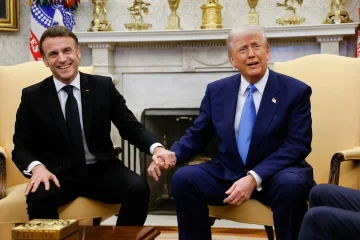
During a meeting at the White House on 28 February, Trump and his deputy, JD Vance, had a tense exchange of words with Ukraine's president, Volodymyr Zelensky, and interrupted each other several times.
Trump accused him of doing “bixhoz with the lives of millions of people” and <x2 with World War III” and told him that “could be back when it's ready for peace”.
The change of American politics did not start here, but at least two weeks ago.
I heard: Oh, we weren't invited. You were there for three years. You never should have started. You could have made deals”, Trump said on February 18th.
With such unexpected comments, he appeared to blame Ukraine for the Russian invasion and suggested that this country could have made a “deal to avoid war.
Ukraine, however, was conquered by its neighbor in February 2022, and the ongoing conflict became the deadliest in Europe since World War II.
Trump, even in a writing on social networks, used harsh language to describe Ukraine's president. He said Zelensky “refuses to hold elections” and calls it “dicator”. According to him, Ukrainian President “must act quickly”, or “will remain without a state”.
Trump seems to be acting to fulfill his promise to end the war in Ukraine as soon as possible. He, initially, made a call with Russian President Vladimir Putin, while a few days later, on February 18th, American and Russian delegations gathered in Saudi Arabia to start talks on specifications.
This was the first direct contact between the parties since Russia began its full-scale invasion of Ukraine on February 24, 2022, and a sudden change in American politics.
It left both Ukraine and the traditional US allies in Europe surprised, which are currently excluded from negotiations.
With Serbia refusing to recognise its independence and dialogue between them blocked for years, could the US, under Trump, pursue a similar approach to the Kosovo issue?
In a letter US President to Kosovo President Vjosa Osmani, on the 17th anniversary of Kosovo's independence on February 17th, he was quoted as saying that US “will continue working with Kosovo in strengthening democratic institutions and promoting economic growth”. He also pledged that ties between the two countries would be expanded.
Retired International Relations Professor Alon Ben-Meir says that in this among the Trump administration, however, he can favour Serbia whether because of closer ties with Serbian President Aleksandar Vuciq, the business interests Trump's son-in-law, Jared Kouchner, in Serbia, or the influence his emissary has for special missions, Richard Grenelli, with continuing criticism of the Government of Kosovo Prime Minister Albin Kurti.
However, this does not mean that Trump will abandon Kosovo”, says Bel-Meir, because “ai knows that to preserve stability in the Balkans, a kind of balance must be set”.
And, in concrete case, the EU is also directly involved. It has troops in Kosovo and it cannot overlook the issue”, says American professor for the Expose programme of Radio Free Europe.
Richard Caplan, professor of international relations at Oxford University, says Kosovo has been historically under pressure from outside parties, but that there has been room on the table.
According to him, Kosovars themselves can draw parallels with Ukrainians, but because the US has lower interests in Kosovo- Serbia and this “reduce the likelihood of Trump abandoning Kosovo, as it has with Ukraine”.
“Taking into account that some of Trump's actions are described as transactional, he may try to establish relations with Kosovo and with Serbia ʹ the same ones that respond more to US interests than the interests of the European community or the Western Balkans”, says Capov.
During his first term as president in the period 2017-2021, Trump witnessed the signing of an agreement between Kosovo and Serbia on normalising economic relations.
Very little of this document was implemented on the ground, but Trump said it is <x0-headed for the two leaders” -- the then prime minister of Kosovo, Avdullah Hoti, and Serbia's president, Aleksandar Vuciq.
This year, in the letter he sent to the president of Kosovo on the 17th anniversary of independence, Trump did not mention dialogue on normalising relations between Pristina and Belgrade. Similarly, he did not mention it in the letter he sent to the president of Serbia on Statehood Day, as well as in February. In both letters, he stressed primarily the importance of co-operation.
Despite that, Professor Ben-Mayir expects Kosovo to face increased pressure from the US to grant more autonomy to the Serb community, which Serbia insists on for years. Failure to do that would have consequences, says Ben-Mair and counts some:
“The United States may impose sanctions, may not help Kosovo economically, may pressure the EU not to advance Kosovo's integration into its own community”.
So the United States can make considerable pressure if they want. That's why I think you can't ignore what the United States wants”, says Ben-Meir.
He adds that Vuciqi's ties with Russia could allow him to influence American politics as well. While organising a possible meeting between Putin's Trump and Putin in Belgrade, which has been mentioned even earlier, only to further strengthen Serbia's position.
To counter all of this, Ben-Meir says Kosovo must show flexibility without compromising its independence.
The association of Serb majority municipalities must be formed. If you do not want territorial exchanges, make association and co-operate with Serbia, because Serbia has great interest in those municipalities, since they are inhabited by Serb majority. So flexibility should be shown in this direction”, says Ben-Meir.
I'm sure Ukrainians have been sold in many ways. Therefore, it is reasonable to worry that Trump can compromise principles when they serve his close interests, US interests”, says Capaplan.
Such visible approach has already alarmed the traditional US allies in Europe. The expected German Chancellor, Friedrich Merz, said the continent should strengthen its security as soon as possible, so that “is paid” from the US.
European Commission President Ursula von der Leyeen said the EU will continue to work with Ukraine “for a just and lasting peace”.
But, unlike them, historic U.S. opponents sound more sympathetic to Trump's behaviour and rhetoric.
“If you had just told me three months ago that this would be the American president's words, I would have laughed a lot about”, wrote Russian Security Council deputy head Dmitry Medvedev on X, commenting on the Trump's statement that “Zelensky is dictator”.
While further meetings between the US and Russia are warned about Ukraine, analysts do not expect the conflict between Kosovo and Serbia to be high on the Trump agenda especially soon.
Kosovo President Vjosa Osmani, who has a leading role in the country's foreign policy, has said she intends to strengthen co-operation with the Trump administration, especially in the area of defence and strategic investments.
Similarly, Kosovo Prime Minister Albin Kurti, when he congratulated Trump on victory in the elections, has said he is eager to work with him in behalf of progress and peace.
Radio Free Europe asked the Ministry of Foreign Affairs and Diaspora in Kosovo for its lobbying activities in the US, but in response it received, it said that “lobby contracts, in accordance with the laws in force, remain confidential”.
Analysts say that diplomatic skills are needed to navigate in this uncertain landscape. And if history is a guide, small allies often have to adapt, or learn to live with the decisions others make for them. / REL