10 hours ago
BBC: In Albania and 13 other countries sperm was used by a gene donor that causes cancer
Periskopi(6 months ago)
(6 months ago)According to the investigation in some countries, genetic material was used for the conception of about 200 children in 14 European countries. A sperm donor, who without his knowledge maintained a genetic mutation that dramatically increases the risk of cancer, has been the father of at least 197 children throughout Europe, has discovered [...]
A sperm donor, who without his knowledge maintained a genetic mutation that dramatically increases the risk of cancer, has been the father of at least 197 children throughout Europe, has found a major investigation. Some children have already died, and only a minority of those who inherit mutation will escape cancer in their lifetime.
Sperma has not been sold in British clinics, but the BBC has confirmed that a very small number of “ ” British families, who have been reported, have used donor sperm while treating fetridity in Denmark. The European Sperma Bank in Denmark, which sold the sperm, said that the affected families had their deepest “consolations and acknowledged that sperm was used to create many babies in some countries. The investigation was conducted by 14 public broadcasters, including the BBC, as part of the European Union's Investigative Reporting Network.
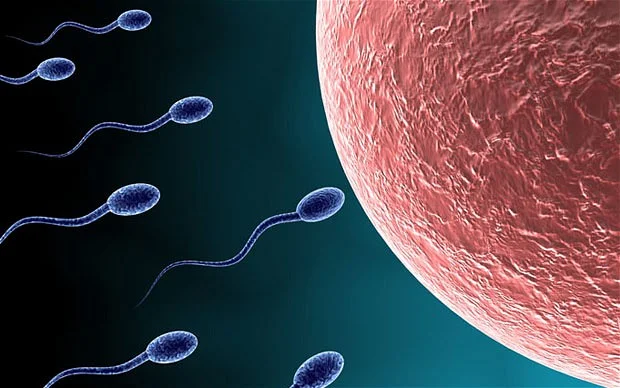
Sperma came from an anonymous man who was paid for the donation as a student, starting in 2005. His sperm was used by women for about 17 years. He is healthy and has passed the crisis checks for donors. However, The DNA of some of his cells was mutated before he was born. Mutation damaged the TP53 find that has a critical role in preventing body cells from turning into cancer.
Most of the donor's body does not contain the dangerous form of TP53, but up to 20% of its sperm does. However, every child created by this sperm will have mutation in every cell in the body. This is known as Li-Fraumen syndrome and brings up to 90% chance of developing cancer, especially during childhood, as well as breast cancer later in life.
“It's a terrible diagnosis,” told BBC prof. Clara Turnbull, cancer geneticist at London's Cancer Research Institute. “It's an extremely challenging diagnosis for a family, has an eternal burden of living with this risk, is obviously devastating. ”
Each year it takes MIR scans of the body and the brain, as well as abdominal ultrasound, to try to detect tumors. Women often choose to remove breasts to reduce the risk of cancer. The European Sperma Bank said that the donor “s and members of his family are not sick” and that such mutation “is not pre-extinently revealed by genetic scandal”. They said “immediately blocked the donor as soon as the problem with his sperm was discovered.
Children are dead
Doctors who were treating children with cancer related to the sperm donation raised concerns at the European Association of Human Genetics this year. They reported having found 23 children with genetic variants from 67 children known by then. Ten of them were already diagnosed with cancer.
Through requests for public information and interviews with doctors and patients, we find that a markedly greater number of children are born from this donor. The figure is at least 197 children, but this may not be final because there is no data from all countries.
It is also not known how many of these children inherited the dangerous option. Dr. Edwee Kasper, a geneticist cancerist at Rouen University Hospital in France who presented the initial data, told the investigation: “We have many children who have already developed cancer.
We have several children who have already developed two different types of cancer, and some of them have died at an early age. ” Céline, not her real name, is a single mother in France whose child was conceived by donor sperm 14 years ago and has mutationd. She received a phone call from the fertility clinic in Belgium asking her to take the girl to crime. She says there is no “obsolutely no negative” against the donor, but she considers it unacceptable to give sperm that “was not clean, it was not safe, it posed a risk”.
And she knows that cancer will remain a threat to them for the rest of their lives. We don't know when, we don't know what kind, and we don't know how many times,” She says. I understand that it's very likely to happen, and when that happens, we will fight and if there are several times, we will fight a few times. ”
Where was the donor sperm sent?
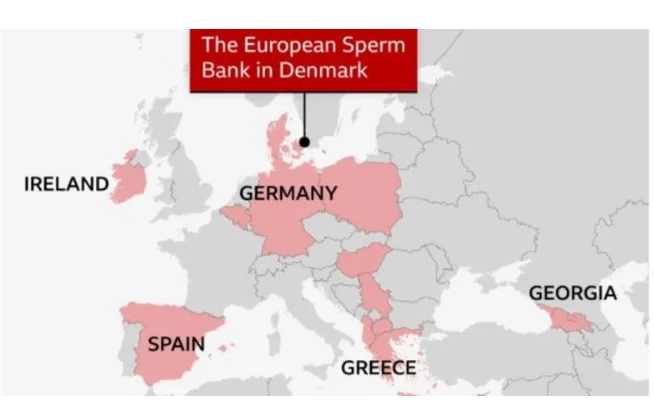
The donor sperm was used by 67 fertility clinics in 14 countries. Sperma wasn't sold at MB clinics. As a result of this investigation, however, authorities in Denmark announced on Monday the British Fertilisation and Embryology Authority (HFEA) that British women had travelled towards the country to receive fertility treatment using donor sperm. Those women have been notified.
Peter Thompson, the chief executive of HFEA, said that a very small “number of women were affected and “ato was informed of the donor from the Danish clinic where” was treated. Whether any British woman has received treatment in other countries where donor sperm has been distributed is unknown. The concerned parents are advised to contact the clinic they have used and the authority of fertility in that country.
The BBC has decided not to publish the donor's identification number because he donated trust and known cases to the UK have been contacted.
There is no global law on how many times a donor's sperm can be used. Individual countries, however, set their own boundaries. The European Sperma Bank acknowledged that these boundaries “are unfortunately” that are violated in some countries and that it is “in dialogue with authorities in Denmark and Belgium”. In Belgium, a single sperm donor should be used by only six families. Instead, 38 different women produced 53 children from this donor.
The UK limit is 10 families per donor.
You can't make a scene for everything.
Prof. Allan Pacey, who headed Sheffield Sperm Bank and is now deputy head of the Faculty of Biological Medicine and Health at Manchester University, said countries have become dependent on major international sperm banks and that half of the sperm in the UK is now imported.
He told the BBC: “We must import from major international sperm banks that also sell it to other countries, because that's how they earn money, and that's the problem, because there is no international law for how often sperm can be used. ”
He said the case was the terrible “” for all involved, but it is impossible to become fully safe sperm. “You can't make crime for everything; we only accept 1%2% of all men who apply to be sperm donors with current crime rules, so if we make it even more strict, there's no donor there.” This case, along with that of a man who was ordered to stop after having made 550 children through a sperm donation, has raised questions about whether there should be stricter limits.
The European Association of Reproduction and Human Embryology has recently proposed a 50-family limit for donors. However, he said this would not reduce the risk of inheriting rare genetic diseases.
Instead, it would be more useful for the welfare of children who discover they are one of hundreds of half brothers and sisters.
More needs to be done to reduce the global number of households born from the same donors, said Sarah Norcross, director of the Educational Trust Progress, an independent organization for people affected by infertility and genetic conditions, we do not fully understand the social and psychological consequences of having hundreds of half-sisters. It could potentially be traumatic,” she told BBC News.
The European Sperma Bank said: “is important, especially in light of this case, to remember that thousands of women and couples would not be able to have a child without the help of donor sperm. It is generally safer to have a child with the help of donor sperm if donors are checked according to medical guidelines. ” / BBC/