20 minutes ago
Trump tariffs for wood and furniture enter into force, even Kosovars are endangered
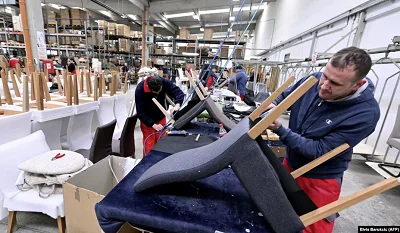
Periskopi(8 months ago)
(8 months ago)New US President Donald Trump tariffs on imported wood, furniture and kitchen cabinets entered into force Tuesday. Recent measures include a 10 per cent fee on softwood imports, while duties on some wrapped furniture and kitchen cabinets start at 25 per cent. [...]
New US President Donald Trump tariffs on imported wood, furniture and kitchen cabinets entered into force Tuesday.
Recent measures include a 10 per cent fee on softwood imports, while duties on some wrapped furniture and kitchen cabinets start at 25 per cent.
Mobiles, doors and windows, wooden construction materials are among Kosovo's main exports to the US in recent years.
On January 1st, the rate for imported furniture is expected to rise to 30 percent, while those for kitchen cabinets will rise to 50 percent.
However, duties for wood products from Britain will not exceed 10 percent, while those from the European Union and Japan will face a 15 - percent ceiling.
The three trade partners have reached agreement with the Trump administration to avoid tougher tariffs.
It is still not clear what fees will be applied to Kosovo, which has already lifted the 10 per cent customs fee to all products imported by the US.
Arieta Voula, from the Association of Kosovo Co-operatives, says he hopes Kosovo institutions will react as soon as they report to the sector how they will be affected and try to reach deals with the US as low as possible with Kosovo.
“We have exported from wood companies to Europe and the U.S., but for the US these dilemmas and questions should be clarified because this could make it difficult to export to US”, Voula tells Radio Free Europe.
She adds that, even though exports to the United States is not very large, it has begun to rise and tariffs would make exports in some ways unsavory.
The producers will reduce export because demand to receive products from Kosovo from the US begins and decreases. The moment they have their tariffs increased, they look at markets where they have the minimum fee”, she adds.
However, it explains that a potential fee would not affect the price of these products for Kosovo consumers.
According to the White House, customs duties were established to strengthen the American industry and protect national security. They become part of a set of separate sectoral tariffs Trump has decided since his return to the American presidency.
But new tariffs will create additional obstacles for an already difficult housing market, further increasing construction and renovation costs”, warned National House Builders Association Chairman (NAHB), Buddy Hughes.
By setting the latest tariffs, Trump said the trade secretary had discovered that <x0 wood products are used in critical functions of the War Department, including construction of infrastructure for operational testing”.
Trump's statement added that American wood production “remains undeveloped”, leaving the country dependent on imports.
But, Hughes from the NAHB said that “setting these tariffs under the pretext of national security) ignores the importance of dwelling on the physical and economic security of all Americans”.
He called for an agreement that “breaks down tariffs on construction materials. ”
Canada, the main supplier of timber to the United States, is also expected to be affected.
The 10 per cent wood tarif is added to the current duties that the United States has recently increased to 35 percent.
This means that Trump's latest action brings the Canadian timber fee to 45 percent.
Stephen Brown of Capital Economics told AFP that, with 30 percent of the wood coming from abroad, a 10 percent fee could increase the cost of building an average house for $2,200.
Brown added that China, Vietnam and Mexico make up most of the American imports of furniture.
He expects Vietnam to face the greatest impact “since the furniture represents 10 percent of its exports to the US.”
The Tarifat was placed on the basis of Article 232 of the 1962 Trade Enlargement Act, the same provision that Trump used to place tariffs on steel, aluminum and vehicles this year.