12 minutes ago
Support for Serbian List Strikes, Vuciqi's Influence Continues
Periskopi(8 months ago)
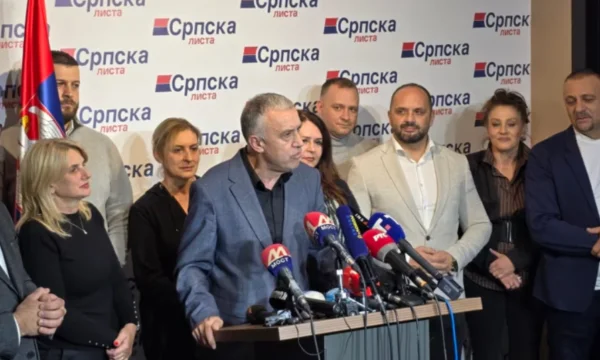
(8 months ago)“This is a victory for the Serbian people, Serbian unification and solidarity” So the Serbian List described its victory in the first round of local elections in nine of the ten Serb majority municipalities in Kosovo. The Serbian list lost part of support compared to the 2021 local elections. Loss of support were [...]
“This is a victory for the Serbian people, Serbian unification and solidarity” So the Serbian List described its victory in the first round of local elections in nine of the ten Serb majority municipalities in Kosovo.
The Serbian list lost part of support compared to the 2021 local elections.
The decline in support was influenced by the showing of new candidates in several municipalities.
Serbian President Aleksandar Vuciq uses the Serbian List's victory to preserve political influence, but also for its power in Serbia, according to analysts.
According to the Central Election Commission's preliminary results, Klokoti is the only Serb-run municipality where the second round of voting will be held.
The same situation had happened in the 2021 local elections, when the Serbian List won the second round.
However, compared to the 2021 local elections, in most Serb majority municipalities, there is a decline in support for this party.
This trend is particularly evident in northern Mitrovica, where the Serbian List received 60% of votes in Sunday's elections.
Four years earlier, this party, supported by Belgrade, had received about 91% of the vote.
A change this time around was that Serbs in this municipality could vote for six other Serbian candidates.
Northern Mitrovica and the other three majority Serb municipalities in the north -- Zvecani, Zubin Potoku and Leposaviqi -- were led by Albanian leaders since May 2023, after the Serb List abandoned Kosovo institutions, in sign of opposition to the country's government's decision to replace Serbian car plates.
Serbian List results in 2021 and 2025
In Kosovo there are ten Serb majority municipalities: Gracanica, Shrpca, Novoberda, Partesh, Ranillug and Klokoti in the south, and North Mitrovica, Zvecani, Leposaviqi and Zubin Potoku in the north.
The Serbian list has gained convincingness in all election processes it has participated in since its establishment in 2013.
That was true in October 12, 2025, but a decline in support was recorded in most municipalities compared to 2021.
Leposaviq: About 70% in 2025; 97% in 2021
Zubin Potok: About 70% in 2025; 83% in 2021
Zvecan: 86% in 2025; 98% in 2021
Gracanica: 62% in 2025; 77% in 2021
Ranillung: 71% in 2025; 100% in 2021
Novoberda: 63% in 2025; 62% 2021
Shtrpce: 59% in 2025; 59% in 2021
Partesh: 89% in 2025; 75% in 2021
KlokotChoices go second.
In Gracanica, a candidate from the Albanian community, supported by all Albanian parties, took part in the Serbian List result.
Politicalologist from Belgrade Ognjen Gogic tells Radio Free Europe that in Sunday's local elections, Serbs in Kosovo had alternatives to the Serbian List in all municipalities different from previous election processes.
This, he said, contributed somewhat to the decline in his support.
As an alternative to the Serbian List in majority Serb municipalities in these elections were: The Party for Freedom, Justice and Survival of Nenad Rashiqi, Serbian Democracy and Aleksandar Arsenijevic, Serbian National Movement and Milija Bisevac, Kosovo Alliance and Goran Marinkovic, as well as some civic initiatives.
New candidates have emerged... If there were no drop in support for the Serbian List, there would be no votes for other parties. The very fact that new groups have emerged indicates that there are new opinions, new moods, the need for an alternative”, Gogic says.
He adds that support for the Serbian List in Kosovo could never be interpreted as supporting the correctness of its policies, but rather as a need for Serbs to retain power in municipalities where they make up the majority, but also their relations with Belgrade.
According to preliminary data from the Central Election Commission, the Serbian List won the majority of councilors in municipal municipalities, but council countries secured other parties as well.
Dusan Janjic, from the Belgrade Forum for Ethnic Relations, believes there is no real alternative to the Serbian List and that the support other political subjects have received is their “msimum”.
Serbian community in Kosovo is experiencing a situation that [former Serb leader Slobodan] Milosevic has called it nonparty pluralism. So the domination of a party is a blockade of the multiparty system... This is the conflict management school: Why do you need complications with the Serbian democratic community? You don't need”, says Janjic for Radio Free Europe.
He recalls that in 2013, when the Serbian List was being formed, some politicians like Oliver Ivanovic and Nenad Rassic resisted monopoly and one-party system, but without success.
Janiq also believes that the international community “tolerates” the Serbian List monopoly and cites the collective movement of citizens in the election, with Serbian List officials at the helm.
So where in Europe is it okay for people to enter group three polling stations? Let Peter Sorensen explain this to me [EU envoy for Kosovo-Serbia dialogue]”, says Janjic.
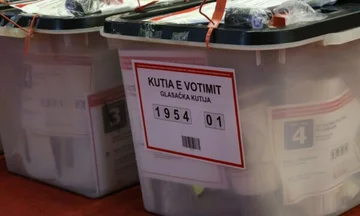
Such a practice of collective going to the polls was observed in the October 12th elections.
What does the Serbian List of Vucinate's victory mean?
Serbia's president, Aleksandar Vuciq, was the first to announce the victory of the Serbian List in nine Serb majority municipalities, noting that the Kloko municipality goes to the second round.
In a telephone conversation Sunday with officials from this party, which was formed with his support, Vuciq said: “la came out, they cannot remove the Serbian name and surname”.
Later, at a news conference, the Serbian List thanked Vucinqi for the support given.
Janzic estimates that Vuciqi's message was, in fact, that he won in local elections in Kosovo's majority Serb municipalities, and that this is a signal to the international community that he can count on it.
Is this true? Temporarily. At this point, Vuciq must deal with normalising relations [with Kosovo] to expand his rule in Serbia. He needs this card. It's extremely important”, he says.
Gogic notes that Vuciq first announced the results of the Serbian List as well as the February 9th parliamentary elections, adding that the move is directed primarily for the interior public in Serbia.
He should show you're winning somewhere. We have student protests, sanctions against NIS [Serbia Oil Industry] ... and it needs to show that its policy is producing results”, Gogic says.
However, he estimates that the Serbian List's victory in local elections could lead to normalisation of relations, as this party and Belgrade brought constructive messages that they want to return to Kosovo institutions.
A day after the elections in Kosovo, Serbian Government Office Director Petar Petkovovic said that the victory of the Serbian List “means that the Serbian people have a future, that this party is guarantor of the survival of Serbs in Kosovo”.
Speaking to Serbian Television Pink, he said the importance of winning the Serbian List is greater because it represents the Serb “conversion to their municipalities in northern Kosovo”.
Otherwise, official Belgrade supported the Serbian List's decision to leave Kosovo institutions in November 2022, but Serbian President Aleksandar Vuciq requested their return in September 2024. /Radio Free Europe